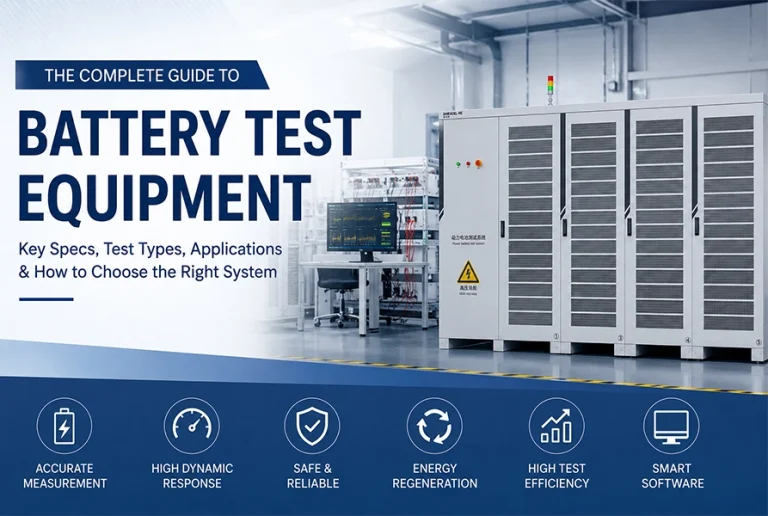
An EV battery pack is a multilayered energy system made up of cells, modules, sensors, cooling components, wiring, and battery management electronics. Testing each layer individually is not a manufacturing routine. It’s a very important engineering process that is used to identify issues in the early battery development, verify a battery system’s behavior, and minimize potential safety risks before the battery enters the vehicle.
A cell-level defect that may be insignificant can turn into a major thermal or reliability problem when hundreds of cells are grouped together in a high-voltage battery pack. This is the reason there is a hierarchy in EV battery testing – cell, module, and eventually complete pack.
For EV engineers, battery manufacturers, and industry buyers assessing battery quality, safety measures, and validation processes, it is imperative to recognize the difference between cell, module, and pack testing.
Why EV Battery Testing Happens in Layers
EV battery testing is split into three levels: cell, module, and pack testing, as each layer tests various electrical, thermal, mechanical, and safety behavior characteristics.
Battery systems are building blocks, and the complexity of these systems increases as they scale up from the cell to the full vehicle battery pack. The chemical stability and energy density of a single cell can be evaluated under controlled conditions. When used in modules, however, engineers need to consider balancing behavior, heat distribution, and electrical interaction among the cells.

Testing becomes significantly more complex at the pack level. Engineers test crash protection, waterproofing, vibration resistance, communication with the vehicle, and overall safety.
Battery layered testing offers several engineering benefits:
- Problems are detected at an earlier stage in development.
- Failure analysis is simplified and more cost-effective.
- Manufacturers minimize risks associated with large-scale recalls.
- The performance of the battery can be improved over time.
- Safety validation conforms to the international EV regulations.
Given the very harsh thermal and electrical operating conditions of modern battery systems, this staged validation process is now common practice across the EV industry.
EV Cell Testing Explained: The Smallest but Most Critical Unit
The cell is the basic energy storage block that makes up an EV battery. Engineers perform extensive testing on cells before they are included in larger assemblies to ensure consistency, capacity, and safety of operation.
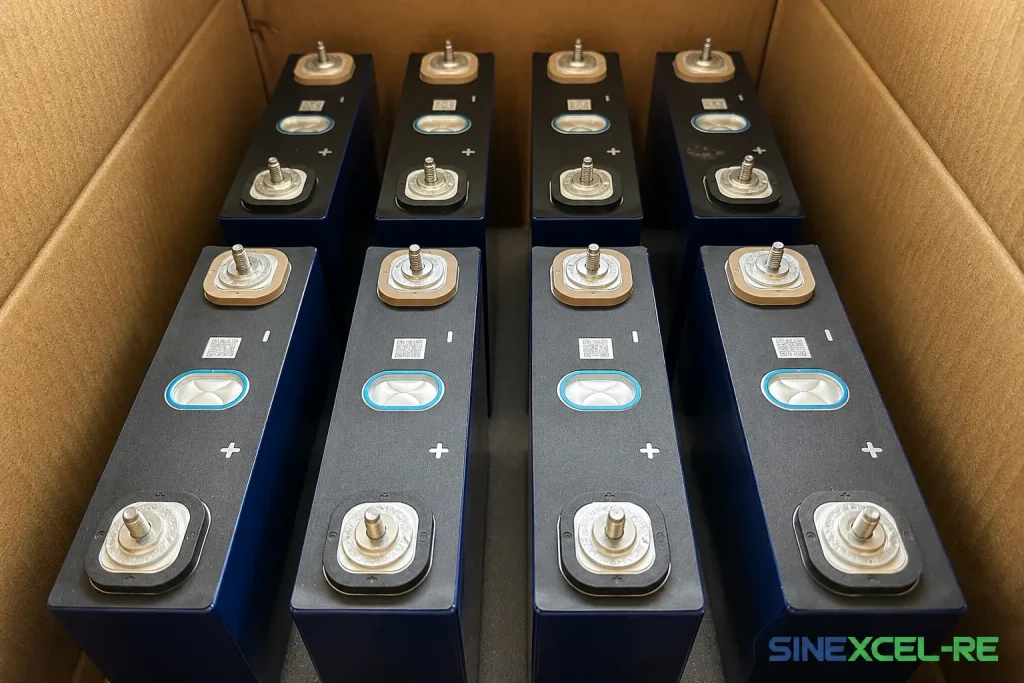
The main focus of cell testing is to check the battery chemistry’s behavior when it is charged and discharged in a controlled manner. Cell validation is one of the most critical steps in battery production, as any defect that occurs at this point can be carried through the entire battery system.
Cell testing focuses on validating the electrochemical performance, safety, and durability of individual battery cells.
Common Cell-Level Battery Tests
1. Capacity and energy density
The engineers check whether the cell can achieve its rated energy output under specified operating conditions. During cycle testing, trends in capacity degradation are also examined.
2. Cycle Life Testing
The number of charge and discharge cycles is repeated to evaluate the long-term durability and battery life.
3. Internal Resistance
Internal resistance has a direct impact on heat generation, charging efficiency, and power delivery.
4. Thermal Stability
Thermal runaway resistance tests are conducted on cells under stress conditions and at elevated temperatures.
5. Charge and Discharge Performance
In this stage, fast-charging ability and discharge rates, voltage stability, and efficiency are verified by engineers.
6. Safety Abuse Testing
Cells can be subjected to nail penetration, overcharge, crush, short circuit, and thermal abuse tests as per validation requirements.
Why is it important to test cells?
Cell-level testing sets baseline safety and performance parameters of the battery chemistry. When inconsistent or faulty cells make it to later stages of the assembly, any issues are much more challenging and costly to pinpoint.
Battery Module Testing Explained: Why Electric Vehicles Depend on Them
A battery module is a collection of cells that are grouped together to create a larger battery with more voltage and capacity. When cells are interconnected, their behaviour can change dramatically depending on whether they pass the validation test or not.
One of the biggest challenges at the module level is managing how cells interact thermally and electrically. Module testing focuses heavily on balancing behavior, thermal gradients, and current distribution between cells.

Module testing evaluates the electrical, thermal, and mechanical performance of multiple cells working together.
Common Module-Level Battery Tests
1. Thermal Distribution
Thermal distribution testing checks how heat spreads across cell groups during charging and discharging.
2. Cell Balancing Performance
Cell balancing tests verify whether the BMS can keep cell voltages within a safe and consistent range.
3. Mechanical Integrity
Modules are tested to the effects of vibration, shock, and structural stress, which simulate vehicle operating conditions.
4. Electrical Connection Reliability
In this test, the resistance, stability, and durability of busbars, welds, and connectors are tested.
5. Propagation Resistance
Engineers determine if thermal runaway on one cell will propagate to another cell.
6. Cooling Efficiency
The cooling performance of the modules is validated before being integrated into the final battery pack.
7. Why Module Testing Matters?
A module test is used to tie in laboratory cell validation and actual battery operation. It enables engineers to identify failures that are related to interactions that can’t be found by testing the cells individually.
Example: Battery Module (60v-300v) Test System
Pack Testing Explained: The Complete Power System
The battery pack is the complete energy system that is mounted in the vehicle. The testing is no longer limited to battery chemistry but also encompasses vehicle-level integration, electronics, cooling systems, enclosure protection, and functional safety.
Pack testing is typically the most complicated and costly section of the process, as it involves integrating all the engineering parameters into a single functional package.
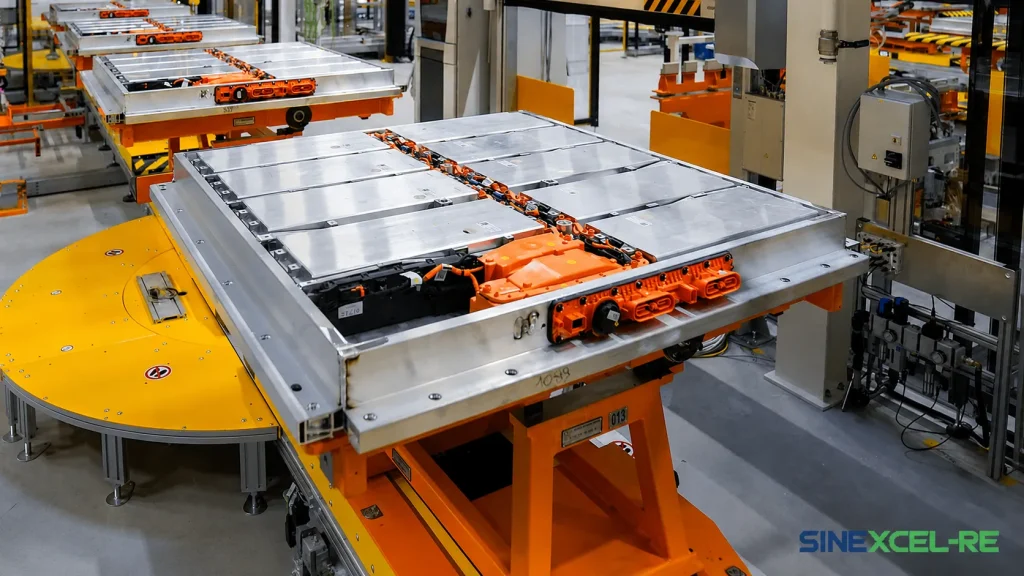
At the pack level, testing focuses on validating the entire battery system under real electrical, thermal, and environmental conditions.
Common Pack-Level Validation Tests
1. Battery Management System Validation
Pack-level validation also includes communication testing, fault detection, balancing control, and safety response verification.
2. Thermal Management Performance
Aggressive charging, high loads, and extreme environmental conditions are used to test cooling systems.
3. Crash and Impact Safety
Battery Packs are tested for Occupant safety and Fire resistance, crush, penetration, and impact.
4. Environmental Testing
Packs are subjected to water ingress, dust protection, corrosion resistance, humidity exposure, and temperature cycling testing.
5. High-Voltage Safety
Insulation resistance, isolation monitoring, and electrical protection systems are tested.
6. Vehicle Integration Testing
Engineers evaluate how the battery interacts with charging systems, power electronics, regenerative braking, and drivetrain loads.
Why Pack Testing Matters?
Pack testing alone cannot replace cell and module testing. A full pack may pass some system-level checks while still hiding cell-level or module-level issues. Pack-level testing ensures that all systems function safely together in actual driving conditions.
Example: Battery PACK (500v-1000v) Test System
Battery Cell vs Battery Module vs Battery Pack: Key Differences
Test goals move from chemistry validation (at the cell level) to system integration and vehicle safety (at the pack level).
Battery Cell: In the cell stage, the main concerns of engineers are electrochemical performance and material behaviour. The goal is to prove out the basic battery chemistry.
Battery Module: Testing at the module level becomes more focused on managing interactions. Engineers calculate the interaction of the grouped cells on heat generation, balancing, and electrical uniformity.
Battery Pack: The next level of focus for the pack stage is total system reliability. Engineers test and validate thermal management systems, crash protection, software integration, communication protocols, and operational safety in vehicles.
This progression is in line with the advances of EV battery architecture. Here is the testing overview.
| Testing Level | Primary Objective | Main Focus |
| Cell | Chemistry validation | Capacity, cycle life, safety |
| Module | Interaction validation | Thermal behavior, balancing, and structural reliability |
| Pack | System validation | Vehicle integration, thermal management, and high-voltage safety |
Why All Three Battery Testing Levels Are Necessary
There are a number of reasons why testing at the cell, module, and pack levels is required, as failures can occur at each level of the battery hierarchy.
The accuracy of the battery system validation can not be achieved in one test phase. Some defects do not manifest themselves in an individual cell, but only when cells are connected to each other or subjected to actual vehicle operating conditions.
Without multiple-layered testing, the risks of:
- thermal runaway propagation
- uneven battery aging
- cooling system failures
- electrical isolation faults
- reduced driving range
- unexpected shutdowns
- large-scale battery recalls
Layered testing also works in favor of EV manufacturers with regard to regulatory compliance, warranty reliability, and product credibility over the long term.
With the ever-growing energy density of EVs, it’s more critical than ever that validation is extensive and multi-levelled – ensuring safety and performance standards.
Conclusion
EV battery testing is intentionally designed to be broken up into cell, module, and pack levels as each level provides different safety and performance characteristics. Cell testing is a process that verifies battery chemistry and basic reliability. The interaction between grouped cells is assessed using module testing. Pack testing verifies the safety and functionality of the entire vehicle-integrated energy system.
These testing layers collectively contribute to the development of safe, long-lasting, and efficient EV systems. Knowing the importance of each stage in battery testing is crucial for engineers and battery manufacturers to enhance battery quality, minimize risks, and advance the next generation of EV technology.
FAQs
Why can’t EV battery testing be done only at the pack level?
Pack-level testing alone is not enough because it may not reveal cell-level defects or module-level interaction problems. Layered testing makes validation more accurate and easier to diagnose.
What is the most important stage in EV battery testing?
Each of the stages is important as they test various risks and performance attributes.
What causes thermal runaway in EV batteries?
Overheating, overcharging, short-circuiting, or physical damage, manufacturing defects, and overheating can cause thermal runaway.
Which testing level focuses most on thermal management?
Thermal management becomes more important at the module and pack level as the heat interaction between cells becomes more complex.
Why is module testing important if cells are already validated?
When cells are electrically and thermally connected, they can act differently, and failure modes could include interaction issues, requiring module-level validation.
What role does the BMS play in pack testing?
The Battery Management System will monitor the voltage, temperature, charging behaviour, and safety features of the entire battery pack.