The release of 1,000km EVs, led by the Denza Z9GT and its 1,036km CLTC range, has officially shifted the industry’s focus from range anxiety to validation anxiety. To reach a four-digit range, an extremely dense battery, typically exceeding 120kWh, is required, with zero margin for error between failure and success. This change necessitates a significant departure from traditional EV battery testing procedures. To achieve safety and reliability, producers should not be content with simple checklists, but with high-fidelity scientific simulations that reflect the extreme stresses of long-haul driving and excessively rapid charging.
Measurement Challenges in Large EV Batteries
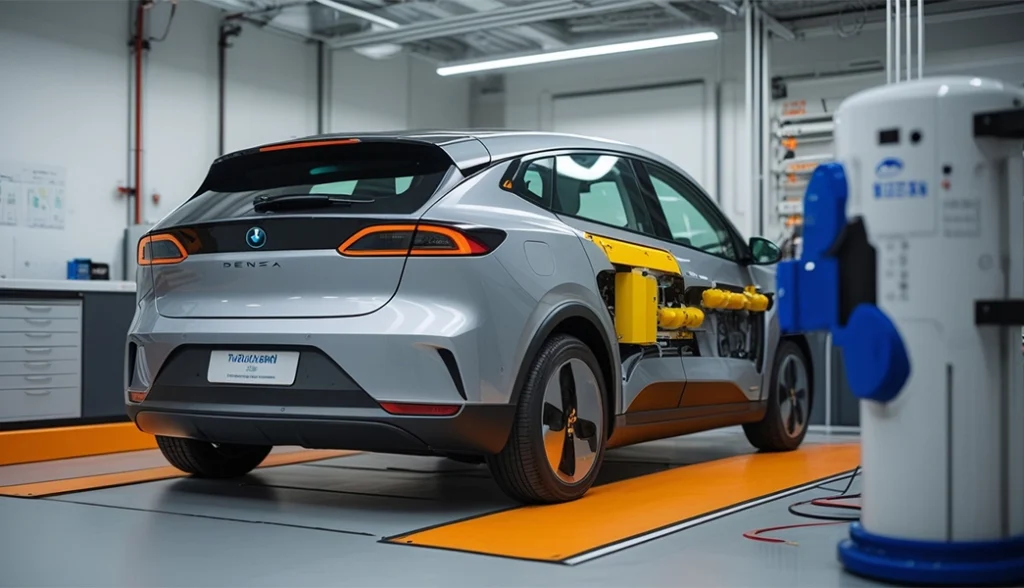
In the case of the huge energy store needed in a 1,000km range, the main technical challenge is measurement resolution. The “1 percent Problem” is a serious risk in a 122kWh pack: a single percent error in state-of-charge (SoC) computation will cause a 15km difference in real-world range. This causes the so-called Ghost Range, where a motorist is stuck even as the dashboard shows that it still has power.
The Voltage Plateau Hurdle
Cells with a high capacity, especially high-end LFP (Lithium Iron Phosphate) and high-nickel NCM ones, have extremely flat discharge curves. The voltage is almost constant throughout approximately 70 percent of the discharge cycle. With a 1,000km vehicle, this would be a few millivolts between 50% remaining and 40 percent remaining. In case the EV battery testing equipment is incapable of discerning these minute increments, then the BMS (Battery Management System) calibration will be flawed.
Practical Solution:0.02% F.S. Accuracy
To avoid calibration errors, voltage and current measurement accuracy of 0.02 Full Scale ( F.S. ) is now required in modern battery validation. This accuracy enables engineers to:
- Pinpoint BMS Calibration:Develop hyper-precise look-up tables that would guarantee the vehicle is aware of the number of remaining Joules.
- Detect Micro-Degradation:Small increments in internal resistance are the earliest indicator of lithium plating, and it will be long before they are serious safety risks.
Validate DCIR (Direct Current Internal Resistance): Accurately test the resistance to the flow of DC current of the battery at various temperatures, and this is important in predicting the performance of the battery in a 1,000km long-haul drive in the winter.
Sinexcel-RE Angle: Contactless Data through Clean Power
This is a high-stakes environment, and the testing hardware is no longer merely a power source; it is a precondition of data integrity. An approach that is solution-based is concerned about the purity of the current. Conventional testers can also have a problem of noise or ripple in their power output that may cause disturbance to the delicate electronics of the BMS. With high-frequency sampling and the use of a high-tech SiC (Silicon Carbide) technology, the High-Performance systems of Sinexcel-RE have laboratory-quality current, which enables the true chemical signature of the battery to shine through.
Thermal Management Challenges in 1000km EVs
A high-energy-density battery is a two-edged sword. Although it supplies the juice to 1,000km, it is also much more susceptible to the thermal gradients. A 1,000km range means high-speed cruising and then charging (10 percent to 80 percent in less than 12 minutes), which generates tremendous thermal loads that current systems are not designed to measure.
Heat Dissipation in 100kWh + Packs.
Heat dissipation is not even through huge packs. The hot spot may occur in the middle of the pack and result in skewed aging or thermal runaway. Verification of such systems cannot be done by simply monitoring individual points any longer, but through enormous multi-channel temperature monitoring of the discharge cycles in high-C-rates. This will ensure that the cooling system can keep the “core” of the battery in the optimum 15 o C to 35 o C range, even during 1,500kW charging bursts.
Dynamic Simulation: Switching to Real-World Drive Cycles
Gone are the days of static load testing. Dynamic Drive Cycle Simulation (WLTP/CLTC) is now needed to effectively test the EV battery. This test bench should be able to recreate real-world measurements, such as simulating the high-frequency spikes of power (as in a tri-motor design, such as the 850kW Z9GT) in a pattern coordinated with an environmental chamber.
Labs can confirm that the thermal management software is flexible by simulating a 1,000km trip across frozen mountain passes and blazing valleys. To counter this, Sinexcel-RE provides a 1-ms response time under currents, which makes the simulation a perfect reflection of the actual needs of the road.
Safety Risks in High-Energy EV Batteries
In order to meet the required energy density of 1,000km range, the producers are using high-nickel NCM (Nickel-Cobalt-Manganese) and the 2nd-generation (Long-Blade) batteries. Although these chemistries are innovative, they are functioning nearer to their thermal limits, and therefore, safety validation is more crucial than ever.
The Probability of High-Nickel Volatility
This is because high-nickel cathodes offer the energy density which is required in long-haul travel, but which is less thermally stable. These materials are more susceptible to release of oxygen at high states of charge and this can enhance a thermal runaway event. With a 120kWh pack, it is not only a car fire, but a huge release of energy. This Safety Paradox implies that the greater the range the more strictly we will have to demonstrate that the energy is under control.
Adopting GB 38031-2025: The 120-Minute Mandate
The industry is now gearing up for the compulsory adoption of the GB 38031-2025 in July 2026. It is a breakthrough for this standard. Whereas the earlier version gave 5 minutes of warning before a fire occurred, the 2025 version did not specify a fire, and there is no explosion within at least 120 minutes of a thermal runaway event occurrence. In the case of 1,000km long-range cruise ships, this safety window of 2 hours is a must, and labs must use the Thermal Propagation (TP) test rigorously.
Bottom-Impact and Mechanical Challenges
Due to the fact that these long-range batteries are usually built in as part of the structure (Cell-to-Body), they are more subject to road hazards. Battery validation should now comprise:
- Bottom-Impact Testing:Impactors of 150 joules were used to test high-speed hits by debris against the battery casing.
- Post-Fast-Charge Safety:Exposing batteries to external short-circuit tests in particular immediately after 300 ultraviolet charge cycles to determine that no dendrite growth has undermined internal safety.
Cost and Efficiency of Battery Testing
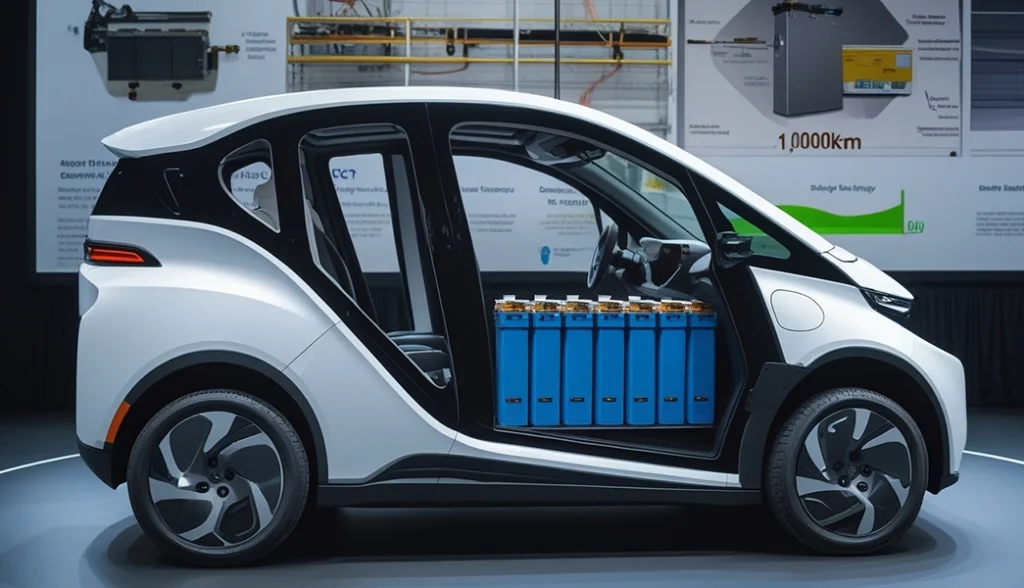
A regular EV battery is much cheaper to test compared to a 1,000km-ready one, which is also more power-intensive. One complete verification process can put laboratory equipment out of commission for months, which is an operational bottleneck.
The Electricity Costs and the Sustainability Gap
A 1,000km battery (120kWh +) needs a 24/7 cycle test to model a 10-year life. When a laboratory utilizes the discharge energy in the form of heat, it makes the costs of electricity and carbon footprint unsustainable. This gap is being filled in modern labs as the test bench is considered a circular energy system.
Energy Recovery and SiC Technology
Using the Silicon Carbide (SiC) technology, contemporary testing systems have achieved conversion efficiencies of over 95 percent with reduced heat dissipation. The main concern of Sinexcel-RE is the possibility of energy-back-to-grid capabilities, which are capable of restoring up to 90%+ of the energy at the discharge cycles.
It does not necessarily squander the energy of a 1,000km pack into the power grid of the facility. This saves the overall facility power consumption and cooling needs, enabling the validation of high volumes without ballooning operational budget. This technology can save millions of utility costs in one project life cycle in a lab with 500 channels of 120kWh packs.
Battery Testing Data and Monitoring Challenges
Millions of data points are produced by a 1,000km validation project per day. The amount of data can easily overwhelm conventional Laboratory Information Management Systems (LIMS) at 1ms sampling rates.
The Change of Inactive Logging to Proactive Dynamic.
Sifting through thousands of hours of logs is too big a risk that human error might happen, and the premium 1,000km vehicle launch. When an engineer is required to detect a 0.1mV dip in voltage in a 2,000-hour test, there is a high possibility of overlooking a critical failure. The practical solutions now incorporate:
- Automated Report Generation:The automatic indication of any cell that is not on the Golden Curve.
- Cloud-Based Monitoring:With the help of this, the lab managers can be notified of a push on their mobile phones in case of an excessive change in the temperature gradient.
- Predictive Analysis:Notifying about cell inconsistencies, including small DCIR increases, before they develop into pack-level failures.
Impact of Fast Charging on Battery Life
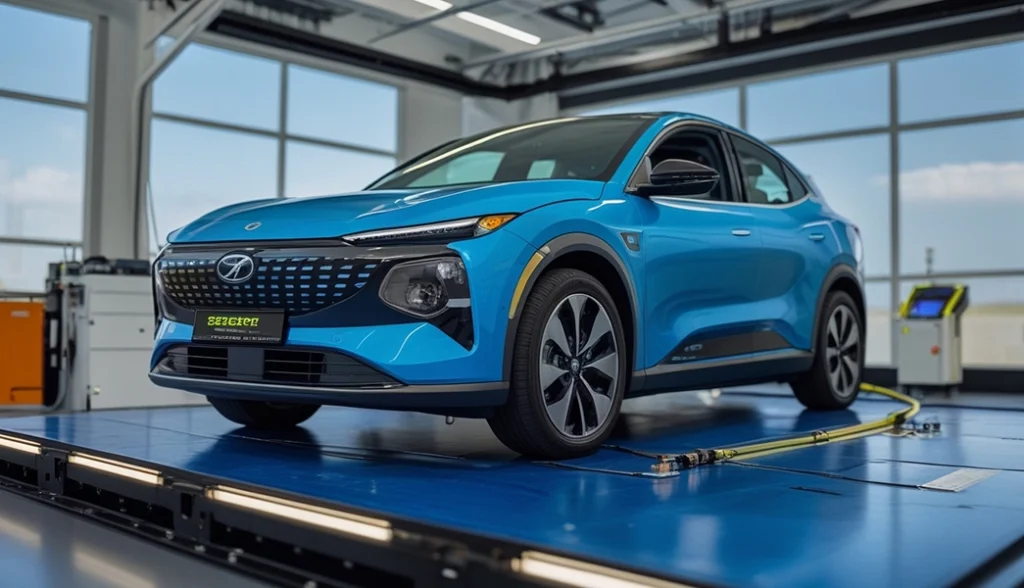
EVs with 1,000km range are nearly always combined with high-voltage architecture 800 V or 900 V systems to support ultra-fast charging. The charge rate at 4C or 5C (480kW to 600kW) on a 120kWh battery transfers very high physical loads to the cell layers.
Lithium Plating Detection
When rapidly charged, the lithium ions may occasionally plate out of the anode surface instead of becoming incorporated within the anode. This slows down capacity and may result in internal short circuits. High precision pulse testing should now be applied to EV battery testing to pick out the faint voltage signature of lithium plating.
C-Rate Endurance Testing
The manufacturers have to certify that a 1,000km battery will withstand at least 1,000 “Flash Charge” cycles and not lose over 20% of its original capacity. This needs a test system that is capable of operating 1,000A+ currents with complete stable operation. The High-Current solutions available at Sinexcel-RE have been optimally designed to receive these types of high-stress endurance runs, which offer the thermal stability needed to support months of high-power continuous tests.
The Future: 1,500km Range and Solid-State Batteries
As we continue to perfect the validation of liquid-electrolyte cells, the industry is already heading towards Solid-State Batteries (SSBs). These have energy densities of over 500Wh/ kg and may extend the range of EVs to 1,500km. The SSBs testing will become even more complicated. These batteries are testable in high-pressure environments and sensitive to interfacial resistance. Battery testing in the future of EVs will require:
- In-situ Pressure Monitoring:This is done by ensuring that the solid electrolyte is in contact with the electrodes at all driving conditions.
- Advanced Impedance Spectroscopy (EIS):This is a high-frequency-based analysis used to identify the separation of internal layers.
Considerations of software-defined testing hardware are among the labs that invest in it today to be ready for the solid-state revolution of tomorrow.
Conclusion: Future-proofing the Validation Lab
The 1,000km range is not a position, but a new standard of the high-end EV market. With an even greater energy density and faster rates of charging, the task of battery validation will only become more complicated.
The successful labs will be those that perceive EV battery testing as not an end goal, but as a basis of information-based innovation. With high-precision power electronics, high-fidelity thermal simulations, and power-saving lab management, a manufacturer can make it so that “1,000km” is only a promise of freedom to the consumer, not a liability to the engineer.
Through collaboration with professionals who have insight into the synergy between power electronics and the safety of chemicals, like Sinexcel-RE, the automotive brands can dare to go beyond the limits of what is achievable in the electric era.
FAQs
What is the average time to complete a complete validation of a 1,000km battery?
Typically, a complete validation, comprising an aging test, environmental test, and safety tests such as GB 38031-2025, takes 6 to 18 months. This is due to the fact that the energy capacity is high, leading to a longer charge/discharge cycle and requiring high-efficiency, 24/7 automated testing equipment.
Why should the battery testing require 0.02% F.S. accuracy?
Capacities that are large possess extremely flattened breakaway curves. The equipment is unable to differentiate small variations in voltage exactly at 0.02% accuracy, which results in a Ghost Range where the approximated range of the vehicle is not right.
Why is SiC advantageous in battery testing?
Silicon Carbide (SiC) makes switching faster, more efficient, and generates less heat. This allows test systems to be smaller and more reliable, and supports high voltages 800 V/1000 V architectures and recovers 90 percent of discharge energy.
What is the impact of the 120-minute stability window of GB 38031-2025 on design?
It compels manufacturers to undertake the implementation of better thermal barriers and venting systems. It is now necessary that the battery pack be a containment vessel, in order to allow one-cell failure to ruin the vehicle in time, allowing passengers to escape in at least two hours.
Is a 1,000km EV battery compatible with legacy 400 V equipment?
No. Due to high-voltage architectures of most long-range EVs, they use 800 V. Testing systems should extend to reach at least 1,000V to 1,250 V to test the safety of these high-voltage packs and insulation resistance.