It happened to us all when we look at the dreaded 1% mark when we are miles away from a charger, or when our pocket is becoming incredibly hot when we are playing a game. In the contemporary age, our smartphones are part of us, but they are bound to a technology that seems to be struggling to keep pace with our requirements.
As the processor speed and the display resolution have taken a giant leap, battery technology has been on a more evolutionary, slow-burning path. In this article, the authors discuss the complex equilibrium of capacity, safety, and lifespan as the defining characteristic of the contemporary mobile experience.
The Chemistry of Power: From Nickel to Lithium and Beyond
To understand current advancements, it helps to consider how battery chemistry has evolved over time. In order to know our location, we need to take cognizance of the journey. The 1990s phones in the form of a brick had not only the antennas but also huge, and had heavy batteries with the memory effect.
The Era of Nickel-Cadmium (NiCd) and Nickel-Metal Hydride (NiMH)
The period between 1900 and 2000 was marked by significant changes in the way the world is viewed. The NiCd and NiMH Era: The Age of Nickel-Cadmium (NiCd) and Nickel-Metal Hydride (NiMH). The years 1900-2000 saw the world change considerably
With the initial mobile phones, Nickel-based chemistries were used. These were cumbersome and were annoyingly endowed with this infuriating fault, that, unless emptied to the very last drop, they forgot their capacity.
The Lithium-Ion (Li-ion) Revolution
With the introduction of Lithium-ion, all this changed. With Lithium cobalt oxide, manufacturers were able to store more energy in a reduced space. Li-ion batteries are not prone to memory effect, self-discharge rates are low, and the batteries have made it to the slim smartphone generation.
Lithium Polymer (Li-Po): The Shape-Shifter
Most high-end phones today have Lithium-ion Polymer batteries. They also replace liquid electrolyte with a gel-like electrolyte made of a polymer. This enables manufacturers to develop batteries of different shapes and sizes that can be inserted in the narrow crevices of the modern phone chassis that are curved in nature.
Capacity vs. Energy Density: The 5,000mAh Standards Search
We get used to 5,000mAh being boasted in adverts, yet capacity is not everything. The actual trick engineers have is Energy Density- to what extent can the power be stuffed in a certain volume without literally creating a brick out of the phone.
The Myth of the Milliampere-Hours (mAh)
Capacity vs. Efficiency: A 5,000mAh battery in a phone with an inefficient processor may not take as long as a 4,000mAh battery in a highly optimized phone.
The Physical Limit: This is the physical limit of the amount of lithium we can install into a 7mm-thick smartphone. In order to gain even more capacity, manufacturers are exploring silicon-anode technology, which, in theory, can hold more lithium ions than graphite anodes.
The Safety Paradox: Fast Charging and Thermal Management
The more we require a quicker charge, the more we add heat. The heat is the natural antagonist to the stability of batteries.
Science of Battery Failure.
A battery may experience Thermal Runaway when it is damaged or overstressed. It is a chain reaction in which an increase in temperature emits energy which overheats the temperature even further.
Modern Safety Mechanisms
Multi-pole Tabs: The new battery design applies several tabs to spread current evenly to eliminate the hot spots when charging.
AI-Based Thermal Throttling: Current operating systems can check battery temperature in real-time, reduce charging speed, or CPU power when the device becomes hot.
Pressure-Sensitive Vents: When there is a build-up of gas, physical vents (or particular weak points in the casing) are constructed so that the gas is released before an explosion takes place.
Lifespan and Chemical Age of Batteries
One of the consumable components is a battery. Its chemistry starts to deteriorate the moment it comes out of the factory.
Getting to grips with Charge Cycles
A cycle is not the next time you plug it in; it is a complete 100% discharge and recharge. The batteries of most smartphones have a capacity of 300 to 500 full cycles(before they reach 80 per cent of their original capacity).
Battery Killer Factors
Exposure to heat: The quickest method of loss of permanent capacity is leaving a phone on a car dashboard during the summer.
Voltage Stress: Prolonged charging of a battery (overnight charging) or allowing the battery to deplete to 0% puts chemical stress on the electrodes.
High Charging Rate: It is convenient, but the excessive heat produced due to high charging rates in 100W+ charges may hasten the decay of the electrolyte.
The Human Factor: Our Usage of Our Devices
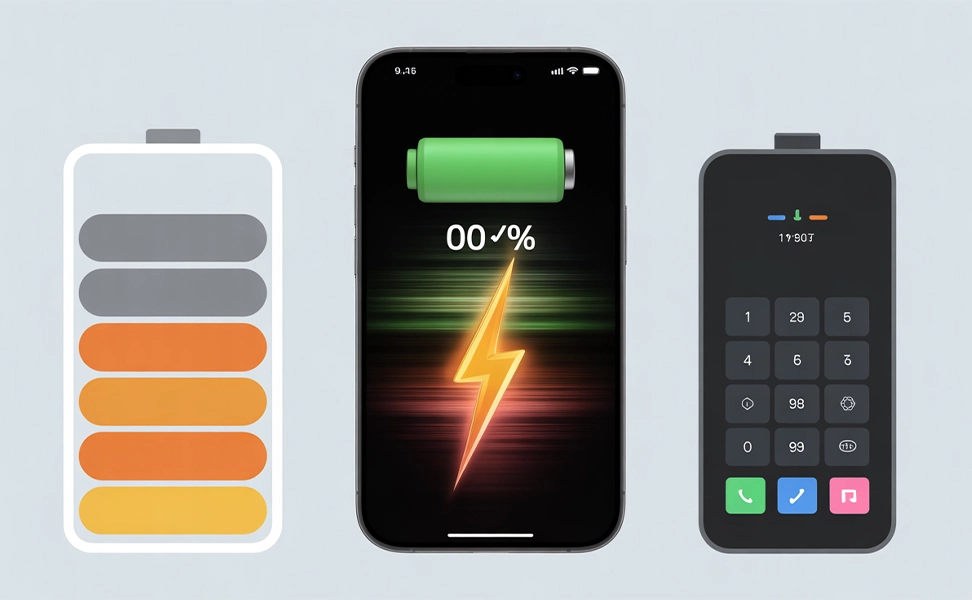
We would not fault the chemistry itself. The habits that we have in our lives contribute immensely to the tug-of-war of Safety vs. Capacity.
The Range Anxiety Psychology
Manufacturers have become caught in a cycle. Users desire 2-day battery life, but they also desire 120Hz screens and 5G connectivity, both of which are power-intensive. This compels engineers to take batteries to the very limit, at the expense of a few seconds of long-term run time in favor of short-term screen-on time.
Software Intervention
Such companies as Apple and Samsung have added Optimized Charging or Battery Protect modes. These characteristics allow charging to 80% until right before you wake up, which greatly prolongs the chemical life of the cell by cutting down the amount of time the cell spends at high voltage.
Graphene and Solid-State Batteries: The Future
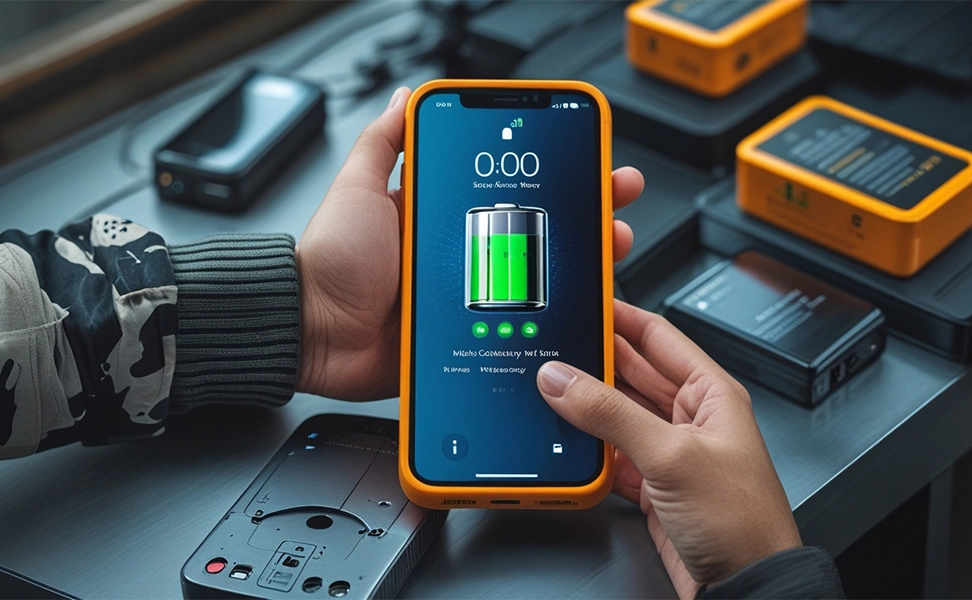
With today’s limitations in mind, let’s look at emerging materials that promise significant changes in battery technology. The second frontier is not more lithium but a transformation of the materials.
The Miracle Material: Graphene
The technology of graphene-enhanced batteries entails the use of graphene as a conductive wrap on the cathode. This enables electron flow (charging) to take place much faster and improves heat dissipation. There are already some “Graphene power banks which can be charged in less than 15 minutes.
Solid-State: The Holy Grail
Instead of using a liquid electrolyte, solid-state batteries use a solid ceramic or glass.
Why it is important: They are virtually flammable, can store a lot more energy, and have the possibility to perform thousands of cycles without degradation.
The Hurdle: They are now very costly and hard to manufacture in large quantities to support the number of smartphones being sold every year.
Conclusion
The ideal smartphone battery has not been invented yet since capacity, safety, and life are usually conflicting with each other. Safety or size is frequently compromised in order to increase capacity. To charge quicker, you lose longevity.
Preservation is the best weapon that we as consumers have. With no extremes and the help of the software-based battery health applications, we can overcome the distance until the next revolution in the field of material science, whether it is graphene or solid-state, which will finally release us from the hunt to find an outlet every day.
The smartphone battery is not simply a source of power anymore; it is an ecosystem that is intricate and managed. And at the moment, the finest battery is the one that you care for.
Frequently Asked Questions
What is the primary distinction between the Lithium-Ion and Lithium-Polymer batteries?
Both operate under lithium, but Li-ion batteries operate under a liquid-based electrolyte and are typically rigid, while Li-Po batteries operate under a gel-like polymer. This has enabled Li-Po batteries to be designed in thin and diversified shapes to accommodate smooth phone skins that are currently popular in the market.
Will the rapid charging really harm the battery life of my phone?
The rapid charge is not the main killer, but the high heat produced can speed up the chemical decay. Rapid charging cycles often subject a battery to its thermal limits, which, in the long run, will decrease its overall capacity sooner than regular charging.
What can I do to ensure a better life and longevity of my battery?
To increase your lifespan, keep your battery at 20 percent to 80 percent in order to limit the stress of voltage and not put your device under heat. One more feature to use is the software option of Optimized Charging to avoid spending any time when your battery is at 100%.
Is the future of smartphones solid-state batteries?
Yes, they can be said to be the Holy Grail since they use safe and solid materials in place of flammable liquid electrolytes. They have much greater energy density and can be charged much faster, but high production costs make them unsuitable for mass production.