The automobile industry is now in a game of tug of war between the traditional and the new. The gold standard of reliability in the case of the Internal Combustion Engine (ICE) is more than a century old. It is taught to us that the gas engine is the most well-maintained vehicle and the Electric Vehicle (EV) battery is the weakest element of its mechanical composition, which is a time bomb that will, sooner or later, demand more money than the vehicle itself.
Nevertheless, there have been recent changes in the field of electrochemical studies and tough industrial testing that prove the contrary. A perspective that opens with the prism of engineering, testing, and materials science reveals a great truth: The contemporary EV batteries are more and more engineered to have a longer lifespan than a standard gasoline engine.
So we know at Sinexcel that a good battery becomes a legend through the process of precision testing. Here, in this deep dive, we discuss the reasons why the EV powertrain is in the marathon of longevity.
EV vs. Gas Engine Life: The Complexity Paradox
We must first know what kills a machine before we can see why EV batteries are leading the pack.
The Mechanical Fatigue of ICE
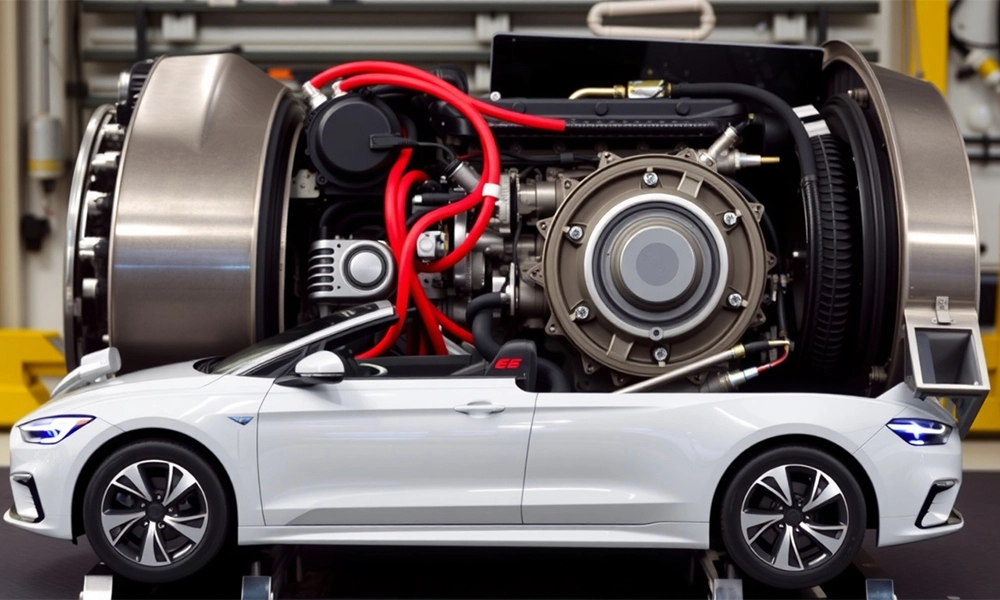
A conventional gas engine is a work of controlled explosions. It has thousands of moving parts: pistons, valves, crankshafts, timing belts, and fuel injectors, all of which work under severe heat and high pressure. The physical strain on these parts is enormous, between 150,000 and 200,000 miles. Gaskets are leaking, the metal is fatigued, and the system is choked by the carbon deposits.
The EVs Simplicity of Solid-State
By contrast, an EV drive is radically simple. It has about 20 moving parts. The battery does not wear out in the mechanical sense; it is chemically degraded. An ICE engine has a disastrous mechanical breakdown (broken belt or broken block), whereas a battery gradually and predictably loses capacity.
Industry statistics indicate that although a high-quality gasoline engine may begin to start showing signs of end-of-life at 200,000 miles, new Lithium-ion and LFP (Lithium Iron Phosphate) packs are being designed to have a million-mile lifespan. The introduction of sophisticated Battery Management Systems (BMS) or the brain of the battery has made sure that no cell is overworked, and this precision can never be achieved by a mechanical carburetor or fuel injector.
Determinants of battery life: It is not all about Mileage
So what influences the duration of the EV battery? It isn’t just the odometer. It is a complicated interaction between environment and chemistry.
Thermal Control: The Unobtrusive Supervisor
Any source of power is the nemesis of heat. A gas engine is a heat engine that requires venting. Heat is one of the variables that should be carefully controlled in an EV. Superior liquid cooling devices maintain battery cells at a Goldilocks temperature range (usually 15 o C to 35 o C). Batteries that remain cool during fast charging and warm during discharge during winter cycles undergo much less of the phenomenon of capacity fade.
Depth of Discharge (DoD) and Cycling
The life of a battery will be given in cycles. A complete cycle is a 0 to 100% discharge and recharge. Nevertheless, EV batteries do not operate in their full theoretical capability. The top and bottom of the battery are buffered by manufacturers. Having a battery with a 20 80 percent charge means that the chemical stress of the lithium ions will be reduced, which in turn means the more cycles the pack will go through exponentially.
Chemical Composition
The change to LFP (Lithium Iron Phosphate) chemistry is a breakthrough in terms of longevity. In comparison to NCM (Nickel Cobalt Manganese) batteries, LFP cells can be charged thousands of times with insignificant loss, which is why they are worth using in vehicles that are designed to travel more than 20 years.
Science of Prediction: Life Cycle Testing & SOH
What makes us believe that a battery will have a lifespan of 15 years when the model was introduced last year only? This is the point where State of Health (SOH) monitoring and life cycle testing are involved.
Accelerated Life Testing
Engineers do not wait 10 years before they find out how a battery functions. They employ aging acceleration procedures. They are able to simulate a decade of use in a few months by exposing cells to higher temperatures and high current cycling under controlled laboratory conditions.
State of Health (SOH) vs. State of Charge (SOC)
Where SOC is the amount of fuel in the tank, SOH is the size of the tank remaining. SOH can be tracked using modern testing equipment with 99% accuracy. Through the examination of the Capacity Fade and Internal Resistance Growth, the testers will have the ability to foretell the very moment of a failure well before it occurs.
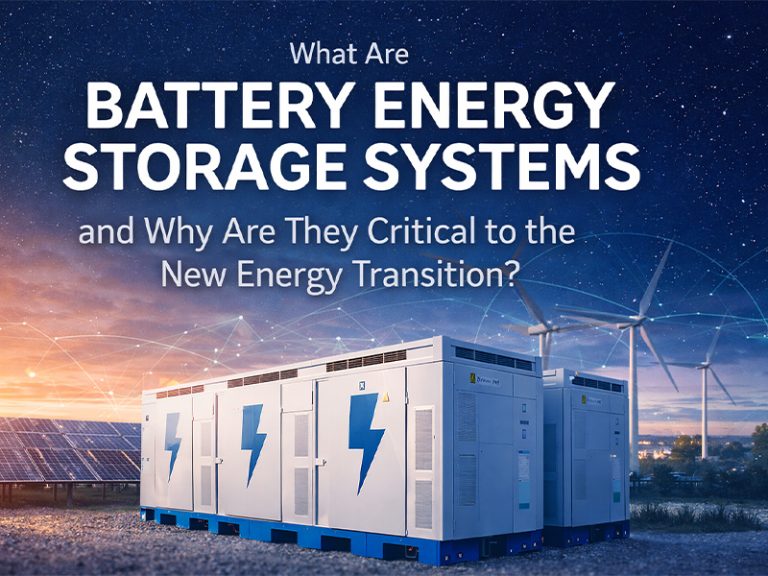
Our testing solutions are aimed at this granularity at Sinexcel. It is not simply the concept of safety but secondary life that is understood in the SOH. A battery essential to an EV reaches 70% SOH, which makes it useless as an automotive tool, but it will continue to be useful in stationary storage of energy for up to a decade.
Laboratory vs. Real Life Performance: Bridging the Gap
There is usually a lack of connection between what a brochure mentions and what a driver encounters. Scientific publications, such as those by ScienceDirect and ResearchGate, point out that Real-World Driving Conditions (RWDC) are much more disorganized than the Steady State conditions of a laboratory.
The Effect of “Aggressive” Variables
The flow of current in the laboratory is smooth. A real-world driver may drive the accelerator to the floor when joining the traffic (high discharge spike) and then step on the regenerative brakes (high charge spike) right away.
Data-Driven Validation
Recent articles based on data-driven experimental methodologies demonstrate that regenerative braking, in fact, positively contributes to keeping the battery healthy through the provision of micro-charges, preventing the battery from languishing at low voltages for too long. In addition, the so-called Active Balancing that the BMS does during actual charging sessions in the real world assists in redistributing energy among cells, which tends to result in unexpectedly long life of daily-used fleet cars.
Why Precision Testing is the Secret of Longevity
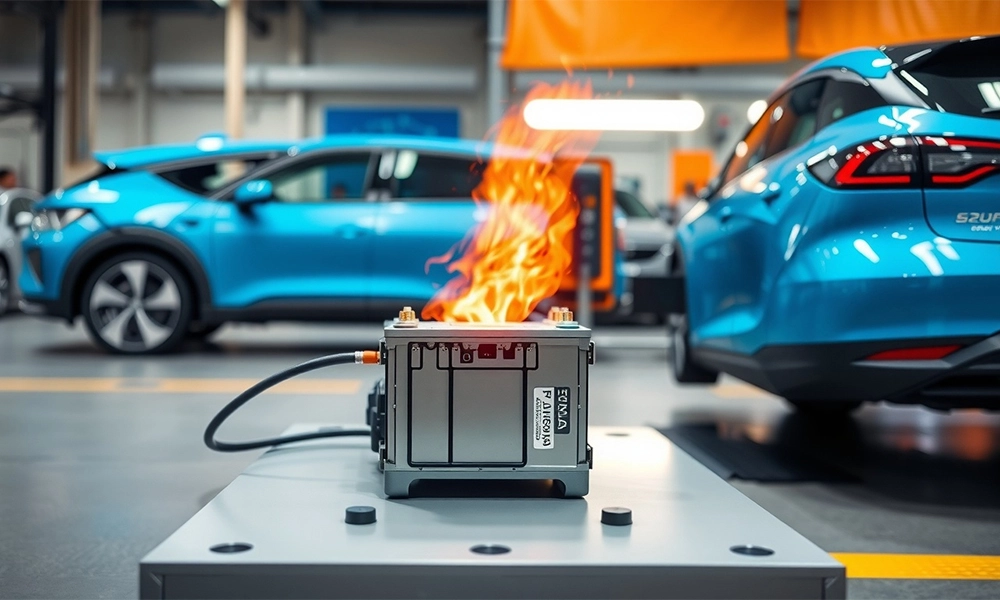
It is an impossibility to control what you cannot measure. It is quite interesting to note that the development of Precision Testing and Validation is the key reason why EV batteries have become even longer-lasting than gas-powered engines.
Battery Management System(BMS) validation
The BMS is what is the most vital to longevity. Accurate testing is the only way to make the BMS capable of identifying one failed cell out of thousands. In case the testing equipment used in the R&D stage lacks accuracy, the BMS will be unaware of the micro-faults that would cause pack failure in the long run.
High-fidelity Power Electronics
The high-precision battery cyclers and E-load simulators enable engineers to recreate the exact electrical noise and thermal variation in the drive cycle in the real world. This certification will guarantee that the chemistry of the battery is sturdy enough to overcome the power of the dirty rapid chargers and the unpredictable needs of high-performance driving.
The manufacturers of validation infrastructure, most of whom are affiliated with Sinexcel, can ensure their batteries are not merely clearing the 8-year warranty test, but their batteries are paying the warranty twice by investing in high-quality validation infrastructure.
Conclusion: The New Era of the Million Mile Vehicle
The myth about EVs being disposable is a swiftly disproving data point that is slowly being demolished. Although a gas engine is fighting against friction, heat, and mechanical wear, an EV battery has the advantage of a controlled chemical environment and zero moving parts.
With the increasing sophistication of testing technology, we are entering a period where the body and interior of the car will probably wear out even before the battery does. This not only will turn EVs into a smarter financial choice, but also a more sustainable one, trying to eventually move these long-life batteries off the road and onto the power grid, which will serve as the green power storage decades in the future.
Frequently Asked Questions (FAQ)
Question: Are EV batteries really lasting longer than gas engines?
A: In many cases, yes. A typical gas engine can need some significant overhaul after 200,000 miles, but many modern EV battery packs have been designed to work 80% of capacity to as many as 300,000 to 500,000 miles, and some even million-mile chemistries are already in the market.
Q: Does charging the battery fast kill it?
A: DC fast charging frequently results in higher heat, so it might cause a slight acceleration of degradation over many years. But due to the complex thermal management systems and tight control of profiles of charging, the effect is significantly smaller than anticipated- it can be a difference of less than 1-2 percent in aggregate life.
Q: What occurs to the battery when it dies?
A: An EV battery is rarely “dead.” It endures its automotive life when it attains a percentage of 70-80 percent of its original capacity. It can, however, be recycled anew to Second Life applications, e.g., storing solar energy to serve a home or a company, across another 10-15 years.
Q: What can I do to be able to have my EV battery last as long as possible?
A: It is the best practice to maintain the charge level between 20 and 80 percent to use on day-to-day routine and never leave the car in the sun to exposures longer than what is necessary to achieve their goal of achieving the best performance.
The future of Electrification with Sinexcel
Sustainable mobility does not only start with the construction of the cars, but it also starts with the infrastructure that must test, validate, and optimize energy systems to drive the cars. At Sinexcel, we are offering the state of the art power electronics and battery testing capable of taking the limits of EV life further.
Our battery formation and testing systems, as well as our EV charging infrastructure on the global level, assist manufacturers in making sure that each cell is long-lasting.
Are you willing to take your energy solutions to the next level?
Get the Advanced Battery Testing and Charging Solutions at Sinexcel and travel with us to the electrified future that is more durable.