The automotive industry is in the middle of a genuine tug-of-war between old and new. The Internal Combustion Engine (ICE) has more than a century of track record behind it as the gold standard of automotive reliability. Conventional wisdom says the gas engine is the dependable workhorse, while the Electric Vehicle (EV) battery is the weak link — a ticking clock that will eventually cost more to replace than the car is worth.
Recent developments in electrochemistry and rigorous industrial testing tell a different story. Looked at through the lens of engineering, testing, and materials science, a clear pattern emerges: modern EV batteries are increasingly engineered to outlast a standard gasoline engine.
This article looks at why the EV powertrain is winning the longevity race — and what testing and validation have to do with it.
EV vs. Gas Engine Life: The Complexity Paradox
To understand why EV batteries are pulling ahead, it helps to start with what actually causes a powertrain to fail.
The Mechanical Fatigue of ICE
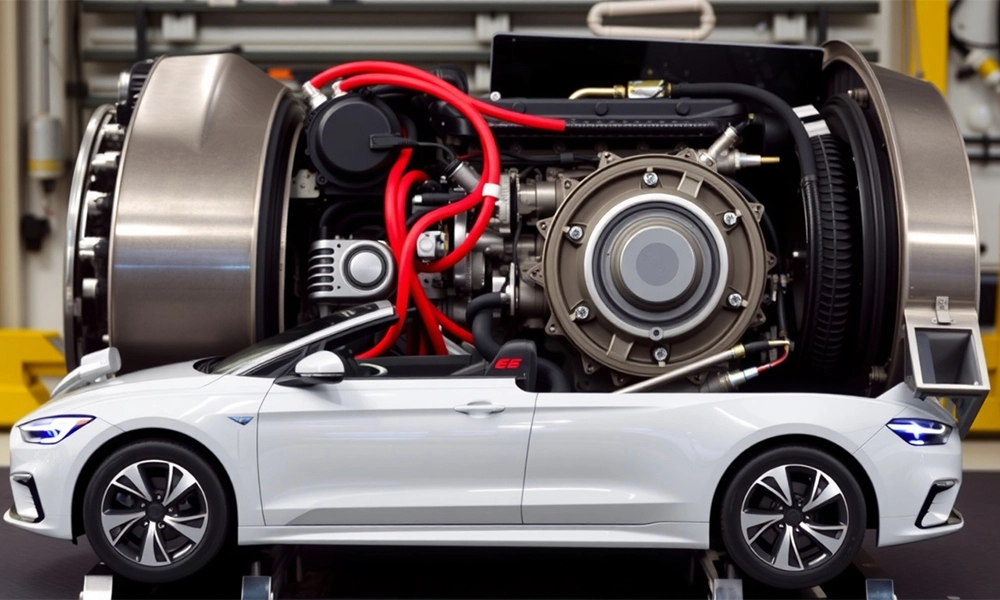
A conventional gas engine runs on a sequence of controlled explosions, relying on thousands of moving parts — pistons, valves, crankshafts, timing belts, fuel injectors — all operating under sustained heat and pressure. That physical strain adds up: somewhere between 150,000 and 200,000 miles, gaskets begin leaking, metal fatigues, and carbon deposits start choking the system.
The EVs Simplicity of Solid-State
An EV drivetrain is radically simpler by comparison, with roughly 20 moving parts. A battery doesn’t wear out mechanically — it degrades chemically. Where an ICE engine tends to fail catastrophically (a snapped belt, a cracked block), a battery loses capacity gradually and, importantly, predictably.
Industry data suggests that while a well-built gasoline engine may start showing end-of-life signs around 200,000 miles, newer lithium-ion and LFP (Lithium Iron Phosphate) packs are increasingly being engineered with far longer service targets in mind. Modern Battery Management Systems (BMS) — the “brain” of the battery — help ensure no individual cell is overworked, a level of precision a mechanical fuel system simply can’t replicate.
What Actually Determines Battery Life
Battery longevity isn’t just a function of mileage — it’s shaped by a more complex interaction between environment and chemistry.
Thermal management
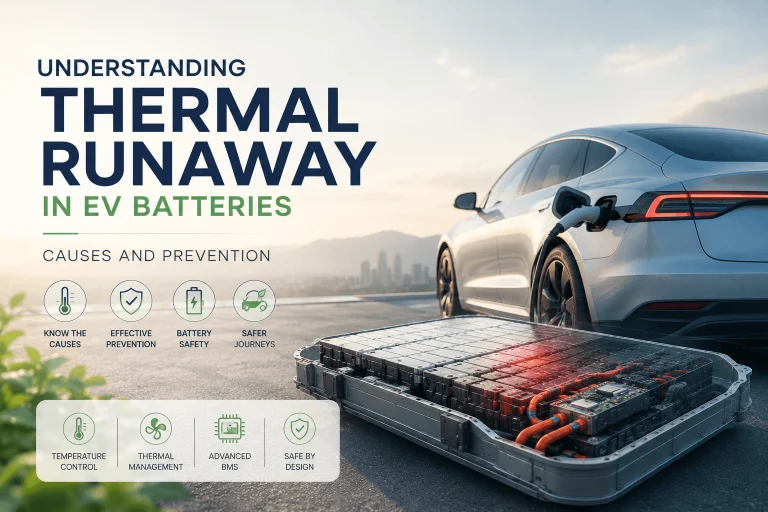
Heat is the enemy of any energy storage system. Where a gas engine is designed to vent heat away, an EV’s cooling system is designed to actively manage it — keeping battery cells within an optimal range (typically around 15°C to 35°C). Cells that stay cool during fast charging and warm during cold-weather discharge cycles experience noticeably less capacity fade over time.
Depth of Discharge (DoD) and cycling
Battery life is typically measured in cycles, with one full cycle representing a 0–100% discharge and recharge. In practice, though, EV batteries rarely operate across their full theoretical range — manufacturers buffer the top and bottom of the usable capacity. Keeping a pack within a 20–80% charge window, for example, meaningfully reduces the chemical stress on lithium ions, which allows the pack to handle exponentially more cycles over its lifetime.
Chemical composition
The shift toward LFP (Lithium Iron Phosphate) chemistry has been a real breakthrough for longevity. Compared to NCM (Nickel Cobalt Manganese) chemistry, LFP cells tolerate thousands of charge cycles with comparatively little capacity loss — a major reason they’re increasingly used in vehicles designed for decades of service.
Predicting Battery Life: Life Cycle Testing and SOH
How can a manufacturer credibly claim a 15-year lifespan for a battery pack that debuted last year? This is where State of Health (SOH) monitoring and life cycle testing come in.
Accelerated life testing
Engineers don’t wait a decade to see how a battery performs in the real world. Instead, they use accelerated aging protocols — exposing cells to elevated temperatures and high-current cycling under controlled lab conditions — to compress a decade of real-world wear into a matter of months.
SOH vs. SOC
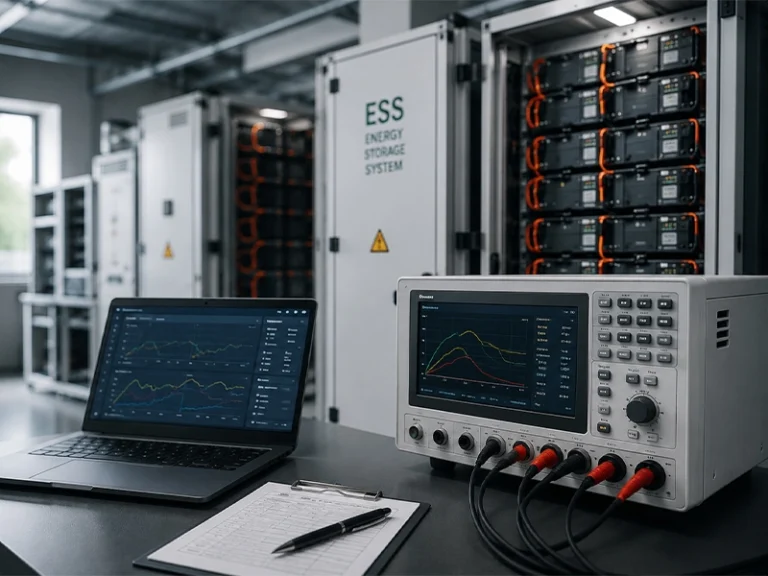
If State of Charge (SOC) tells you how much fuel is currently in the tank, State of Health (SOH) tells you how much the tank itself has shrunk over time. Modern testing equipment can track SOH with a high degree of precision by monitoring capacity fade and internal resistance growth over repeated cycles — see our guide on DCIR testing for more on how internal resistance measurement works in practice. This lets engineers anticipate failure well before it actually happens, rather than reacting to it after the fact.
SOH monitoring also matters beyond the vehicle’s original service life. A pack that drops to roughly 70% SOH is generally considered past its useful life as an EV battery, but it can often remain useful for another decade or more in stationary energy storage applications — a “second life” that’s becoming an increasingly important part of the battery lifecycle conversation.
Lab Testing vs. Real-World Performance: Bridging the Gap
There’s often a gap between what a spec sheet promises and what a driver actually experiences. Published research on real-world driving conditions (RWDC) consistently shows that actual usage patterns are far less predictable than the steady-state conditions typical of lab testing.
The effect of aggressive driving variables
Current flow in a lab test tends to be smooth and controlled. A real-world driver might floor the accelerator merging into traffic (a sharp discharge spike), then immediately hit regenerative braking (a sharp charge spike) moments later.
What real-world data shows
Interestingly, some research suggests regenerative braking actually helps battery health overall, by delivering frequent micro-charges that keep cells from sitting at low voltage for extended periods. Active cell balancing performed by the BMS during real-world charging sessions also helps redistribute energy across cells more evenly — a factor that appears to contribute to the longer-than-expected lifespans seen in daily-driven fleet vehicles.
Why Precision Testing Is the Real Driver of Longevity
You can’t manage what you don’t measure — and that’s precisely why precision testing and validation have become central to why EV batteries increasingly outlast gas engines.
BMS validation
The BMS is arguably the single most important factor in long-term battery longevity. Accurate testing is what allows a BMS to reliably catch a single failing cell among thousands — see our guide on BMS validation testing for a closer look at how this validation actually works. If the test equipment used during R&D lacks precision, the BMS in the field may miss the micro-faults that eventually cause pack failure.
High-fidelity power electronics
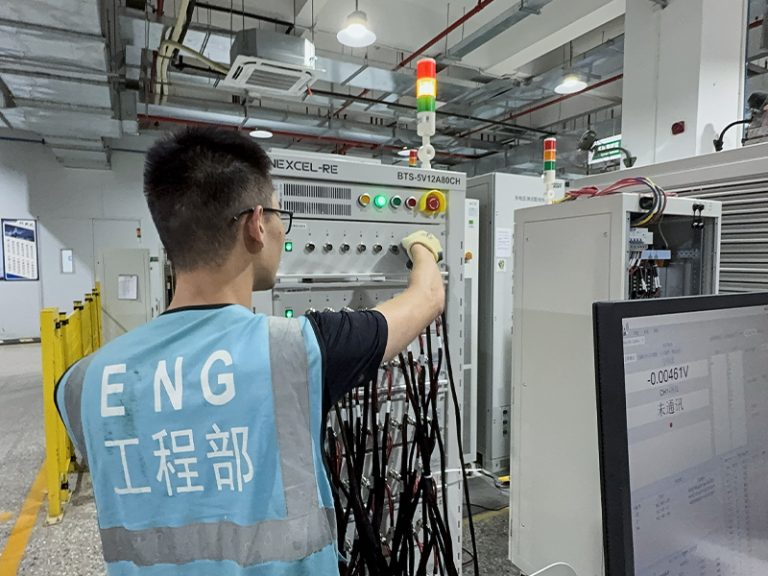
High-precision battery cyclers and electronic load simulators let engineers recreate the exact electrical noise and thermal variation a battery would experience in a real drive cycle. This kind of testing helps confirm that a battery’s chemistry can withstand the stress of imperfect fast chargers and the unpredictable demands of aggressive driving.
Investing in rigorous validation infrastructure during development is what separates a battery pack that merely survives its 8-year warranty period from one that comfortably outlasts it.
Conclusion: The New Era of the Million Mile Vehicle
The idea that EVs are inherently “disposable” is steadily losing ground to the data. Where a gas engine fights an ongoing battle against friction, heat, and mechanical wear, an EV battery operates in a comparatively controlled chemical environment with zero moving parts.
As testing technology continues to advance, it’s increasingly plausible that a car’s body and interior will wear out before its battery does. That shift doesn’t just make EVs a smarter financial choice over time — it also points toward a more sustainable path, where long-life batteries eventually move from powering vehicles to serving as grid-scale energy storage for years afterward.
Frequently Asked Questions (FAQ)
Question: Are EV batteries really lasting longer than gas engines?
A: In many cases, yes. A typical gas engine can need some significant overhaul after 200,000 miles, but many modern EV battery packs have been designed to work 80% of capacity to as many as 300,000 to 500,000 miles, and some even million-mile chemistries are already in the market.
Q: Does charging the battery fast kill it?
A: DC fast charging frequently results in higher heat, so it might cause a slight acceleration of degradation over many years. But due to the complex thermal management systems and tight control of profiles of charging, the effect is significantly smaller than anticipated- it can be a difference of less than 1-2 percent in aggregate life.
Q: What occurs to the battery when it dies?
A: An EV battery is rarely “dead.” It endures its automotive life when it attains a percentage of 70-80 percent of its original capacity. It can, however, be recycled anew to Second Life applications, e.g., storing solar energy to serve a home or a company, across another 10-15 years.
Q: What can I do to be able to have my EV battery last as long as possible?
A: It is the best practice to maintain the charge level between 20 and 80 percent to use on day-to-day routine and never leave the car in the sun to exposures longer than what is necessary to achieve their goal of achieving the best performance.
The future of Electrification with Sinexcel
Sustainable mobility does not only start with the construction of the cars, but it also starts with the infrastructure that must test, validate, and optimize energy systems to drive the cars. At Sinexcel, we are offering the state of the art power electronics and battery testing capable of taking the limits of EV life further.
Our battery formation and testing systems, as well as our EV charging infrastructure on the global level, assist manufacturers in making sure that each cell is long-lasting.
Are you willing to take your energy solutions to the next level?
Get the Advanced Battery Testing and Charging Solutions at Sinexcel and travel with us to the electrified future that is more durable.