BESS: Battery Energy Storage System — a technology that, through battery systems, stores electrical energy and releases it as and when required. A BESS is not just a battery pack, but a battery pack with a Battery Management System (BMS), Power Conversion Hardware (PHH), and an Energy Management System (EMS) all working together. It is utilized in residential, commercial, and large-scale applications for storing excess electricity and releasing it as needed when electricity is generated less than demand or costs are higher.
Simply put, a BESS is an intelligent electrical reservoir that “time-shifts” power – storing it at times when it is cheap or abundant, then releasing it when it is most needed.
Why is “System” the keyword in the BESS Definition?
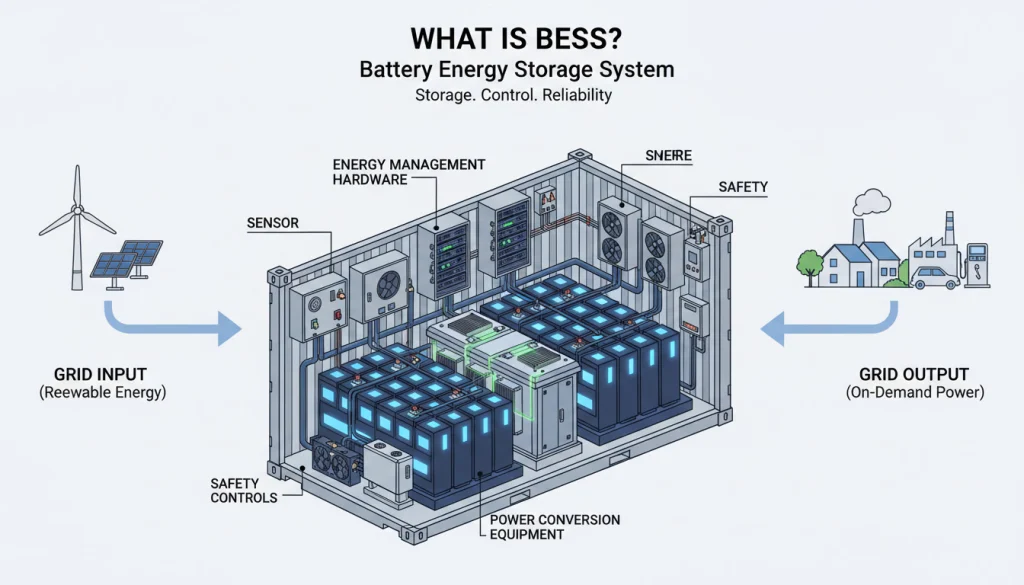
A BESS is NOT a larger battery. There are four essential elements to BESS, and these need to be accounted for to define BESS properly.
- Battery Cells — The storage medium itself is organized in modules and racks. These contain the chemical energy and govern capacity, lifespan, and safety features.
- Power Converter System (PCS) — A bidirectional AC-to-DC converter to convert power from AC to DC and vice versa between the grid and the battery.
- Battery Management System (BMS) — Safety layer. It can perform real-time monitoring of voltage, current, and temperature at the cell level and automatically disconnect a circuit in case of failure.
- Energy Management System (EMS) — The thinking brain. It decides when to charge, when to discharge, and how much power to move, depending on the price signals, the status of the grid, or pre-programmed rules.
Take away one of these elements, and what you’re left with is not a working BESS; it’s merely hardware.
How Does BESS Work?
A BESS has an operating cycle that consists of three simple steps:
- Charging: When AC power from the grid or a renewable source is provided, the PCS converts the power to DC, then stores it as a chemical reaction in the battery cells.
- Energy Storage: The batteries store that energy until it’s needed. The BMS monitors for temperature, voltage, or current out-of-range parameters continuously, helping to keep the battery stored safely during this period.
- Discharging: When power is required, chemical energy is converted back to DC, then the PCS is used to convert it to AC, and it is delivered to loads or returned to the grid. The round-trip efficiency for a well-designed BESS is generally 85% to 95%.
The EMS oversees all three stages, from deciding when to charge from solar, for example, as opposed to when to discharge, during evening peak periods. The true economic benefit of a BESS comes from its scheduling.
The Different types of batteries that can be used in BESS.
The chemistry of the batteries varies according to the application. The following are the main options and how they compare:
Lithium-Ion is the most popular option. It’s practical at all scales because it has high energy density, has 3,000–8,000 charge cycles, responds quickly, and has a mature supply chain. The primary concern is the risk of thermal runaway, which must be managed.
Sodium-Ion is emerging as a viable alternative because it has higher thermal stability, more abundant raw materials, and is less fire-hazardous. The benefits in terms of energy density are smaller, but for residential energy storage, where its physical size is less important, the tradeoff becomes more acceptable.
Flow Batteries are composed of liquid electrolytes in separate tanks. Thermal runaway is not really an issue; cycle life is over 15,000 charges, and they are well suited for long-duration storage (4-12 hours), but they are big and expensive per kWh.
The oldest technology still in use is Lead-Acid. It starts at low cost, is thermally stable, but has a short cycle life (500-1,000 cycles) and low energy density, which makes it inappropriate for most current applications.
| Type | Cycle Life | Safety | Cost |
|---|---|---|---|
| Lithium-ion | High | Medium | Medium |
| Sodium-ion | Medium | High | Medium |
| Flow Battery | Very High | Very High | High |
| Lead-acid | Low | High | Low |
These are the real-world applications of BESS.
Grid Frequency Regulation — Grids are required to keep 50 Hz or 60 Hz at all times. BESS can react within milliseconds, whereas thermal power plants take more time; thus, it is well suited for absorbing or injecting small amounts of power to maintain frequency stability.
Peak Shaving — BESS can be used to discharge during periods of high demand to reduce grid strain, thereby reducing the need for the expensive peaker plants that may only operate a few hundred hours per year.
Renewable Energy Integration — Solar & wind power when it’s available, not when it’s needed. BESS can store the excess electricity and discharge it later, helping to reduce the intermittency and curtailment.
Commercial and Industrial Energy Management — Businesses charge BESS during low-cost off-the-peak hours and discharge during high-cost peak hours to directly lower the cost of electricity charges. It also helps control the energy-intensive equipment demand charges.
Residential Solar + Storage — BESS can be combined with rooftop solar to boost residential self-consumption, from 30% to more than 70%, to decrease reliance on the grid and to back up the grid in emergencies.
What is the cost of a Residential BESS?
“How much does it cost?” is one of the first questions homeowners ask, and the answer is: It depends on the brand, capacity and complexity of installation.
The cost of BESS for residential applications ranges from $800 to $1,200 per kWh of usable capacity in 2025-2026, including the cost of hardware and labor. The estimates of a typical home system range from 10 to 15 kilowatts and cost about $10,000 to $18,000 before subsidies or tax credits are taken into account.
The three most popular residential brands compared:
Tesla Powerwall 3: 13.5 kWh usable capacity and an integrated inverter that makes installation easy. Retail price is approximately $11,500 (not including installation). A good match for Tesla loyalists, solar users, and those with an extensive network of installers, it has a good app interface and a strong network of installers.
Modular System BYD Battery-Box Premium HVS: A 5.1kWh, with the ability to be stacked for up to 66kWh. Competitive pricing ($900-$1000/kWh hardware-only) has helped give it popularity amongst installers who prefer flexibility. Some markets have low consumer brand recognition; others have high industry recognition.
Germany’s Sonnen Eco: known for its long lifespan and intelligent energy management — boasts a good reputation in terms of its features. Prices are higher (typically $1100-$1400/kWh of installed capacity) and include a full warranty as well as optional participation in some regions in the virtual power plant market.
Payback periods vary significantly by local electricity price and incentives but are typically 6-10 years for most residential BESS installations when applied to markets with strong solar feed-in tariffs or time-of-use pricing.
Thermal Runaway and Fire Safety
Thermal runaway is too much to ignore in any comprehensive book on BESS. This is the most critical safety issue relating to lithium-ion systems, and simply glossing over it with an optimistic view is unethical.
What is Thermal Runaway?
Thermal runaway is a self-propagating process in a lithium-ion battery that begins with overcharging, an internal short circuit, physical damage, or overheating. The temperature of the battery can then rise very quickly to 600°C–1,000°C (more than 1,800°F). The electrolyte decomposes, oxygen is released from inside, the separator melts, and it becomes impossible to stop the reaction from the outside.
The threat of propagation from one cell to an entire rack or even a container is a possibility when considering the installation scale of a typical BESS, which may have thousands to tens of thousands of cells. There have been several major BESS fires in South Korea, the USA, and China, causing damage to property and, in some instances, loss of life. Lithium-ion fires also make suppression difficult in that the lithium-ion cells generate oxygen during the fire, and regular extinguishers only stop the fire and not from re-flashing.
The Way the Industry is Coping with the Risk.
A good BESS design does not consider thermal runaway as a risk; instead, it should be treated as an engineering problem that can be systematically controlled. The following are layers of protection:
A high-grade BMS with cell-level monitoring disconnects automatically when there is a voltage, current, or temperature anomaly. Gas detection sensors detect the chemical characteristics of incipient (pre-smoke) thermal runaway several minutes before the smoke becomes visible. Liquid cooling provides even temperatures among cells and slows down the onset of runaway. Propagation is limited through the use of fire-rated physical barriers between containers and racks. Specialized suppression systems, such as Novec 1230 and aerosol agents, can quickly cool cells and extinguish re-ignition where traditional systems have been unable to extinguish the fire.
The standard NFPA 855 and UL 9540A have new requirements for documented thermal runaway testing and prescriptive fire protection design for any BESS that is certified. The most critical purchasing decision a buyer can make from a safety standpoint is to select a system that meets the standards.
BESS is compared to other storage technologies.
BESS isn’t the only large-scale energy storage solution. The bulk of the world’s existing grid storage is pumped hydro, a relatively expensive but very durable storage technology that is only feasible in certain geographies and which can take years to build. Flywheels are as quick as BESS, but only hold service for a few seconds to minutes, and are therefore not effective at peak shaving, but are more effective at ultra-short regulation. Hydrogen storage can fill the seasonal gap, which cannot be economically addressed by BESS, but technologies are not yet commercially scaled and have low round-trip efficiencies.
BESS fits between the extremes – fast response, flexible siting, and discharge times of 30 minutes to four or more hours. It’s not pumped hydro; the two technologies complement each other and can’t work as standalone solutions.
How Manufacturers Test BESS Before Deployment
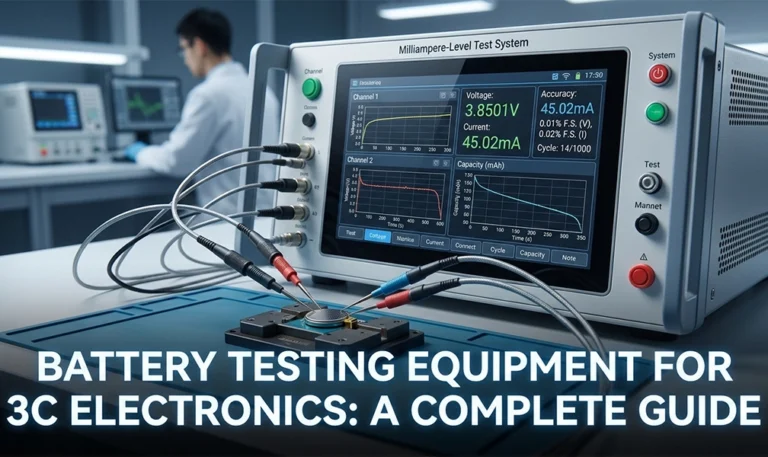
Before a Battery Energy Storage System enters commercial operation, manufacturers typically perform testing at multiple levels to verify safety, performance, and long-term reliability.
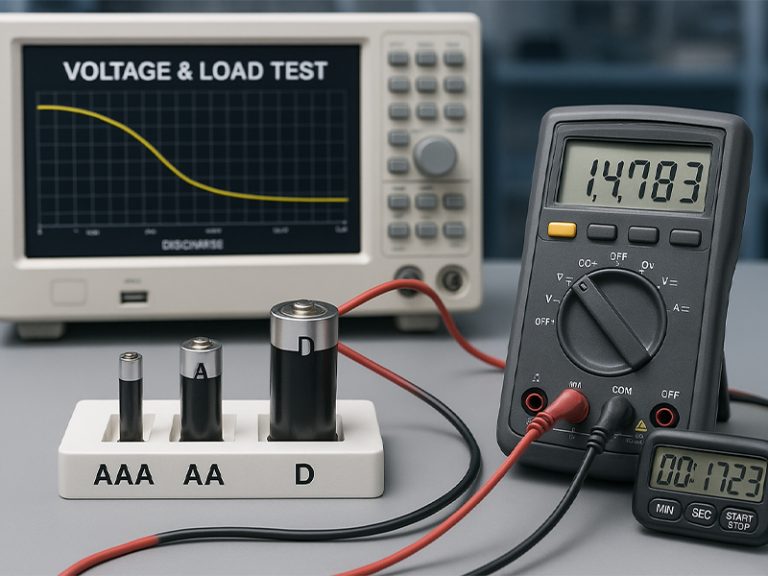
Cell-Level Testing
At the cell stage, engineers evaluate:
- Capacity
- Internal resistance
- Charge/discharge efficiency
- Cycle life
- Rate capability
The objective is to identify cell consistency and ensure every battery meets design specifications.
Module-Level Testing
Battery modules are tested to verify:
- Cell balancing performance
- Thermal distribution
- Communication reliability
- Mechanical integrity
Module testing helps identify issues that may not appear during individual cell testing.
Pack-Level Testing
At the pack level, testing focuses on:
- High-current operation
- Thermal management effectiveness
- BMS functionality
- Safety protection mechanisms
Engineers also simulate abnormal conditions such as overcharge, over-discharge, and short-circuit events.
System-Level Validation
The final stage evaluates the complete BESS, including:
- PCS performance
- EMS control strategies
- Round-trip efficiency
- Grid interaction
- Long-duration cycling
System-level validation ensures the energy storage system performs reliably under real-world operating conditions.
Conclusion
The infrastructure element that converts intermittent renewable energy generation into reliable energy is BESS — Battery Energy Storage System. It’s fundamentally a system comprising batteries, power electronics, and intelligent controls that together store electricity and provide it exactly when and where it’s required. Once you have a working knowledge of BESS, how it works, the cost, and the risks that must be managed, you can think about whether it’s the right investment for your residential, commercial, or utility-scale application.
FAQ
What subsidies, if any, does the Government offer, or do tax credits apply to BESS?
Yes, in many markets, sure. Under the Inflation Reduction Act, the federal Investment Tax Credit (ITC) provides a 30% tax incentive for installing a home battery storage system with solar. In 2023, standalone storage (without solar) was also made available. Numerous states provide extra rebates as well (California’s storage rebate program (SGIP) and New York’s rebate program are among the most generous). EU member states provide different degrees of support in their national energy transition programs. Please make sure you are eligible to purchase before you do, as the incentive structures are always changing.
What licensing/permit is needed to install a BESS?
Requirements differ from country to country, state to state, and municipality to municipality, but most will need a licensed electrician for the high-voltage connections, a building permit, and a utility interconnection agreement if the system is connected to the grid. Systems are usually required to be UL 9540 approved and to meet local fire ordinances (which may be based on NFPA 855). Permitting should be included as part of the service. If it is not mentioned, be sure to ask before entering into a contract.
Which of the following describes how BESS is used with solar panels?
The solar panels produce DC electricity, and a solar inverter transforms it into an AC power supply that is used in the home. A BESS stores power generated that the household does not use immediately, either as an AC-coupled configuration (inverter in BESS) or a DC-coupled configuration (Hybrid inverter). A slight improvement in efficiency is provided by DC coupling. The priority list is handled by the EMS: Firstly, power the home, secondly, charge the battery, thirdly, export to the grid. When the grid is not used, the BESS discharges during nighttime or during cloudy weather, before meeting household demand. This loop is what drives up the self-consumption rate from ~30% to 70%+.
Where does a BESS go when it’s time?
Cells that are less than 80% capacity can frequently be used for secondary life applications such as grid ancillary services, EV charging buffers or back-up power at lower cycling rates. Eventually, they are recycled where lithium, cobalt, nickel, manganese, and copper are recovered. Manufacturers are responsible for end-of-life collection and processing in the EU Battery Regulation and China policies. When comparing brands, inquire about any end-of-life terms in the warranty and whether the manufacturer offers a recycling program.
Will BESS function during a power outage?
Most grid-tied BESS systems have an automatic transfer switch that disconnects the home from the grid during an outage and automatically connects to the battery system in milliseconds. This is not supported by all systems; some entry-level AC-coupled systems need to be present in the grid to work. Another option to consider is whether the loss of power in an outage is a concern; ensure that the model you are considering has “islanding” or “off-grid” operation before you buy it.