The lithium-ion battery has become the heartbeat of our civilization in the modern era. Whether it is the smartphones we have stuck to our palms or the electric vehicles (EVs) that are transforming our highways, and the large grid storage systems that are flattening the renewable energy landscape, these electrochemical wonders are everywhere. However, despite their commonness, Lithium-ion batteries have always had a vexed secret: their medical condition is a black box.
Until recently, accurately determining the life of a battery, or when it would die, was more of a guess, based upon extrapolation of time-consuming laboratory tests that could be months. However, there is a tectonic change that is happening. The meeting of highly developed Machine Learning with electrochemistry has given rise to a new phase of accuracy. The main model of this revolution is a revolutionary AI model called DS-ViT-ESA.
This article has discussed how battery testing is changing due to this artificial intelligence breakthrough, reshaping the future of electric vehicles, and serving as a foundation of global sustainability.
The Black Box Problem: It is difficult to predict battery lifespan
The complexity of the problem being solved by AI requires one to comprehend the scale of the AI breakthrough. A lithium-ion battery is not a straightforward linear empty fuel tank. It is a complicated chemical milieu in which deterioration is non-linear based on a chaotic combination of variables.
The Chaos of Degradation
There are numerous internal mechanisms that degrade batteries. The active lithium is exhausted by the growth of the Solid Electrolyte Interphase (SEI) layer on the anode, gradually decreasing capacity. Thermal expansion may cause mechanical stress to crack electrode materials. The dendrites are small, needle-like lithium structures that may become short-circuited and grow.
These processes do not occur periodically. One might receive a battery that has a long life, 80 percent of which might be slow, and then, at a specific knee-point, the capacity may fall abruptly. These non-linear events are difficult to predict by conventional prediction methods that may be based on a simple count of voltages or a simple count of coulombs.
The Weaknesses of Traditional Testing
In the past, to establish the life of any battery, cycle aging tests were necessary. Manufacturers would load a lot of batteries and keep charging and discharging them until they died.
- Time-Expensive:It is slow (it may require months or even years) and slows down the time-to-market of new battery chemistries.
- Lack of Realism:Sometimes, constant currents and temperatures are used in lab tests. In practice, a battery is subjected to the winters that are freezing, summers that are scorching, Fast Charging of an aggressive character, and uneven usage behavior.
- Destructive:You would have to really destroy the test subject to find out how long it lasted, which is not of any use in determining the type of battery that a consumer has in his car.
The industry was in dire need of a non-destructive approach to looking at a fresh battery and forecasting its future in a very precise manner. End Artificial Intelligence.
Move to DS-ViT-ESA: The Vision Transformer Approach

The particular innovation that is rocking the industry is the DS-ViT-ESA model. This is an acronym that means Dual-Stream Vision Transformer with Efficient Self-Attention. Although the name is rather technical to hear, the idea of it is a graceful conversion of computer vision to energy data.
Treating Electricity like an Image
Conventionally, battery data (voltage, current, temperature) is a sequence of data as a time-series, such as a ticker tape of numbers. Nevertheless, the DS-ViT-ESA model adopts the alternative approach that is influenced by computer vision.
ViTs are the architectures of AI, which are intended to observe patterns in pictures. They divide an image into patches and compare the relation between them. The logic is applied to battery charging curves with the DS-ViT-ESA model. When voltage is plotted versus capacity during a charge cycle, it forms a certain curve. The image is a texture and shape curve for the AI. Minor peculiarities in this curve, which cannot be discerned by the human eye, are the fingerprints of the inward chemical condition of the battery.
The Self-Attention and Dual-Stream Power
The Dual-Stream architecture lets the model process information in two parallel lanes, simulating the way a human expert could analyze data, but with unlimited precision:
- Global Stream:This examines the macro-level- the general direction of the charging curve across time. It determines patterns of macro-level degradation.
- Local Stream:This is concerned with fine differences among single cycles. It captures the slightest noise or anomalies that usually lead to big failures.
The AI has at its disposal the so-called mechanism of the Efficient Self-Attention, which enables the allocation of significance to the various data points. The model is taught to ignore the irrelevant noise and hyper-concentrate on the particular voltage variations that indicate the growth of SEI or lithium plating, just as you might concentrate on the crack in a windshield instead of the clear glass.
The 15-Cycle Miracle
The most beautiful performance of this model is its speed. It has been shown that DS-ViT-ESA is able to forecast the total life of a lithium-ion battery based on the 15 charge cycles only.
It is known that an average battery can last between 1,000 and 3,000 cycles, so this implies that the AI will only need to monitor between 1 and 3 percent of the battery lifecycle to predict the other 97 percent. It is similar to a physician forecasting the life of a human being with great precision after taking a look at them during a few days of their childhood.
Radicalizing the Electric Vehicle (EV) Industry
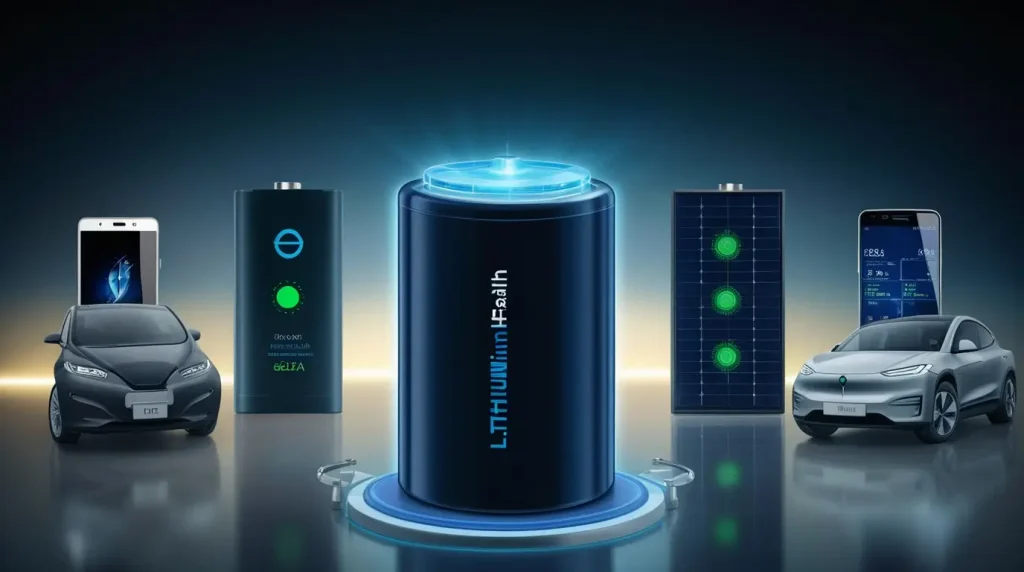
The automotive industry is the most benefited area in this advancement in Battery Testing and prediction. Battery is the most costly and a critical element as the world moves to Electric Vehicles.
Solving “Health Anxiety”
The phenomenon known as range anxiety (fear of running out of charge) is being slowly supplanted by the so-called health anxiety (fear of the battery wearing out too quickly). Present EV dashboards offer a single percentage of State of Health (SOH), which is both a simplistic indicator and can be inaccurate.
Cars would be able to give a dynamic and highly accurate prediction of Remaining Useful Life (RUL) with the integration of AI models such as DS-ViT-ESA with the Battery Management System (BMS). A driver might receive a warning: “According to your usage of fast charging in the recent past, it is estimated that the battery will last 8 years. This may be extended to 10 years in case of switching to standard charging. This openness enables customers to make a wise choice regarding their usage.
Delivering a Revolution in the Used EV Market
The resale market is one of the greatest EV adoption obstacles. Customers are afraid to buy a used EV and realize that the battery will require replacement with a $15,000 transaction after a month.
Artificial intelligence (AI) makes it possible to have such a thing as Battery Health Certificates. A car dealership might insert the car into a diagnostic device that executes the AI model on its current history, which creates a verified record of its probable lifespan. Such openness would stabilize the prices of used EVs and create consumer trust, without which it is impossible to mass adopt electric transport.
Enabling Safer Fast Charging
Fast Charging is fast and inconvenient, but stressful to batteries chemically. It is heat-generating, and it can push the lithium ions to accumulate on the anode surface (plating) instead of them accumulating into the structure.
Adaptive Fast Charging can be supported by AI models. The BMS may implement real-time health predictions to alter the speed at which milliseconds are charged instead of using a fixed charging profile. In case the AI notices the microscopic indications of lithium plating at an early stage, the current can be throttled immediately, which means that the charge can be as rapid as possible without the need to damage it.
Grid Storage and Renewable Reliability
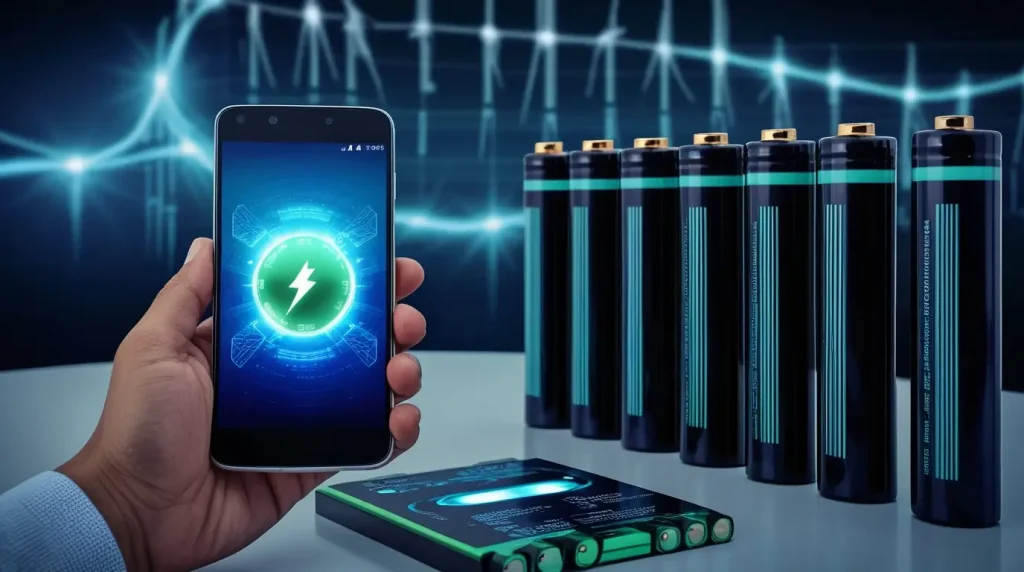
EVs get the media attention, but the key to a green energy future lies in Grid Storage. The storage of solar energy during the night and wind energy during calm days needs to be stored in massive banks of lithium-ion batteries.
Maximum scale Predictive Maintenance
In the case of utility companies that may be handling gigawatt-hours of storage, a battery breakdown can trigger a chain reaction or fire risk. Millions of separate cells can be monitored on a granular basis with the DS-ViT-ESA model.
Ageing cells – The operators have the ability to detect so-called weak link cells that age faster than their peers and replace them early in a scheduled maintenance, instead of letting them fail disastrously. This consistency is very important in stabilizing the grid and also in achieving Sustainability targets.
Maximizing Economic Payoffs
The grid batteries work on a thin margin; they can go out to purchase electricity when the price is low and then sell the same electricity when it is high (arbitrage). Nevertheless, violent bicycling depreciates the property. Using AI prediction, the operators can estimate the cost of degradation of each transaction. The system could make the decision: Sale of the energy would make us $100 in profits, but would result in $120 in wear on the battery. We will hold.” Such economic intelligence can only be achieved by the use of very precise lifespan prediction.
Sustainability and a Second-Life Battery Economy
Probably the greatest influence of good battery forecasting is in Sustainability and the circular economy.
The Grading Challenge
Once an EV battery reduces its capacity to 80 percent, it is considered to be incompetent to support the high-power requirements of a car. Nevertheless, it also has huge prospects of lower-energy requirements, such as residential power storage or driving streetlights. It is referred to as second-life use.
The difficulty has been in grading such used batteries. A Tesla battery pack that has been crashed may appear like a normal one externally, but is it internally scarred? Recyclers must treat all used batteries with caution, even without proper tests, which often leads to the shredding of packs that still have years of life.
Artificial Intelligence as the Intermediary of Circularity
Recyclers are able to test used modules fast with models such as DS-ViT-ESA. A handful of cycles allows the AI to match the grades of the batteries:
- Grade A:Refurbished automobiles may be resold.
- Grade B:Ideal to store at home (Powerwalls).
- Grade C:Industrial backup, low power.
- Grade D:End life, sent to be recovered.
The accurate sorting will stop premature recycling, and thus the carbon footprint of a new battery produced will be greatly minimized. It guarantees that we make the most out of every electron of value out of the lithium, cobalt, and nickel that we extract from the earth.
Future of a Battery Digital Brain
The DS-ViT-ESA is not an independent system itself, but the predecessor to the Battery Digital Brain. We are heading in the direction of a situation in which all batteries have an equivalent in the cloud.
The digital twin will constantly consume the data on the physical battery, which will constantly update the prediction of its lifespan. It will take the experience of the millions of other batteries in the network. When a particular lot of cells in Norway begins malfunctioning because of cold weather, the AI can immediately modify the charging specifications of comparable vehicles in Canada to safeguard them.
Challenges Ahead
Although the promise is enormous, difficulty still remains.
Computational Power: The processing power needed to run Vision Transformers that are complex is large. One of the major engineering challenges is optimization of these models to achieve execution in embedded chips in the BMS of a car (Edge AI).
Privacy of data: The charging history of a battery tells a lot about the behavior/location of a person. The most important thing is to secure this data.
Generalization: Although DS-ViT-ESA demonstrates such good “zero-shot” generalization (can work on charging speeds it has not observed before), it needs to demonstrate itself in the thousands of different battery chemistries (LFP, NMC, NCA), which are changing each year.
结论
A superpower is predictive ability of the future, and in the case of the energy industry, the superpower has arrived. The DS-ViT-ESA model is a paradigm shift in Battery Testing and the last stage of reactive guesswork to proactive precision.
This AI innovation is eliminating the technological and economic bottleneck that slows down the shift towards green energy by giving an accurate prediction of Lithium-Ion Lifespan using only a fraction of the data. It has guaranteed safer Electric Vehicles, more stable Grid Storage, and a truly circular economy where waste is reduced to the minimum.
By being on the brink of complete electrification, it is also evident that the software that drives the hardware in the future will define what it will be. Revolution in battery health does not simply have to do with improved chemicals but with smarter code. And under the leadership of AI, the future of the energy industry is not only cleaner but much longer.
常见问题
What is the difference between the battery life predicted by the DS- ViT-ESA model and the traditional techniques?
It does not destroy the battery, instead analyzing voltage curves as an image with computer vision, recognizing patterns of degradation in the microscopic detail without having to ruin the battery.
What is the speed of this AI model to ascertain the overall lifespan of a battery?
The model is able to predict the full remaining useful life of a battery based on data of at least 15 charge cycles, which slashes the time needed to test a battery significantly.
Will this technology be able to assist me in case I would like to purchase an Electric Vehicle that is used?
Indeed, it is capable of creating accurate “Battery Health Certificates” that will tell you the actual remaining life of the battery in a used EV, and keep read of purchasing a battery on its deathbed.
What is the value of proper lifespan forecasting on the environment?
It gives the recyclers an opportunity to grade used batteries to be used in the second life such as grid storage rather than shredding the batteries, which guarantees that we do not waste the value of every mineral mined.