Battery anxiety, stemming from concerns about immediate range to long-term viability, has been the most significant barrier to the widespread adoption of EVs. The prevailing myth suggests that EV batteries suddenly die or become unstable after 3 to 5 years. However, real-world aging data is debunking this narrative.
Unlike smartphone batteries, EV traction batteries are industrial-grade power boxes, now designed with cells projected to outlast the mechanical life of the vehicle chassis.
Wondering how long do EV batteries last? In this article, you’ll learn the difference between a battery’s calendar life, cycle life, and other methodologies used to evaluate lifespan. By the end, you can accurately picture what “end of life” looks like for your EV batteries and the factors that can extend or reduce this time.
How Long Do EV Batteries Last? The Quick Verdict
Modern EV batteries are engineered to last for about 15 to 20 years. At this rate, you can expect about 150,000 to 300,000 miles of utility before the battery reaches its End of Life (EOL) threshold.
Almost all EV battery manufacturers offer a warranty period of 8 years or 100,000 miles. They guarantee that your battery will maintain at least 70% of its original capacity by this time. However, this guarantee represents a conservative floor, not the ceiling for battery performance.
As EV batteries approach the end of life, they don’t suffer a catastrophic failure; they simply fade. Your battery doesn’t just stop working; it just takes you less distance than it did on the first day.
The Baseline: Quantifying Normal Degradation
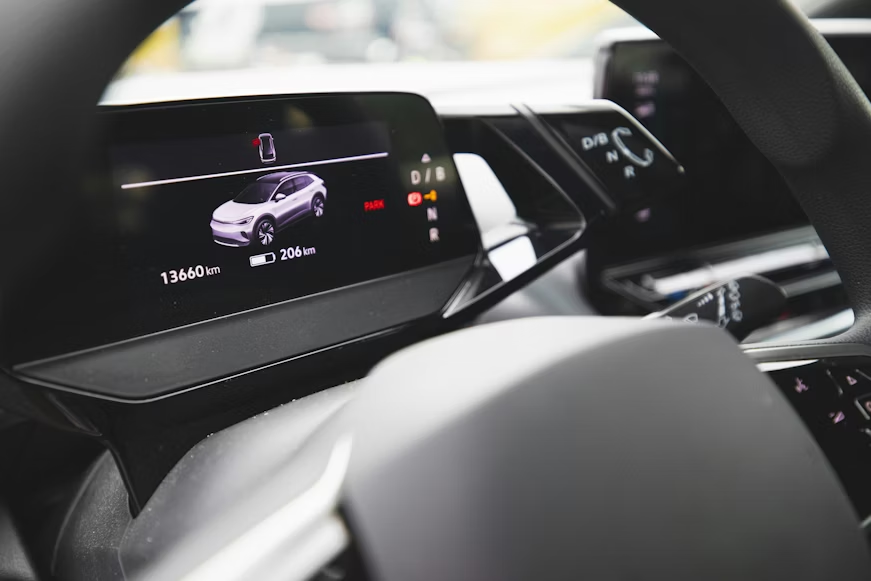
Degradation is a primary determinant of EV battery lifespan. But to understand EV battery longevity, we must move away from an arithmetic calculation of degradation rate and adopt the engineering metric of State of Health (SOH).
This metric is a dynamic ratio that compares the battery’s current maximum capacity to its original capacity after production. SOH is expressed as a percentage. However, the percentage does not decline linearly from the initial years to the end of life; it follows an S-curve.
The S-Curve of EV Battery Degradation
During degradation, most lithium-ion traction batteries follow a non-linear trajectory called the S-curve. This curve includes three main stages:
- The Setting-In Phase
This covers the initial years of the batter (12-24 months). Here, you’ll observe a slightly accelerated capacity loss of around 2-5%. In this phase, the Electrolyte Interphase (SEI) layer stabilizes and consumes a small portion of the available lithium content.
- The Cruise Phase
This phase follows stabilization, when your battery enters a long, stable plateau. Here, a modern battery loses only about 1.4-2.3% of its capacity annually. This phase is referred to as the linear maturity stage and accounts for the majority of the vehicle’s functional life.
- The Wear-Out Phase
A battery enters this stage after about 15 years or more than 300,000 kilometers. In this stage, its internal resistance increases significantly due to chemical and mechanical stresses. At this point, the decline in capacity retention becomes more noticeable, signaling the battery’s end of life (EOL).
Defining End of Life for EV Batteries
Unlike with consumer electronics, the end of life (EOL) of traction batteries is not determined by their inability to provide power but by a defined level of utility.
Most manufacturers set the EOL benchmark at 70-80% SOH. This is the point at which the battery is considered to have insufficient capacity for the vehicle’s prescribed range.
However, an EV battery at the end of life is not completely degraded; it remains a highly functional energy storage asset. For example, a 60kWh battery at 70% SOH retains about 42kWh of storage. This storage level is more than enough for high-level second-life applications, such as a commercial backup power system.
Critical Factors Influencing EV Battery Lifespan
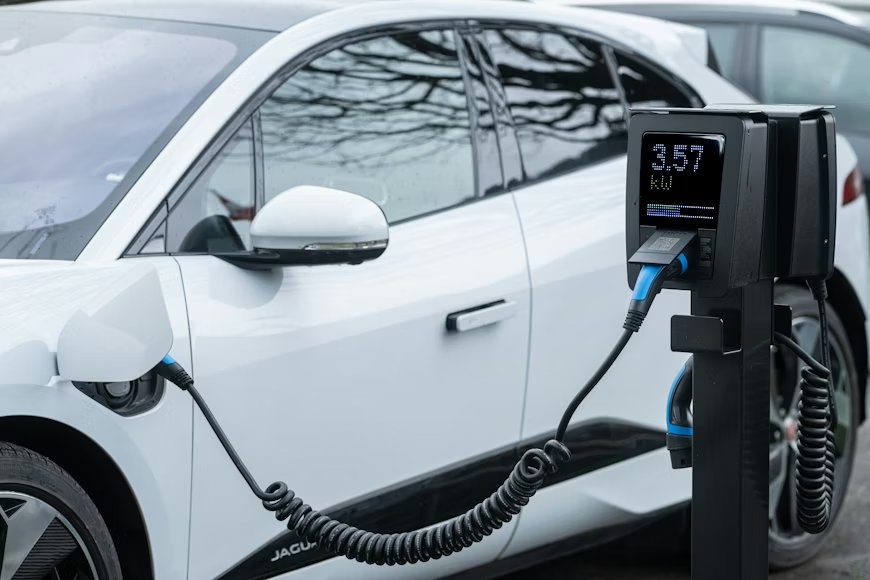
The modern EV battery is a complex, active system whose lifespan is influenced by the electrochemical stressors driving degradation. In this section, we’ll explore some important factors that determine lifespan and longevity.
Thermal Management
Thermal management is the most important factor in maintaining an EV battery’s SOH. While excess heat can lead to fragmentation of electrode materials, excessive cold can also increase resistance that drains performance.
Therefore, ideal thermal management requires more simple cooling. This led to the development of the thermal brain in traction batteries. The thermal brain controls modern systems designed to maintain optimal core temperature around 25°C.
For example, systems now actively use motor waste heat to warm up batteries in winter. Similarly, charging systems also account for the enthalpy of reaction to detect thermal lag for effective cooling before permanent damage occurs at the cell separator.
State of Charge (SoC)
Stress from State of Charge (SoC) is another factor affecting battery longevity. However, the widely quoted 20-80% rule is usually oversimplified. In reality, the stress is not caused by absolute percentages, but by the duration in which the battery remains in high or low-energy states, that is, near 100% or 0% SoC.
Calendar aging occurs when a battery sits at 100% SoC. That is because it maintains a high chemical potential that encourages the growth of the SEI layer. This increases its internal resistance and permanently consumes the lithium content, reducing the battery’s calendar life.
However, degradation does not just occur when you attain high or low energy states. It only occurs when your battery is habituated or spends most of its resting time at these extremes – short, infrequent cases are negligible.
For long-term storage, professionals recommend keeping your battery at approximately 50% SoC to maintain chemical stability and ensure longevity.
High-Power DC Fast Charging
Charging power is now a critical operational stressor for EV batteries. While DC Fast Charging (DCFC) is important, current data indicates that frequent reliance on ultra-fast chargers is associated with a measurable increase in degradation.
EV batteries on vehicles that rely heavily on DCFC charging experience an average annual degradation of approximately 3.0%. In contrast, vehicles primarily using AC or lower power charging degrade at approximately 1.5%.
Once your EV uses an ultra-fast charger for more than 12% of its charging sessions, you’re trading the battery lifespan for fast-charging.
The Impact of Battery Chemistry
While all traction batteries are lithium-ion batteries, different types are made with different recipes. Unfortunately, these different batteries are not built with the same longevity in mind. Two of the most common battery types are Nickel Manganese Cobalt (NMC) and Lithium Iron Phosphate (LFP) batteries.
NMC battery offers higher energy density. So it comes in smaller packs that offer a higher range. However, its internal structure is quite fragile, causing lattice fatigue during use. Therefore, while it performs better, it requires stricter maintenance to run a 15+ lifespan. You must avoid 100% charges and minimize high-speed charging.
In contrast, LFP batteries offer durability and safety. It has a robust internal structure that can withstand 100% charging daily without chemical fatigue. So, while it is physically larger and offers less range, it outlasts NMC batteries in terms of cycle count.
With NMC batteries, lifespan is extended by user behaviour, especially charging habits. Conversely, the hardware of LFP batteries dictates their effective lifespan. So, when buying a used EV, knowing whether the battery is NMC or LFP can help you estimate the remaining EV battery cycle life most accurately.
Comparing Real-World Perspectives
When we compare lab-based specifications with real-world user experience, a fascinating trend emerges. Data from diagnostic firms, EV producers, and users show that EV battery health consistently outperforms expectations.
On many forums, the consensus has shifted from fear to keen observation as more EV owners with over 100,000 miles report that their batteries retain between 85 and 95% of their original capacity.
User reports also show that mileage is a poor predictor of electric car battery life. Drivers report that a 5-year-old, high-mileage fleet vehicle can show a higher SOH than a 10-year-old vehicle in the driveway. This supports the fact that how a car is charged, and the climate where it is parked matters more than the odometer reading.
Many owners also note that while a few percent of range loss appears on their dashboards, it rarely affects daily utility. Even after 100,000 miles, some users say it’s hard to tell the difference from the first day of use.
Seasoned owners are also vocal about the fact that sudden failure is quite rare and is more likely caused by manufacturing defects covered under the EV battery warranty rather than by natural degradation.
If you’re concerned about the battery inspection for a second-hand EV, the common recommendation is to request SOH certificates from a third-party diagnostics service.
Why EV Battery Lifespan is Cut Short
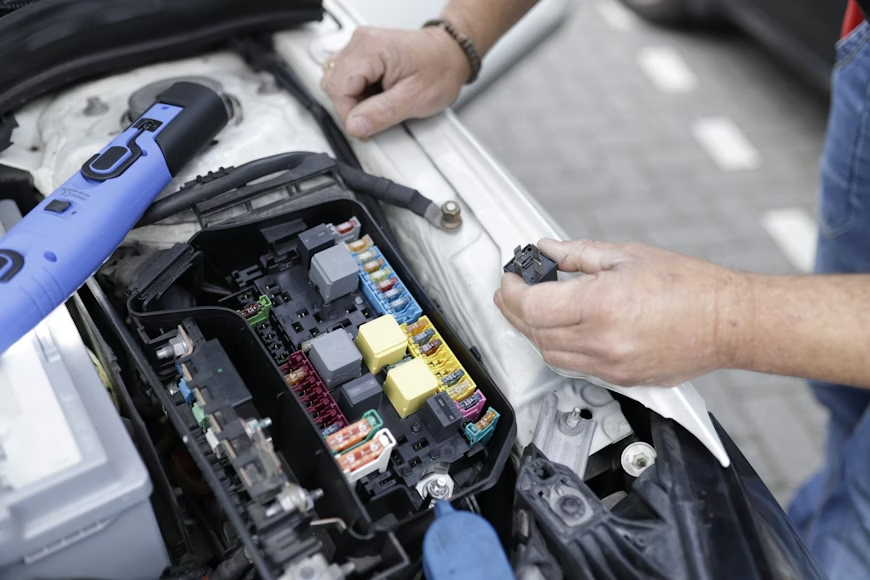
In a perfect scenario, every battery would follow the S-curve of degradation. But sometimes premature failures occur, cutting battery lifespan. These are not caused by too much driving but by a specific chemical or mechanical trigger. In this section, we’ll consider two things that primarily kill an EV battery.
- Lithium Dendrite Growth
Dendrites are tiny, needle-like structures that grow on the anode during charging. They are mostly caused by lithium plating due to constant overcharging or forcing current into a cold battery.
During growth, dendrites can pierce the anode and cathode separators, forming an internal short circuit that causes rapid self-discharge.
- Manufacturing Defects and Moisture Ingress
Although rare, tiny contaminants, such as a speck of dust or a copper particle trapped during assembly, can cause failure later.
For example, moisture can enter the battery if the casing loses it hermetic seal, either due to debris damage or corrosion. When water enters the battery and reacts with the electrolytes, it creates hydrofluoric acid that corrodes the electrodes, leading to rapid, unexplained capacity loss.
The table below outlines some main causes of EV battery failure and their warning signs:
| Failure Mode | Primary Cause | Warning Sign |
| Cell Imbalance | Manufacturing variance / BMS error | Rapid drop in “estimated range” |
| Lithium Plating | Extreme cold + High-power charging | Sudden 10-15% drop in SOH |
| Thermal Fatigue | Frequent DCFC without cooling | Increased fan noise / Charging speed throttling |
| Isolation Fault | Moisture ingress / Physical damage | System “Error” code; vehicle won’t start |
To reduce failures, EV battery manufacturers have adopted Cell-to-Pack (CTP) designs that offer better thermal isolation. This design ensures that a single-cell failure no longer requires a full-pack EV battery replacement, extending EV battery life, even when issues arise.
结论
While manufacturers estimate a 15 to 20-year lifespan for EV batteries, the actual lifespan depends on a collection of factors, from thermal management to charging habits. The fact remains that EV battery degradation is manageable. With the right charging habits and proper thermal management, your battery lifespan can be optimized to cover the vehicle’s intended life and beyond.
常见问题
- Does fast charging always damage EV batteries?
No, fast charging does not necessarily damage batteries; it only accelerates wear when used exclusively. High-current charging increases battery temperature, which can lead to dendrite formation that harms the battery.
- Why is 70-80% SOH considered the End of Life of a Vehicle?
At 70% SOH, a battery’s internal resistance increases, so it can no longer provide power as quickly as it should. Additionally, the reduced range may no longer meet the vehicle’s original mission profile.
- What is the difference between calendar and cycle aging?
Calendar aging is the degradation that occurs when a battery is at rest, typically due to time, temperature, and state of charge (SOC). In contrast, cycle aging is the degradation caused by the physical movement of lithium ions during charge and discharge.