Today, the EV industry has reached a pivotal point. While the last decade focused primarily on transitioning from internal combustion engines to electric-powered vehicles, that focus has now shifted toward deep technical optimization of EVs, especially regarding charging latency and service range.
At CATL Tech Day 2026, CATL introduced two major EV battery technologies: a battery capable of charging from 10% to 98% in about 6 minutes, and a condensed matter battery with a claimed range of up to 1500km.These technologies are significant because they address two major barriers to EV adoption: charging speed and driving range.
For engineers, researchers, and EV enthusiasts, these headline features are impressive. But the real interest is in the underlying chemistry, thermal management, and validation workflow protocols that support mass production. This article will explore these areas of interest to reveal whether these technologies are true industry game changers or simple lab developments. Read on to find out!
Is 6-Minute Charging and 1500km Range a True Game Changer for EV Batteries?
The simple answer is yes! But to understand why this is a game-changer, we must look at the electrochemical strategy. Previously, battery manufacturers had to choose between power density (fast charging) and energy density (long range). CATL has bypassed this binary choice through its flagship lines: the third-generation Shenxing, the leading ultra-fast-charging battery, and the Qilin Condensed, a high-energy-density battery platform designed for long-range EV applications
To achieve a 6-minute charge, CATL designed the Shenxing battery with optimized LFP cells for ultra-fast charging battery applications.
From a charging perspective, the 6-minute EV charging milestone (reaching 98% SOC) fundamentally alters the requirements for public infrastructure. This necessitates a shift toward Megawatt Charging Systems (MCS). The engineering challenge involved managing the CATL 6-minute charging degradation through a CATL claims 0.25mΩ internal resistance. By maintaining such low resistance, CATL ensures that the battery performance remains consistent over 1,000+ extreme cycles.
For longevity, CATL unveiled the Qilin Condensed Matter technology for long-range EV battery demands. For the first time, a 1000km EV range is achievable without the prohibitive weight penalties that typically degrade vehicle dynamics.
These technologies allow CATL to effectively address different market tiers simultaneously. Thus, the innovations unveiled at the CATL Tech Day 2026 help narrow the usability gap between EVs and internal combustion vehicles.
| Feature | Shenxing Battery | Qilin Condensed Battery |
|---|---|---|
| Main Goal | Ultra-fast charging | Ultra-long range |
| Chemistry | LFP | Condensed matter |
| Charging Speed | ~6 minutes | Standard |
| Claimed Range | Standard EV range | Up to 1500km |
| Main Engineering Challenge | Thermal management | Energy density stability |
The Physics of the 6-Minute Charge
The 6-minute EV charging milestone making headlines from the CATL Tech Day simply describes the time required to charge the battery from 10% to 98% SOC, which is estimated at 6 minutes and 27 seconds.
This is a direct result of CATL’s improved Super Charging architecture in the third-generation Shenxing battery. To achieve this design, CATL engineers had to overcome internal resistance and lithium plating — the primary enemies of ultra-fast battery charging.
At high charge rates, there is usually high internal resistance within battery cells, which increases heat generation. However, in the Shenxing battery, CATL achieves a record-low resistance of about 0.25mΩ — 50% lower than in the previous generation — even at high charging rates.
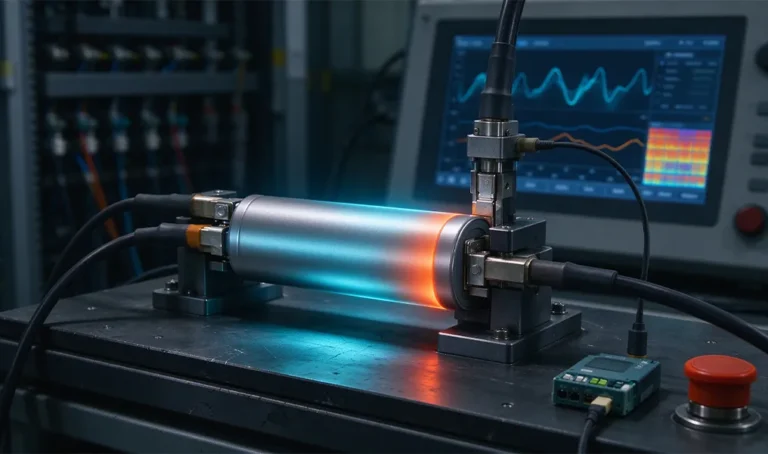
This allows their fast-charging battery to absorb energy at high rates (up to 15C) without overheating or damaging the LFP cells. They introduced a thermal-electrical separation design to effectively manage these thermal loads during such an aggressive charge.
Unlike in traditional packs, where the electrical connectors and cooling channels are compacted together, this battery pack features independent sealed exhaust channels for each cell. This design keeps heat and electricity on separate paths, preventing localized hotspots that accelerate cell degradation.
The battery also features ion-path technology that creates a highway for lithium ions using a nanocrystallized material surface on the cathode. This technology reduces the overpotential required for charging and, in turn, reduces lithium buildup on the anode.
As a result, testing CATL EV batteries at extreme rates reveals that the battery can maintain stability even in extreme weather conditions. At -30°C, it can still charge from 20% to 98% in about nine minutes.
Breaking the Energy Ceiling: How CATL Achieved the 1500km Range
The 1000km EV range was once considered the theoretical limit for lithium-ion EV battery systems. However, CATL has now bypassed this energy ceiling by moving from liquid-electrolyte to condensed matter chemistry for the traction battery.
The Qilin Condensed Battery unveiled at the CATL Tech Day 2026 achieves a massive density of 350Wh/kg and a volumetric density of 760Wh/L. This is possible only due to the application of aviation-grade condensed matter technology in passenger vehicles. So, for a sedan, this produces a long-range EV battery capable of 1500km on a single charge — about double the average range of current high-end EVs!
To accommodate this high energy density, the Qilin battery features a high-nickel cathode paired with a low-expansion silicon-carbon anode. But Silicon anodes naturally expand during lithiation, which can cause mechanical failure. Thus, CATL uses a compressed gel electrolyte to provide a structural buffer to accommodate this expansion while maintaining high ionic conductivity.
Also, this semi-solid electrolyte is leak-proof and non-flammable, allowing engineers to increase voltage windows without the risk of thermal runaway common with liquid electrolytes. Therefore, the transition to compressed gel electrolytes also increases the safety of these EV batteries.
The Qilin EV battery performance is further improved by the Cell-to-Chassis (CTC) integration. By eliminating the boundary between the vehicle frame and the battery pack, CATL reduces the total pack weight enough to improve 0-100km/h acceleration by about 0.6 seconds, without compromising handling or braking efficiency.
Testing the CATL 6-Minute Fast Charging Battery
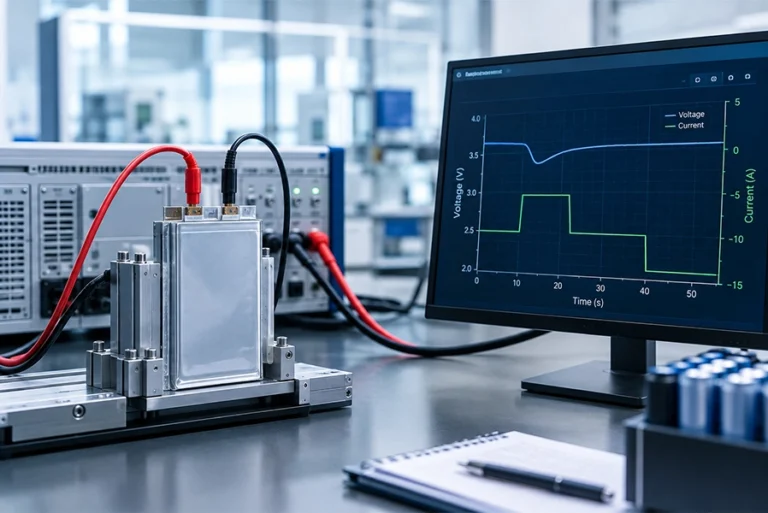
To validate the 10C equivalent and 15C peak charging rate of the third-generation Shenxing battery, CATL fast charging battery testing protocols include real-time stress simulations. The primary goal of this rigorous testing is to confirm the stability of the 0.25mΩ internal resistance across varying States of Charge and environmental temperatures.
Engineers testing CATL EV batteries will use high-precision Electrochemical Impedance Spectroscopy (EIS) to map the movement and behavior of lithium ions at the electrode interface. The system will also monitor the extra voltage required to drive the electrochemical reaction to ensure that it does not exceed the threshold that triggers lithium plating.
Another important component of the CATL battery performance validation is the “1,500 joules.” Although the National Standards for impact test only require a 150 Joules test, CATL’s safety protocol for the Shenxing and Qilin lines adopts a ten times more rigorous bottom-coating impact test. This is to ensure that the battery’s cooling plates and composite current collectors remain intact even under severe mechanical deformation.
Data from these tests will be handled by an could be analyzed through AI-driven validation platforms. Analysis of the data will be used to fine-tune the Battery Management System (BMS) algorithms to optimize power delivery limits without compromising the structural integrity of the battery cell.
Validation and Compliance: Meeting Global Standards
As you may have guessed, for CATL to deploy these technologies globally, their battery performance validation must align with the strictest international standards. Every battery pack, whether it’s the third-gen Shenxing or the Qilin Condensed Battery, must undergo a series of tests to ensure its safety for public roads.
First, the batteries must meet the UN38.3 standards — the global benchmark for transportation safety. Here, the T.5 and T.7 tests, which test for external short circuit and overcharge, are most critical for the fast-charging batteries. However, the Thermal-Electric Separation design in CATL’s generation batteries ensures that heat is vented away before triggering a chain reaction, even when a cell is pushed to its electrical limit.
Next, the batteries must meet the IEC 62660-3 and ISO 6469-3 safety standards. These standards verify that the high voltages are properly isolated. Long-range EV batteries like the Qilin battery lines also need UL 2580 certification to validate mechanical integrity and fire suppression capabilities in large-scale packs.
Since EV batteries are often judged by their worst-case scenarios, when determining safety, CATL’s ‘No Propagation” technology is a solid safety guarantee, ensuring SAE J2929 compliance.
Conclusion
The technologies unveiled at the CATL Tech Day 2026 represent a significant milestone in the development of EVs, especially in optimizing performance and combating range anxiety and charging downtime. CATL’s technology has brought the theoretical future of ultra-fast charging batteries and long-range batteries for transcontinental EV travels closer to a mass production reality.
The Shenxing and Qilin platforms prove that high-energy-density batteries don’t need to sacrifice longevity. With a CATL battery cycle life that retains 90% health after 1000 extreme cycles, CATL offers a significant development that eliminates the last remaining advantages of the internal combustion engine.
FAQs
Does extreme fast charging significantly impact the CATL battery cycle life?
CATL claims the Shenxing battery retains over 90% capacity after 1,000 high-rate charging cycles. Despite the aggressive 10C rates, the CATL 6 minute charging degradation is mitigated by a self-repairing electrolyte and “thermal-electrical separation” cooling.
Can the 1000 km EV range be maintained in extreme cold?
While all batteries experience reduced efficiency in cold climates, the third-generation Shenxing and Qilin lines feature an integrated thermal management system that can heat cells at 7°C per minute. This allows a fast-charging EV battery to maintain consistent performance even at -30°C, enabling it to reach 20% to 98% SOC in approximately 9 minutes.
How does CATL achieve a 6-minute charge without triggering lithium plating?
The 6-minute EV charging capability of the Shenxing III is enabled by a multi-gradient porous electrode and a “fast-ion ring” coating on the graphite anode. This reduces the kinetic barriers for lithium-ion intercalation. During CATL fast charging battery testing, it was confirmed that these features maintain the anode potential above the lithium plating threshold, even at a 10C charging rate.