Battery testing equipment is used to evaluate the electrical, electrochemical, thermal, and lifespan characteristics of batteries. Depending on the battery type and its development stage, a variety of measurements can be performed, including voltage, current, capacity, energy efficiency, internal resistance, cycle life, and temperature.
Battery testing equipment has a wide range of applications, including but not limited to the development and testing of battery chemistries, electric vehicle battery pack testing, and energy storage system testing. Cell-level testing requires precise current measurement at low currents, while testing of modules, battery packs, and high-voltage energy storage systems requires high voltages and high currents.
This guide will introduce you to the main types of battery testing equipment, testing techniques, application examples, and test system specifications to consider.
What Is Battery Testing Equipment?
A battery testing system is a device used to control and monitor a battery’s electrical and operational parameters and to collect test data. Depending on the test objectives, the system controls charging and discharging currents, voltages, power, and test cycles, while recording parameters such as capacity, energy, efficiency, temperature, and internal resistance.
Battery testing equipment is widely used throughout the entire battery R&D and manufacturing process, ranging from material and cell testing to the validation of modules, battery packs, and energy storage systems.
The required equipment depends largely on the battery’s size and the testing objectives. Laboratories require precision cell testers for early-stage chemical performance development, while manufacturers of electric vehicles or energy storage systems need high-voltage, high-power battery testing systems.
| Testing Level | Typical Application | Equipment |
|---|---|---|
| Cell | Chemistry R&D, cell qualification | Cell Battery Tester |
| Module | Module validation | Battery Module Test System |
| Pack | EV and ESS pack testing | Battery PACK Test System |
| Cluster | ESS cluster testing | High-Voltage Battery Cluster Test System |
| System | Containerized BESS testing | Container BESS Test System |
Types of Battery Testing Equipment
Battery testing equipment varies significantly depending on the battery size, voltage range, current requirements, and testing objective. The main categories include cell-level testers, battery cyclers, formation systems, module and pack test systems, high-voltage systems, and specialized electrochemical and environmental testing equipment.
Battery Cyclers
Battery cyclers are used to repeatedly charge and discharge batteries under controlled conditions. They are commonly used for capacity testing, cycle life testing, rate capability evaluation, and battery aging studies.
A battery cycler typically controls current, voltage, power, and charging or discharging profiles while recording the battery’s response over time.
Battery Formation and Grading Systems
Formation and grading systems are primarily used during battery manufacturing. Formation establishes the initial electrochemical characteristics of a cell through controlled charging and discharging, while grading evaluates parameters such as capacity and internal resistance to classify cells with similar performance.
Accurate formation and grading help manufacturers identify variations between cells before they are assembled into modules and battery packs.
Battery Module and Pack Test Systems
High-voltage battery test systems are designed for applications where battery packs operate at hundreds or even thousands of volts. They are commonly used for EV battery packs, high-voltage energy storage systems, and other large-scale battery applications.
These systems need to provide accurate voltage and current control while maintaining appropriate safety functions, data acquisition, and communication with the battery management system.
EIS Testing Equipment
An electrochemical impedance spectroscopy (EIS) testing system determines a battery’s electrochemical performance by measuring its impedance response at different frequencies. Unlike traditional charge-discharge testing, EIS provides deeper insights into the internal operating mechanisms of a battery.
Environmental and Thermal Testing Equipment
Environmental and temperature testing equipment is used to evaluate battery performance under various temperature and environmental conditions. Since battery performance can vary with temperature, it is essential to conduct environmental testing on batteries.
Testing Methods
Research into battery chemistry relies on reliable experimental data to understand how battery materials, design, and operating conditions affect performance. A variety of testing methods enable scientists to understand a battery’s electrochemical characteristics, degradation processes, and reliability.
By conducting multiple tests simultaneously, it is possible to determine whether a particular battery chemistry system possesses a reasonable combination of all necessary characteristics.
| Testing Method | What It Measures | Typical Application |
|---|---|---|
| Capacity Test | Capacity and energy | Cell, module, pack |
| Charge/Discharge Test | Voltage, current, power | Performance evaluation |
| Cycle Life Test | Capacity retention | Aging analysis |
| DCIR Test | Internal resistance | Power and degradation |
| EIS | Electrochemical impedance | Chemistry research |
| Thermal Test | Temperature behavior | Safety and thermal management |
| Fast-Charging Test | High-rate charging behavior | EV battery development |
Charge and Discharge Performance Testing
Charge and discharge testing is one of the most fundamental methods used in battery research.
By applying controlled charging and discharging cycles, researchers can evaluate key performance indicators, including:
- Battery capacity
- Energy efficiency
- Voltage characteristics
- Rate capability
- Power output
This testing helps determine whether a new electrode material or electrolyte formulation can deliver the expected electrochemical performance.
For example, researchers developing high-energy-density lithium-ion batteries may compare different cathode or anode materials by analyzing capacity retention and voltage behavior under different charge and discharge conditions.
Battery testing equipment provides precise control of current, voltage, and test profiles, allowing researchers to compare different battery chemistries under consistent conditions.
Cycle Life and Degradation Testing
Long-term durability is one of the biggest challenges in battery development.
A battery may show excellent initial capacity but experience rapid degradation after repeated cycling. Cycle life testing helps researchers understand how battery performance changes over time.
During cycling tests, battery testing systems continuously monitor:
- Capacity retention
- Charge and discharge efficiency
- Internal resistance growth
- Voltage changes
These results help researchers identify degradation mechanisms, such as:
- Loss of active lithium
- Electrode structure damage
- Electrolyte decomposition
- Interface instability
By analyzing degradation patterns, engineers can improve material selection and optimize battery designs for longer service life.
Internal Resistance and Impedance Testing
Internal resistance is an important indicator of battery performance and aging.
As batteries degrade, resistance typically increases, causing:
- Higher energy loss
- Reduced power output
- Increased heat generation
Battery researchers use resistance measurements and electrochemical impedance analysis to understand changes inside the cell.
These tests help evaluate:
- Electrode kinetics
- Charge transfer behavior
- Electrolyte stability
- Aging mechanisms
For advanced battery chemistries, impedance analysis provides valuable information that cannot be obtained through capacity testing alone.
Thermal Performance and Safety Testing
Temperature has a significant impact on battery performance, lifetime, and safety.
During battery chemistry research, thermal testing is used to evaluate how cells behave under different operating conditions, including high current charging, fast discharge, and extreme temperatures.
Researchers analyze:
- Temperature rise during operation
- Heat generation characteristics
- Thermal stability
- Performance changes at different temperatures
This information is critical for developing safer battery materials and improving thermal management strategies for EV and energy storage applications.
Coulombic Efficiency and Energy Efficiency Testing
Coulombic efficiency measures the ratio between the charge stored during discharge and the charge supplied during charging.
Although the difference may appear small during early cycles, even minor efficiency losses can accumulate over thousands of cycles and significantly affect battery lifetime.
High-precision battery testing equipment allows researchers to measure small variations in efficiency and evaluate:
- New electrode materials
- Electrolyte formulations
- Battery aging behavior
This is especially important for next-generation batteries where researchers need to identify small improvements in chemistry performance.
Fast-Charging and High-Power Testing
As EV manufacturers pursue shorter charging times, battery chemistry must maintain performance under high charging rates.
Fast-charging tests evaluate how batteries respond to increased current levels and help identify potential issues such as:
- Lithium plating
- Excessive heat generation
- Capacity loss
By simulating real-world charging conditions, researchers can optimize electrode structures and charging strategies while maintaining battery safety.
Speeding up the Process of Verifying New Materials
Developing a new battery chemistry requires years of validation, because researchers need to balance energy density, safety, cost, and long-term durability before commercialization.The industry does not have such time nowadays. Battery testing equipment can shorten this schedule by a number of important processes:
High-Throughput Screening
Early Battery Chemistry During the early phases of Battery Chemistry R&D, there are hundreds of material combinations that can be tested. Contemporary testing apparatus permits parallel testing. A single test battery bench can Advanced battery testing platforms can support multi-channel testing, allowing researchers to evaluate multiple cells under identical conditions and accelerate material comparison. compared with only one cell at a time. High-throughput reduction. This is a high-throughput mechanism that reduces the number of candidate materials by choosing the best three in less than a fraction of the time.
Precision of Electrochemical Testing
The volumetric expansion on charging can also result in rapid degradation when testing a new anode material, e.g., silicon-graphite composites. The sensitivity required to determine small variations in Coulombic efficiency is offered by electrochemical testing equipment. Even small differences in coulombic efficiency can accumulate over hundreds or thousands of cycles, affecting long-term battery lifetime.
Solid-State Battery Research
The next frontier is solid-state batteries, which will be safer and more energy-dense because liquid electrolytes are substituted with solid electrolytes. The electrode-solid electrolyte interface is, however, extremely hard to stabilize. Modern test instruments enable the researcher to exert different levels of pressure and temperatures on these cells, which enables them to comprehend the mechanical and chemical strains that cause failure of the interface.
Incentives to grow Innovation using Long-term Data
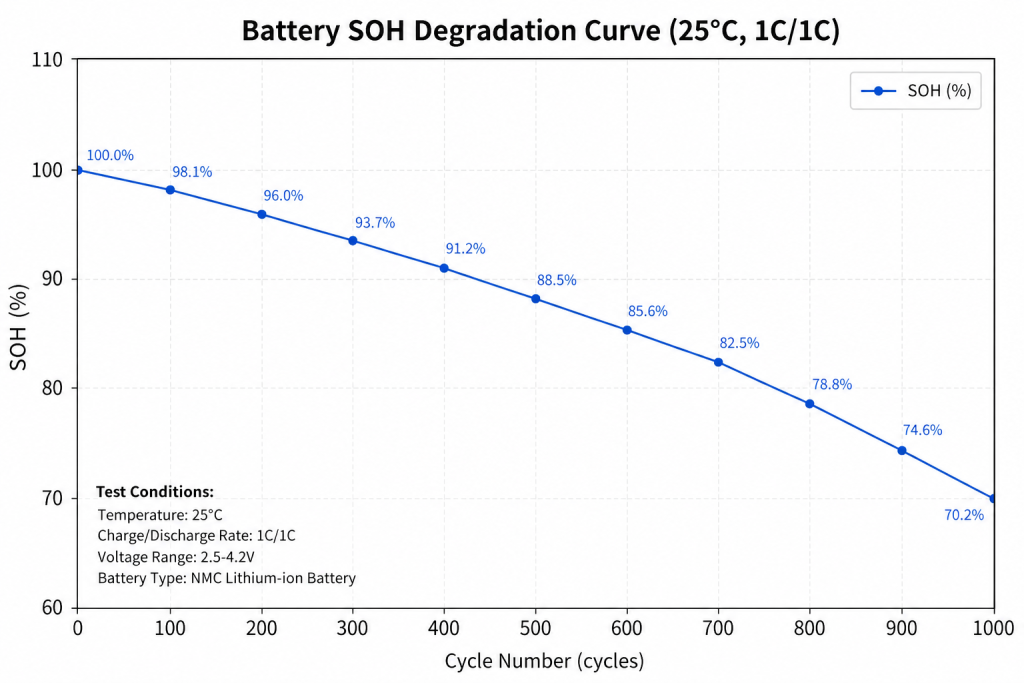
The aspect of R&D that takes the longest time is identifying the battery life. You can not just wait ten years and find out whether a ten-year battery is working. Here comes Battery Life Cycle Test and State of Health (SOH) Test.
Accelerated Life Testing
Advanced machinery follows complicated algorithms in executing accelerated aging. Researchers can forecast Battery Cycle Life of a battery in a few weeks, not years, by cycling a battery at moderately higher temperatures or with moderate depth-of-discharge (DoD).
State of Health (SOH) and State of Charge (SOC)
More accurate SOH and SOC algorithms can be created using precision testing. Within an R&D environment, the exact State of Health of a prototype can be known to enable the investigator to have visibility of the correlation between the physical degradation (such as the growth of dendrites) and the electrical signal. This closed feedback mechanism is critical to the development of self-healing battery technologies or more intelligent BMS software.
How to Choose Battery Testing Equipment
Selecting the appropriate testing equipment depends on the type of battery being used, the testing phase, voltage and current requirements, and the performance parameters that need to be determined during testing. The requirements for a lithium-ion battery testing laboratory differ from those of an electric vehicle company testing high-voltage battery packs or an energy storage company testing its battery energy storage system (BESS).
When selecting battery testing equipment, the following factors must be considered.
Voltage and Current Range
The voltage and current ranges should be suitable for the batteries under test and provide sufficient margin for various test scenarios. Battery cell testing may require lower voltages and currents but must still offer good measurement resolution; in contrast, electric vehicle batteries and large battery packs may require voltages of hundreds or even thousands of volts, as well as higher currents.
In addition, when working with high-power equipment, consideration should be given to the system’s ability to operate across different voltage and current ranges.
Accuracy and Resolution
Accuracy and resolution directly affect the reliability of battery test data. Small measurement errors can become significant during long-term cycle testing or when researchers compare small changes in capacity, voltage, or internal resistance.
For applications such as battery chemistry research, capacity characterization, and degradation analysis, a testing system should provide sufficient voltage and current accuracy as well as appropriate measurement resolution for the battery being tested.
Number of Channels
The number of channels required depends on the desired throughput and the number of batteries that need to be tested in parallel. Multi-channel battery testing systems can test multiple cells or batteries simultaneously under different operating conditions.
In the field of research and development, using more channels may be more efficient when comparing different types of battery chemistries, electrodes, and charging protocols.
Dynamic Response and Test Profiles
Dynamic performance is particularly important when it is necessary to quickly simulate transient operating conditions for batteries. For example, batteries in electric vehicles may experience sudden changes in power demand when the vehicle accelerates or brakes.
In such cases, battery test equipment should be capable of dynamic testing.
Data Acquisition and Software
Battery testing generates a massive amount of data, particularly during cycle life, aging, and long-term test procedures. The test system must be equipped with appropriate sampling rates, data logging, test programming, visualization, and data export capabilities.
Test procedures must also be repeatable, and the software should support comparisons across different test cells, modules, and battery packs.
Regenerative Capability
Regenerative capability is a key factor that must be considered when designing high-power battery test systems. During discharge, regenerative test systems can feed electrical energy back into the grid rather than wasting most of it as heat.
As the power of test systems increases, these advantages will become increasingly important for the energy efficiency and operating costs of test facilities.
BMS and Communication Integration
Battery testing equipment should also be compatible with the battery management system and other test equipment used in the test environment. Depending on the application, integration may include CAN, CAN FD, RS485, temperature chambers, water cooling systems, and other external devices.
For EV and ESS applications, communication between the test system and BMS is particularly important because battery protection, operating limits, and test conditions may need to be coordinated during the test.
Battery Testing Workflow: From Cell to Pack
Battery testing does not take place at a single stage of development. Testing requirements change as a battery moves from cell-level research to module, pack, and complete energy storage system validation.
At each stage, the test system needs to match the voltage, current, power, measurement accuracy, and test objectives of the battery under evaluation. A typical battery testing workflow can therefore be divided into several stages, from cell characterization to system-level validation.
Cell-Level Testing
Cell-level testing is commonly performed during battery chemistry research, cell development, and quality evaluation. Typical tests include capacity measurement, charge and discharge performance, cycle life, rate capability, DCIR, and electrochemical impedance analysis.
At this stage, high measurement accuracy and resolution are often more important than extremely high power. Researchers may also require multiple channels to compare different cell designs or test conditions in parallel.
Formation and Grading
After cell manufacturing, formation and grading are used to establish and evaluate the electrical characteristics of the cells. Controlled charge and discharge processes are used during formation, while grading can be used to classify cells according to parameters such as capacity and internal resistance.
Consistent formation and grading are important for identifying cell-to-cell differences before cells are assembled into modules or packs.
Module-Level Testing
Multiple cells are connected to form a battery module, increasing the voltage and current requirements of the test system. Module testing can evaluate electrical performance, capacity, thermal behavior, protection functions, and communication with the battery management system.
Test conditions should reflect the intended operating range of the module while maintaining appropriate safety limits.
Battery Pack Testing
Battery packs contain multiple modules and are commonly used in electric vehicles and energy storage systems. Pack-level testing requires higher voltage and power capabilities and often involves communication with the BMS.
In addition to basic charge and discharge tests, pack testing may include DCIR, pulse testing, dynamic load profiles, drive-cycle simulation, fast-charging evaluation, and protection-function verification.
High-Voltage EV Battery Testing
Modern EV battery packs can operate at high voltage and require testing under rapidly changing power conditions. High-voltage EV battery testing can include charge and discharge performance, fast-charging behavior, drive-cycle simulation, regenerative braking conditions, pulse testing, and thermal performance evaluation.
The test system must provide sufficient voltage and current capability while maintaining accurate measurement and fast dynamic response.
Energy Storage System Testing
Energy storage systems introduce additional testing requirements because batteries may operate for long periods under repeated charge and discharge cycles. Testing can evaluate capacity, efficiency, cycle life, dynamic response, grid-related operating conditions, and BMS performance.
For large-scale BESS, testing may extend from individual cells and modules to battery packs, clusters, and containerized systems. High-power regenerative test systems can also help reduce energy consumption during large-scale charge and discharge testing.
Conclusion
Battery testing equipment plays a role throughout the battery development and validation process, from early-stage chemistry research to module, pack, EV, and energy storage system testing. Different applications require different combinations of voltage range, current capability, accuracy, channel count, dynamic response, and data acquisition.
These tools are the most significant drivers of innovation. As the world keeps putting additional pressure on its energy storage policies, the cooperation between such innovative companies as Sinexcel-re and the top scientists in the world of batteries will be the most important aspect in moving the green energy transition.
FAQs
What is the distinction between Battery Life Cycle Testing and Battery Performance Testing?
The Battery Life Cycle Testing is aimed at longevity, the number of charge/discharge cycles that a battery is able to complete before its capacity reduces to a specific point (typically 80 percent). Battery Performance Testing changes the behaviour of the battery to examine the battery characteristics under certain conditions, which may include high-current discharge, extreme temperatures, or quick charging.
Would it be important to have high precision in electrochemical testing?
In battery R&D, gains can be made in small steps, typically 0.1 percent of improvement. Poor equipment may conceal these improvements by its low level of noise. The accuracy of the battery tests can be done to high precision, so the data is clean enough to determine whether a real chemical improvement or an error in measurements.
What is State of Health (SOH) testing?
The State of Health (SOH) testing is a comparison of the current state of a battery to the as-new condition. It considers the decrease in the capacity, more internal resistance, and the stability of the voltage. SOH testing is applied in the R&D of how various chemistries age.
Is it possible to test the battery equipment to replicate a real-world EV driving cycle?
Yes. The modern battery test benches can be programmed with drive cycles (such as the WLTP or EPA tests) to simulate the actual power demands of a car to drive within a city, accelerate on a highway, or use its regenerative braking.