When we consider batteries, we tend to think about the total amount of power they will give or their life cycle. But behind the performance of any battery, there is a fundamental element, the electrodes. No matter what device you are operating with, a smartphone, an electric car, or even a solar power storage system, the electrodes within your battery are all major contributors to its efficiency, capacity, and longevity. Knowing these electrodes and their operation may make you understand the science of battery testing and operation.
What are Battery Electrodes?
Battery electrodes serve as conductive materials within batteries, which enable electrons and ions to move throughout the charging and discharging process. Each battery has both a negative electrode and an electrode (the positive electrode.
How Electrodes Work
The electrodes help in the transfer of electrical current by an oxygen-free transfer of electrons during oxidation and reduction reactions. The electrode that is losing electrons and therefore leaving the electrode is the anode.
The reduction site is the cathode as it is the electrode to which the substances receive the electrons, and the source of electrons is the electrode. The efficiency of the electron transfers between two points depends on the combination of the electrode material and the properties of the surrounding environment, as the properties determine the ability of the system to conduct electricity, as well as the ability of the system to sustain a voltage difference.
The chemical reaction concerns active electrodes such as zinc and copper, and the inert electrodes such as platinum and graphite, which do not change their chemical compositions, and are used in the transfer of the electrical current.
How Battery Components Interact
The electrodes generate a potential difference between the electrodes as the anode gives up electrons to the external circuit. The electrolyte does not permit the direct flow of electrons between the electrodes but the internal flow of ions, which completes the circuit. When the device is connected to a load, the electrons flow between the anode and the cathode, via the external circuit, and energize the equipment to which it is connected.
Electrodes Example In Lithium Iron Phosphate Battery
The electrodes in a lithium iron phosphate (LiFePO 4 ) battery consist of certain materials that are created to be stable in energy storage. Lithium iron phosphate is used in order to produce the cathode, and gives good thermal stability and long cycle life. Graphite is a carbon-based substance known to be the best anode material, where lithium ions can be stored.
In the process of charging, the lithium ions flow from the cathode to the anode via the electrolyte. In the discharging, the ions are pushed back to the cathode and an electric current is generated. This flow of ions between the electrodes enables the battery to work in real-life applications such as electric vehicles and solar storage systems.
Why Are Electrodes Important in Battery Testing?
Electrodes are extremely significant as far as battery tests are concerned because it is at these points that electrochemical reactions occur. They aid in the movement of the electrons between the battery and the external circuit, which can be utilized to measure the performance parameters that include voltage, current, capacity, and efficiency. Accurate testing of a battery would not be possible without well-functioning electrodes.
Electrode testing is therefore essential in the battery development and is utilized to establish the energy density of the battery, battery charge cycles, battery life and safety. Electrodes are important to battery tests because.
Note: Every battery test, which includes capacity testing, cycle life testing, and impedance testing, evaluates how electrodes manage the process of lithium insertion and extraction while experiencing stress throughout their lifespan.

How Battery Testing Evaluates Electrodes
We test the electrochemical performance of electrodes to verify capacity, efficiency, resistance, and stability by charge-discharge tests, cyclic voltammetry, and impedance analysis.
Electrode tests are used to determine the expected life span of a battery and the way its functionality diminishes with each usage. There are various ways in which battery electrode testing is done to measure their functionality, stability, and safety in daily life. These tests can be classified into the following categories:
1. Electrochemical Tests
These are tests to calculate the voltage, current, and power of a battery. They are applied to assess the performance of the electrodes in varying conditions of charging and discharging.
2. Capacity and Efficiency Tests
The number of charge and discharge cycles enables us to know how well the electrode can store and release energy. Good quality electrodes must maintain their ability to discharge numerous times without substantial deterioration.
3. Impedance Spectroscopy
This test is used to determine the level of resistance that the electrodes produce. Reduced resistance is usually associated with enhanced flow and efficiency of energy.
4. Thermal Stability Tests
Thermal tests are the tests that define the reaction of the electrodes to temperature changes. Expansion or contraction of some of the electrodes can also influence battery performance, and thus, thermal stability is crucial.
5. Safety Testing
The electrodes can contain some material that is highly reactive or volatile. It is tested to make sure that the electrodes can be safely used in high temperatures or in case of a short circuit, which poses risks of overheating or exploding.
Regulatory Compliance
Manufacturers should comply with such standards as:
- UN 38.3 (transport safety)
- IEC 62133 (portable batteries)
- UL certifications
The products may not enter the global markets due to failure to comply.
Key Materials Used in Battery Electrodes
How electrode materials impact battery efficiency? Electrode material affects the efficiency of the battery because it affects conductivity, capacity, and stability. Higher quality materials allow faster electron/ion conduction, have more energy capacity, and are less degraded- translating to higher efficiency and longer battery life.
The anode and cathode materials used hugely influence the performance of the battery. The Electrodes of a battery are made out of the following materials:
| Type of Electrode | Typical Materials | Battery Use |
| 阳极 | Graphite, Lithium, Silicon Liberates | Release electrons during discharge, and receive ions during charge |
| 阴极 | Lithium Cobalt Oxide (LCO), Lithium Iron Phosphate (LFP), Nickel Manganese Cobalt (NMC) | Electrons are absorbed on the cathode during discharge, and ions are released during charge |
Electrode Materials: Graphite vs Silicon Anodes
The graphite or silicon anode option is essential in deciding the performance of lithium-ion batteries. Graphite has been the benchmark as it has a constant and consistent performance with numerous charge cycles, with good energy density and cycle life. Silicon anodes have a higher storage capacity than other materials, and this allows the batteries to reach high-energy density levels.
The disadvantage of silicon is that it swells and contracts when charging and thus may cause mechanical degradation and shortened cycle life unless sophisticated engineering measures are used. The choice of anode material not only dictates the battery energy storage capacity, but also battery life and operational reliability since it dictates the amount of power that can be stored, and the duration of battery life.
Common Electrodes in Popular Battery Types
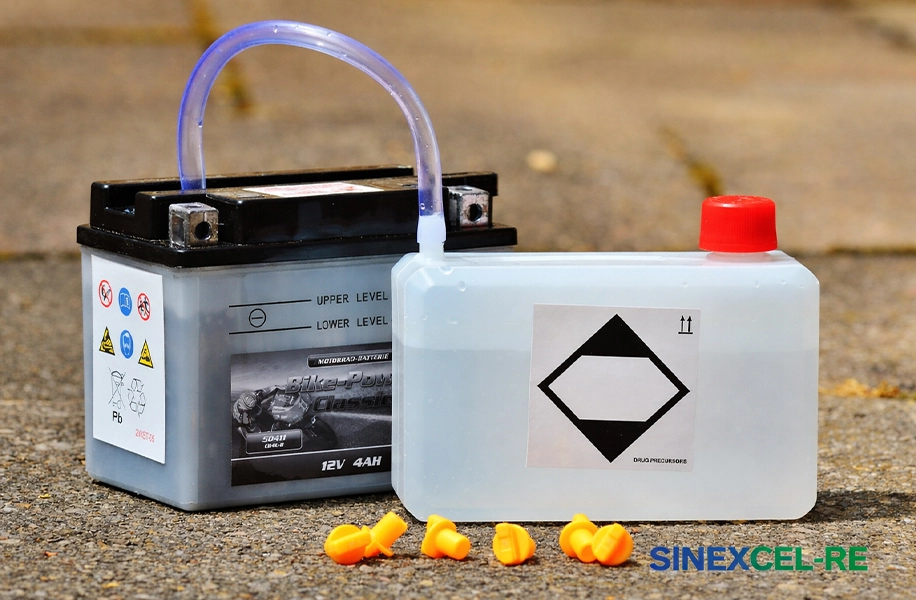
The various types of batteries have different electrode materials that are appropriate to the chemistry and application. The lead dioxide (PbO 2 ) is used as the cathode, and sponge lead (Pb) as the anode in lead-acid batteries. Lithium-ion batteries normally contain a cathode of lithium metal oxide (i.e., lithium cobalt oxide or lithium iron phosphate) and an anode of graphite.
Nickel-cadmium batteries have nickel oxide hydroxide as the cathode and cadmium as the anode. Nickel metal hydride batteries are similar in cathode (nickel oxide hydroxide) but make use of a hydrogen-accepting alloy as the anode. All combinations are selected to maximize performance, cost, and lifespan.
Why Batteries Slow Down Over Time: The Role of Impedance and Degradation
The two metrics of impedance and degradation function as interconnected measurements of electrode condition because they show how operating conditions change electrode materials and their interfaces. The structural and chemical changes that occur at the electrodes during battery operation develop through SEI layer growth on the anode and lithium plating under high stress and particle cracking in high-capacity materials like silicon.
The resulting changes create two forms of increased impedance, which include elevated charge transfer resistance at the electrode surface and decreased lithium diffusion throughout electrode particles. The testing process shows that an increase in impedance serves as a primary indicator of battery degradation because it detects early signs of performance decline before users notice any capacity reduction.
The combination of these two phenomena demonstrates that performance decline occurs through an incremental process, which results from multiple electrode failures that create obstacles to chemical reactions and decrease efficiency.
最终想法
The electrodes of a battery are extremely crucial in determining how effective a battery is. The materials, design, and testing of the electrodes knowledge is imperative in improving the battery life, power output, and safety. Electrodes are involved in the core of performance, whether it is testing the smartphone battery, or creating the new electric vehicle batteries. As technology increases, the materials used as electrodes will be enhanced, taking the electrode materials to the limits of energy storage and creating batteries that are stronger, longer-lasting, and safer.
Want to enhance your battery testing processes? Explore Sinexcel‑RE’s innovative solutions to help you achieve more efficient, reliable results in battery performance. Get in touch with us today and start boosting your battery testing efficiency!
常见问题 (FAQ)
Q: How do electrodes affect battery performance?
Electrodes ascertain the efficiency, capacity, and lifespan of a battery. Electrode material has a direct influence on the amount of energy that a battery can hold and on the battery’s life.
Q: What materials are used for battery electrodes?
Battery electrodes are usually constructed of conductive material such as metals (e.g., lead, nickel) or compounds based on carbon (e.g., graphite). Metal oxides or lithium compounds (e.g., lithium cobalt oxide) are also used by them to allow efficient electrochemical reactions.
Q: Why are electrode tests important?
The electrode testing assists in testing the performance, cycle life, energy density, and safety of a battery. The testing process ensures that the battery is functioning as per its normal performance. The battery could be safely operated due to its multiple testing conditions.
Q: Can electrodes be reused?
Yes, numerous electrodes can be reused if they do not degrade much in charge-discharge cycles. But with time, they become inefficient because of wear, chemical reaction or accumulation, hence reuse is minimal.
Q: What are 3D electrodes?
To further increase the surface area of electrodes, 3D electrodes design an electrode structure that incorporates three-dimensional structures to increase surface area that cannot be attained with conventional 2D electrodes. The design facilitates operation of the battery with higher active material capacity, leading to a high energy density and charge-discharge efficiency.
Q: What are dry electrodes?
Dry electrodes are electrodes that are made to be used without any liquid electrolytes or solvents and, therefore, are simpler, lighter, and less harmful to the environment. They have found extensive use in batteries or supercapacitors, and they provide cheap and eco-friendly alternatives to the conventional wet electrodes.