Battery cycle life testing measures how many charge-discharge cycles a battery can complete before its performance falls below a defined end-of-life criterion. This guide explains how cycle life testing works, what parameters are measured, what equipment is required, and which factors can affect the results.
电池寿命测试
21 年第一季度站 本世纪以来,包括电池在内的储能设备变得比以往任何时候都更加重要。这是因为人们越来越重视可再生能源、电动汽车和其他可持续发展实践。电池使用量的增加使电池的使用寿命与耐用性、成本和性能的关系更加密切。.
为了测试和预测电池和电池组的不同性能参数,我们开发了适当的测试方法并使之标准化。进行电池寿命测试是为了估算电池在性能显著下降之前可以承受的充电/放电循环次数。进行生命周期测试是为了验证设计、改进设计、增强客户对产品的信心,并使基于电池的系统更加高效、经济和安全。.
什么是电池寿命测试?
电池寿命循环测试也称为充放电循环、老化测试或循环寿命测试。通常,实验室测试是为了测量循环寿命,但也可以通过监测实际使用情况来实现这一目的。在实验室中,加速老化过程是对电池进行快速充放电,并监测每次循环后电池性能参数受到的影响。当性能下降并低于特定限度时,测试就算完成。以下是有关电池生命周期测试的一些重要因素
- 生命周期测试是一个相当复杂的过程,因为生命周期不是一个静态的数字,而是一个受多种因素影响的动态指标。这些因素包括放电深度(DoD)、C 率(充放电率)、电池类型、电解液的质量和数量、散热、环境条件等。.
- 在老化测试过程中会对各种性能参数进行监测和分析。电压、电流、内阻和容量等显著特征表明电池的整体健康状态(SoH),并有助于确定电池的使用寿命。.
- 容量被认为是本测试中最重要的性能参数。电池容量下降到以下值之前进行的充放电循环次数 80其最初额定容量的 %(或目标容量)与循环寿命相对应。.
- 循环寿命测试的充电和放电可以按照与实际使用类似的方式进行。这意味着可以改变充放电速率、控制温度、设置机械因素、限制放电深度等。.
Why Is Battery Cycle Life Testing Important?
Since a battery’s performance cannot be judged solely by its initial capacity, life testing is crucial. A battery may have a high initial capacity, but its capacity can decline significantly after multiple charge-discharge cycles.
Battery manufacturers and researchers use cycle life testing to achieve the following objectives:
– Determine the long-term performance of batteries
– Compare the performance of different chemical systems or battery structures
– Evaluate capacity loss during cycling
– To study the battery’s degradation process
– To evaluate charging and discharging modes
– To investigate the effects of temperature and current rates (C-rates)
– To verify the performance of battery cells, modules, and packs
– To collect data for battery development and quality control
For electric vehicles and energy storage systems, cycle life testing helps engineers understand how various operating conditions affect the long-term performance of batteries.
影响电池寿命的主要因素
影响电池寿命的内部和外部因素有很多。了解这些因素可以帮助您更好地了解电池,并以适当的方式使用电池以延长其使用寿命。.
内部因素或多或少与电池的尺寸和设计有关。电解液、隔膜和电极的成分和化学性质会影响内阻和电池的使用寿命。尺寸、形状和重量也会影响电阻、散热和安全性。SOH(健康状态)和 SOC(充电状态)也在不断变化,影响着电池的使用寿命。.
从外部来看,湿度和环境温度是最重要的参数。附加负载和电源会影响放电深度(DoD)和充电速度,从而影响电池的使用寿命。.
电池化学
Different battery chemistry systems exhibit different aging behaviors. For example, even under similar charge-discharge conditions, LFP and NMC batteries may have different aging characteristics.
Therefore, the chemical properties of the battery should be taken into account when designing test protocols and analyzing results.
排放深度 (DoD)
Depth of discharge is a metric that measures the actual extent to which a battery’s capacity is utilized in each cycle.
Tests conducted within a shallow State of Charge (SOC) window may yield different aging behavior compared to deep-discharge cycle tests. Therefore, the depth of discharge should be clearly specified when comparing cycle life test results.
Charge/Discharge Rates
A battery’s charge/discharge rate is typically expressed as a C-rate.
Different C-rates can affect a battery’s temperature, polarization, capacity, and aging behavior. Therefore, cycle life tests should include controlled and well-defined current curves.
温度
Temperature has a significant impact on battery aging and performance.
Cycle life testing can be conducted by controlling the temperature to determine how the battery behaves under different temperature conditions. In lithium-ion battery testing, temperature measurement is critical because any abnormal temperature changes may affect test results as well as battery safety.
充电状态
During cycling, the SOC window can influence battery aging. Cycling the battery within different high and low SOC windows will yield different results in cycle life testing.
充电
Factors that may contribute to battery aging include charging voltage, current, charging curve, and charging time. CC-CV charging technology is widely used for lithium-ion batteries when required.
How Is Battery Cycle Life Testing Performed?
A battery cycle life test should be performed under controlled and repeatable conditions. The exact test procedure depends on the battery chemistry, application, manufacturer specifications, applicable standards, and test objectives.
A typical cycle life testing workflow includes the following steps.
Define the Test Conditions
Before testing begins, engineers define the test protocol.
Important parameters may include:
- Battery chemistry
- Cell, module, or pack configuration
- Voltage range
- Charge current
- Discharge current
- C-rate
- 温度
- SOC window
- Depth of discharge
- Rest time
- Number of cycles
- End-of-life criterion
The test conditions should be documented clearly so that the results can be reproduced and compared.
Perform Initial Characterization
Initial characterization establishes a baseline for the battery before aging.
Depending on the test objective, engineers may measure:
- Initial capacity
- Initial voltage
- Energy
- DC internal resistance (DCIR)
- 温度行为
These baseline measurements can later be compared with measurements taken after hundreds or thousands of cycles.
Charge the Battery
The battery is charged according to the defined test profile.
Depending on the battery chemistry and test protocol, charging may use constant-current charging or a constant-current/constant-voltage profile.
The testing system controls the current and voltage while recording the battery’s response.
Rest the Battery
Some test protocols include a rest period after charging or discharging.
The rest period allows the battery to stabilize before the next step and provides more consistent measurement conditions.
Discharge the Battery
The battery is then discharged according to the specified current, voltage limits, SOC range, and DoD.
During discharge, the testing system records voltage, current, capacity, energy, and other required parameters.
Repeat the Charge-Discharge Cycle
The charge and discharge sequence is repeated according to the test protocol:
Charge → Rest → Discharge → Rest → Repeat
The process continues until the required number of cycles is completed or the battery reaches the specified end-of-life criterion.
Monitor and Record Test Data
Throughout the test, the battery testing system records data continuously or according to the configured sampling interval.
典型测量包括:
- 电压
- 当前
- 容量
- Energy
- 温度
- Cycle count
- 内阻
- Coulombic efficiency
Continuous data collection makes it possible to identify gradual degradation as well as abnormal battery behavior.
Analyze Cycle Life Data
After or during testing, engineers analyze how battery performance changes with cycle number.
Common analysis includes:
- Capacity retention vs. cycle number
- DCIR vs. cycle number
- Energy efficiency vs. cycle number
- 温度行为
- Voltage profile changes
- Degradation trends
The measured cycle life is then determined according to the defined end-of-life criterion.
选择电池寿命周期测试设备
研究人员和工业家们已经开发了许多设备和系统来测试各种类型的电池。这些系统可以测试多个性能参数或一个特定参数。用于进行电池测试以估算电池寿命的设备被称为电池循环仪。在选择电池生命周期测试设备时,必须考虑电池的尺寸、类型和规格。此外,您的测试目标也至关重要。所选电池循环仪的规格必须能够满足您在准确度、精确度、采样率、数据分析和安全功能等方面的目标。.
在此简要讨论这些关键性能和选择参数,以帮助您为电池的生命周期测试选择正确的设备。.
在电池寿命周期测试中,测试程序会反复进行;监测数据会被存储、分类和分析;数据会在各种组件和附件之间交换。这表明所选设备应具备 通信接口, 和 数据记录 特点。所选设备应能支持真实的测试协议,以便模拟电池或电池组(串联或并联)的预期或实际使用条件。.
对于不同的应用,对电压、电流、功率和能量的要求各不相同。这些参数与电池尺寸相对应。间接地,电池的大小和规格是根据应用要求来选择的。在选择 使用蓄电池循环器时,必须牢记蓄电池的尺寸和额定值,并确保蓄电池循环器的额定值也应与蓄电池的额定值相匹配。. 尺寸合适的测试工具 这对优化效率、节省时间和获得准确结果都是必要的。.
老化测试总是很耗时,因此,考虑到您的目标和实验电池的数量,您可以选择具有以下功能的电池循环器 多独立通道 可以同时对多个电池进行测试。.
电化学阻抗光谱 (EIS) 可帮助分析可能随电池循环而变化的阻抗数据。该功能与频率有关,许多制造商都在其生命周期测试设备中加入了 EIS 功能,甚至包括可在所有通道之间共享的多通道测试仪。.
此外,一个循环器可能只为一种类型的电池而设计。您可以选择具有不同通道的循环器,以便 支持不同类型的电池.
如果您正在寻找用于高级分析或研发目的的电池寿命测试设备,那么 准确度、精确度和分辨率 也成为重要的考虑因素。.
电池循环器还包括 软件. 它主要用于记录和分析数据。因此,人们可以选择含有温度记录功能的循环仪、, 分析工具和图表 或其他演示形式。. 温度记录 是非常重要的可记录参数,因为热失控会破坏电池,即使没有发生热失控,电池的循环寿命也会受到影响。.
在电力系统中,电流、电压和时间是采样、监测和分析的核心参数。根据需要,可利用这些核心参数计算其他参数。这些值可以通过软件或硬件计算。由于采样率的原因,读数和数据在硬件和软件系统之间会丢失。这表明 硬件系统直接进行计算 会更加精确。因此,您可以选择那些内置硬件的电池寿命测试设备。.
设备提供的附件、安全功能、嵌入式软件和售后支持也能提升测试体验。选择电池寿命测试仪时,必须考虑硬件和软件功能。软件的用户友好性以及对产品调试、安装和使用的支持始终是非常重要的。.
电池寿命测试方法
每种电池循环测试仪或电池寿命测试设备都是为测试特定类型的电池而设计的,同时遵循明确的测试方法。例如,对于可充电锂离子电池,充放电循环可按以下方法进行:
首先,以 1.2C 至 1.4C 的放电率对电池放电,放电直至达到 3.3V 至 3.55V 的截止放电电压。然后,在暂停后以预定的 C 速率进行充电。如此反复进行充放电循环,直至电池容量降至初始容量的 80%。在达到这一基准之前所进行的充放电循环次数即为电池的寿命周期。在测试过程中,还可以进行温度循环测试。为此,需要将电池置于热室中,并根据实时情况升高或降低温度。.
在有无热室的情况下进行测试时,所有电气参数(电流、电压和电阻与时间的关系)都会被采样和记录。在这里,可以使用一个软件系统来自动完成测试程序,即自动设置测试条件并记录测试结果。之后,将计算功率、电荷、容量和其他相关参数。同样,如果你的软件能够对每个采样点进行计算,那就更好了。一旦运行一个周期并获得所有数值,就可以对数据进行分类和分析。.
在电池寿命评估方面,IEC62660-1 详细概述了锂离子电池的测试程序和测试要求。该标准还详细介绍了功率测试和电流电压特性测试。.
市场上最好的电池寿命测试设备
如果您正在寻找电池寿命测试设备,您必须详细了解您的电池及其工作环境。此外,您还必须清楚自己的预算、目标和时间表等。这里列出了一些顶级的电池循环测试仪制造商和供应商,以帮助您根据自己的需求选择合适的设备。.
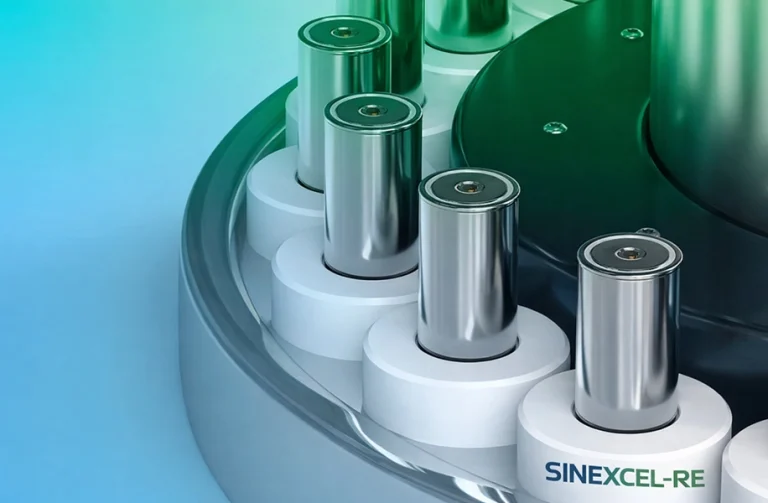
SINEXCEL-RE
事实证明,SINEXCEL-RE 在提供高精度的 电池测试解决方案. .其系统采用先进的软件和硬件技术,适用于全球电动汽车制造商、大学、研究实验室和电池制造商。其所有电池测试产品都非常可靠,并具有各种安全功能。其软件不仅能进行数据分析,还能控制测试条件。.
Su-vastika
SU-vastika 生产先进的电池测试仪,可根据测试要求提供各种测试模式。其系统具有用户友好的界面,并与不同类型的锂电池兼容。Su-vastika 的电池循环测试仪还集成了各种安全功能,并在每次循环后提供测试结果。.
ACEY
XIAMEN ACEY INTELLIGENT EQUIPMENT CO., LTD 以其高质量的电池测试设备而闻名。ACEY 设计并提供可用于不同类型电池(包括锂离子电池、镍镉电池和铅酸电池)的电池循环器。它还为客户提供定制的电池测试解决方案。.
STInstruments
STinstruments 不断设计并向市场推出新型电池循环器。其最新的 BioLogic-9xx ‘即插即用 ’系列适用于学术研究、质量控制和工业开发。该系列产品还配备了电化学阻抗谱(EIS)功能。.
常见问题
电池寿命周期测试是否存在挑战?
虽然生命周期测试的好处显而易见,它可以帮助电池制造商和研究人员改进电池系统的设计、性能和质量,但有时与这些测试相关的挑战并不明确。总之,进行这些测试需要花费大量的时间和金钱。此外,这些测试本身也会带来安全问题。道德和环境问题也仍然是相当大的挑战。.
我们能否使用任何电池寿命测试设备来测试所有类型的电池?
不,并非所有电池循环器都适用于所有类型的电池。随着电池化学成分和容量的变化,测试设备也必须随之改变。换句话说,检测设备的规格必须与电池的规格相匹配。测试设备制造商明确指出,用户可以用 ‘这种 ’型号的测试仪安装 ‘这种 ’和 ‘这种 ’类型的电池。.
是否有讨论电池寿命测试的国际标准?
电池寿命测试已发展成为改进电池设计和性能的重要工具。因此,也制定了一些标准,详细规定了进行老化测试的要求和程序。例如,IEC 62133 规定了锂离子电池的测试要求。该标准得到了制造商和监管机构的广泛认可和使用。.
对电池进行老化测试需要多长时间?
老化测试非常耗时。一次测试可能需要几周到几个月的时间。因此,如果您需要测试多个电池,建议您选择多通道测试仪。.