An engineer connects a multimeter to a 12V backup battery. The reading shows 12.5V — well within normal range. Two hours later, the UPS fails during a power outage. Runtime: less than 90 seconds.
This is not an edge case. It happens in data centers, EV service bays, and telecom installations every day. The battery wasn’t dead — it was degraded. And voltage testing alone will never catch that.
Reliable battery diagnostics require three methods, each revealing a different layer of health:
- Voltage testing shows state of charge — fast, but limited
- Resistance testing detects internal degradation before capacity loss appears
- Cycle testing measures true lifespan under real operating conditions
If you want to know what the three basic tests are, you can take a look at this article.This guide explains what each method actually reveals, where it falls short, and — critically — how to choose the right combination for your specific application: UPS maintenance, EV diagnostics, solar storage validation, or telecom infrastructure.
Why Voltage Testing Alone Is Not Enough
One of the most common battery problems in the field is a battery that appears healthy during a quick voltage check but fails the moment a load is applied.
This happens every day in:
- UPS backup systems
- Telecom battery banks
- Solar storage systems
- 电动汽车
- Industrial equipment
An engineer checks a 12V backup battery and sees 12.5V on the terminals. Everything looks fine. Then the system switches to battery power during an outage and shuts down within seconds.
The issue usually is not voltage. It is internal degradation.
Aging batteries develop higher internal resistance, reduced usable capacity, poor thermal stability, and voltage collapse under load. That is why professional battery diagnostics never rely on voltage testing alone.
Real battery testing involves multiple methods, each revealing a different part of battery health.
- Voltage testing shows basic electrical condition
- Resistance testing reveals internal degradation
- Cycle testing shows long-term capacity and lifespan behavior
Understanding what voltage can and can’t tell you is the starting point for any serious battery diagnostic program.
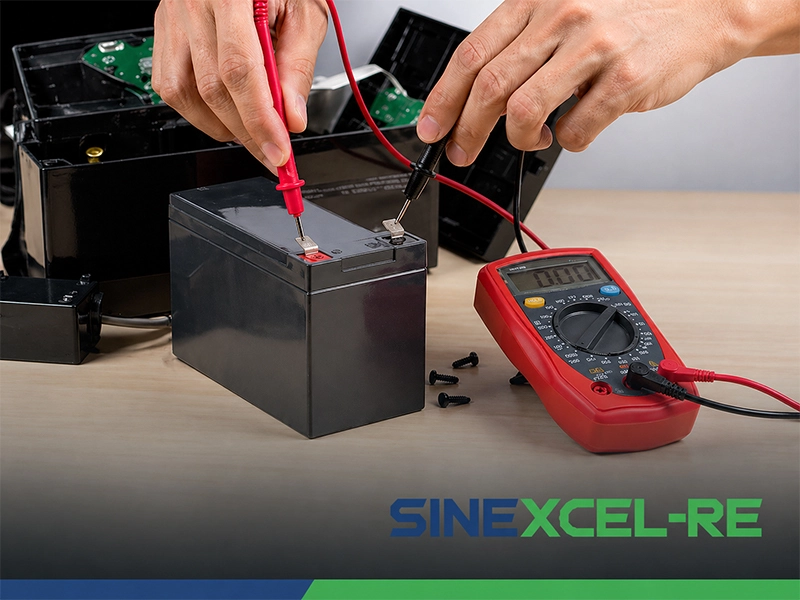
Three Battery Testing Methods Compared
| Feature / Method | Voltage Testing | Resistance Testing | Cycle Testing |
| Purpose | Measure state-of-charge (SoC) | Detect internal health and early degradation | Assess lifespan and capacity retention |
| What it Measures | Open-circuit voltage (OCV) | Internal resistance / impedance | Charge-discharge cycles and capacity fade |
| Equipment Needed | Multimeter, basic battery tester | LCR meter, specialized battery analyzer | Battery cycler, data logger |
| Time Required | Seconds to minutes | Minutes | Hours to days per test |
| Accuracy for Health | 低 | 中型 | 高 |
| Invasiveness | Non-invasive | Low to moderate | Moderate to high (cycling required) |
| 优点 | Quick, easy, low-cost | Detects early problems | Realistic aging and performance data |
| 缺点 | Cannot detect internal damage | Requires specialized tools | Time-consuming and equipment-intensive |
| Best Use | Quick checks, field testing | Diagnostics, lab testing | R&D, battery lifespan evaluation |
That combination provides a much clearer picture of:
- State of charge (SOC)
- State of health (SOH)
- Capacity retention
- Runtime capability
- Failure risk
Each method answers a different question. The right diagnostic approach depends on what you’re trying to find out — and which failure mode you’re trying to prevent.
Voltage Testing
What Voltage Testing Really Shows
Voltage testing is the fastest way to check whether a battery is charged, discharged, or behaving abnormally. It is also the most misunderstood battery test.
A normal voltage reading does not automatically mean the battery is healthy.
In many failed UPS systems, batteries still show acceptable terminal voltage right before they collapse under load. Voltage testing works best as an initial screening tool.
Open Circuit Voltage (OCV) Test
This test measures voltage with no charger or load connected.
OCV testing requires the battery to be disconnected from all loads and chargers, with a minimum rest period of two minutes to allow surface charge to dissipate. Measure terminal voltage with a calibrated digital multimeter and compare against chemistry-specific reference values — 12.6–12.8V for a fully charged 12V lead-acid battery, 4.2V for a lithium-ion cell, 3.6V for LiFePO4.
Load Voltage Testing
This is where many weak batteries are exposed. Instead of checking voltage with no load, engineers apply current and monitor how far the voltage drops.
A battery with high internal resistance may show:
- Normal open-circuit voltage
- Severe voltage sag during discharge
- Rapid recovery once the load is removed
That pattern is extremely common in aging UPS batteries.
Real Engineering Example: UPS Battery Failure
A common field issue in data centers involves VRLA batteries that pass voltage inspection but fail runtime testing.
During maintenance:
- Battery voltage appears normal
- Float charging looks stable
- No alarms are active
But during a power outage:
- Internal resistance rises sharply
- Voltage collapses under load
- UPS runtime drops from 20 minutes to less than 2 minutes
This is why voltage testing alone is never enough for critical backup systems.
Advantages of Voltage Testing
- Fast and simple
- Low-cost testing method
- Useful for routine inspections
- Good first-stage diagnostic tool
- Easy to perform in the field
局限性
Voltage testing cannot accurately reveal:
- Remaining capacity
- Internal degradation
- True runtime capability
- Long-term battery health
That requires deeper testing methods.
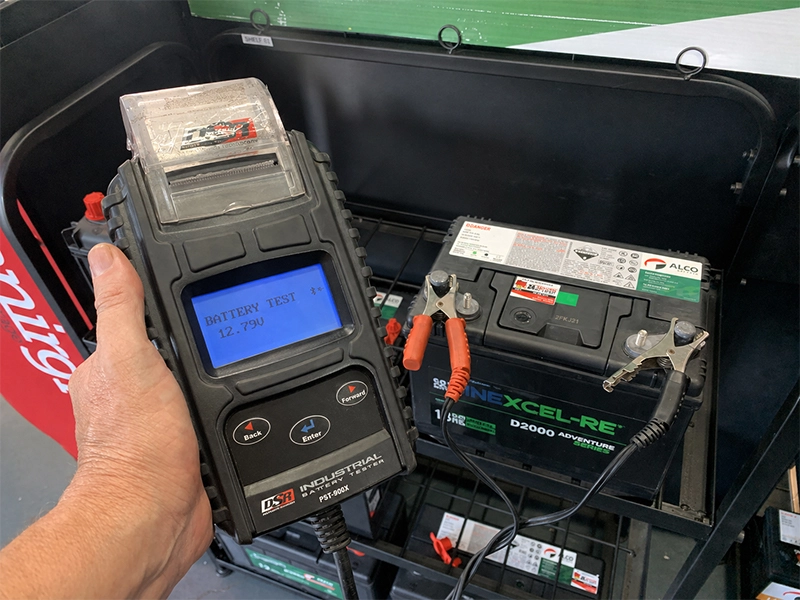
Internal Resistance Testing
Why Internal Resistance Matters
In real battery systems, internal resistance often tells engineers more than voltage. A battery can still show acceptable voltage while its resistance has doubled.
Once resistance rises:
- Heat generation increases
- Efficiency drops
- Voltage sag becomes worse
- Fast charging performance declines
- High-current operation becomes unstable
This is especially important in:
- EV battery packs
- Telecom backup systems
- Solar storage batteries
- High-current industrial systems
What Causes Internal Resistance to Increase?
Several degradation mechanisms contribute to resistance growth:
- Electrode aging
- Corrosion
- Electrolyte breakdown
- Sulfation in lead-acid batteries
- Mechanical stress
- Repeated fast charging
- High operating temperatures
In lithium-ion batteries, resistance growth is one of the clearest signs of aging.
What Abnormal Resistance Readings Usually Mean
| Resistance Behavior | Likely Problem |
| Gradual increase | Normal aging |
| Rapid increase | Cell degradation |
| Large imbalance between cells | Pack imbalance or damaged cell |
| Sudden spike | Loose connection or internal failure |
Real Engineering Example: EV Battery Diagnostics
In electric vehicles, resistance testing is heavily used to identify weak cells before major failures occur.
A battery pack may still provide acceptable driving range while a few cells begin showing elevated impedance.
During high acceleration:
- Those cells heat up faster
- Voltage drops more aggressively
- Battery balancing becomes harder
- Thermal stress increases
Modern EV battery management systems continuously monitor these behaviors. In many cases, impedance growth appears months before noticeable range loss.
AC Impedance Testing
Some systems use AC signals instead of DC pulses.
Advantages include:
- Faster testing
- Online monitoring capability
- Better repeatability
- Reduced stress on batteries
AC impedance testing is common in:
- Telecom infrastructure
- Large battery banks
- Data center UPS systems
- Continuous monitoring platforms
Advantages of Resistance Testing
- Detects aging earlier than voltage testing
- Identifies weak cells quickly
- Useful for predictive maintenance
- Excellent for trend analysis
- Works well in large battery banks
局限性
- Requires specialized equipment
- Results vary with temperature
- Different chemistries behave differently
- Resistance alone does not measure capacity
Cycle Testing
What Cycle Testing Reveals
Cycle testing measures how battery performance changes over repeated charge and discharge cycles.
This is the test engineers rely on when evaluating:
- Battery lifespan
- Capacity retention
- Thermal stability
- Charging durability
- Long-term reliability
Manufacturers use cycle testing extensively during:
- EV battery development
- Solar storage validation
- Consumer electronics testing
- Warranty qualification
How Cycle Testing Works
The battery repeatedly goes through:
- Charging
- Resting
- Discharging
- Recharging
The process continues until usable capacity drops below a target threshold. Most manufacturers define end-of-life at roughly 80% of original capacity.
Real Engineering Example: Solar Storage Batteries
In solar energy systems, batteries often experience partial daily cycling.
Over time:
- Capacity slowly decreases
- Charging efficiency drops
- Heat generation increases
- Runtime becomes less predictable
A battery may still operate normally while losing 15–20% of its original capacity. Without cycle testing, this degradation can go unnoticed for years.
What Engineers Watch During Cycle Testing
Capacity Retention
Tracks how much usable energy remains.
Temperature Rise
Excessive heat often signals accelerated degradation.
Voltage Stability
Large fluctuations can indicate cell imbalance.
Coulombic Efficiency
Measures how efficiently the battery stores and releases charge.
加速寿命测试
Manufacturers often accelerate aging using:
- Elevated temperatures
- Fast charging
- High discharge currents
- Deep discharge cycling
This helps predict long-term reliability without waiting years for natural aging.
Advantages of Cycle Testing
- Provides realistic lifespan data
- Measures true degradation behavior
- Essential for battery development
- Supports warranty validation
- Helps optimize battery management systems
局限性
- Time-consuming
- Expensive to perform
- Requires automated equipment
- Generates large datasets
Despite the cost, cycle testing remains the most reliable way to evaluate long-term battery durability.
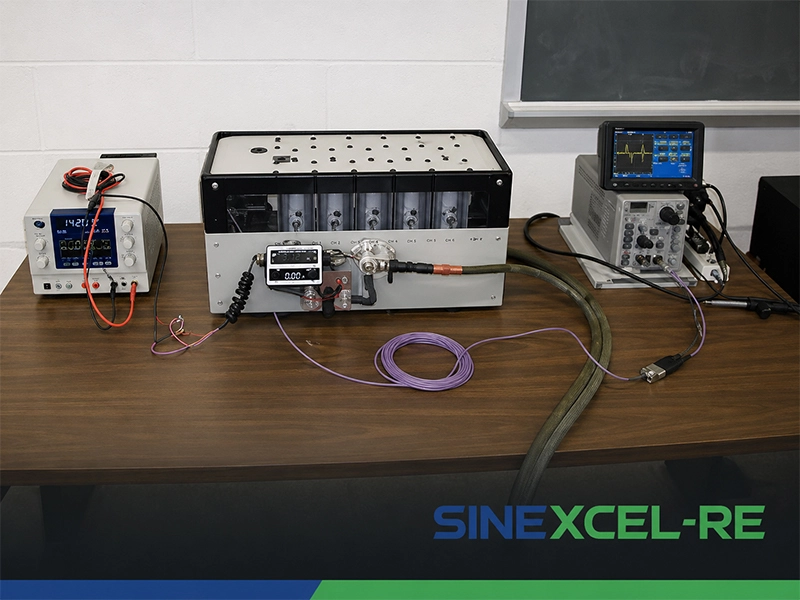
Which Battery Testing Method Is Best?
There is no single “best” battery test.
The right method depends on the problem engineers are trying to solve. In practice, professional battery maintenance programs combine several methods together.
Common Battery Testing Mistakes
Even good testing procedures can produce misleading results if conditions are not controlled.
Testing Immediately After Charging
Surface charge can temporarily inflate voltage readings.
Ignoring Temperature
- Cold batteries behave very differently from warm batteries.
- Resistance and voltage readings shift significantly with temperature.
Relying Only on Voltage
- This is one of the most common maintenance mistakes.
- A battery can pass voltage inspection and still fail under real load conditions.
Ignoring Historical Trends
Single measurements are less valuable than long-term trend data.
Engineers usually track:
- Resistance growth
- Capacity decline
- Temperature behavior
- Cell imbalance trends
Modern Battery Testing Technologies
Battery diagnostics are becoming increasingly data-driven.
电池管理系统 (BMS)
Modern BMS platforms continuously monitor:
- Cell voltage
- 电流
- 温度
- Balancing behavior
- Fault conditions
This is especially important in EV and grid storage systems.
AI-Based Predictive Maintenance
Advanced analytics platforms now use machine learning to predict:
- Remaining useful life
- Failure probability
- Thermal runaway risk
- Abnormal charging behavior
Remote Monitoring Systems
Large telecom and solar installations increasingly rely on remote battery diagnostics.
Engineers can monitor battery banks across multiple sites without physical inspection.
结论
Real world applications of battery testing involve more than merely reading off one voltage value and taking that as a pass. All energy storage systems require testing to ensure their safety, efficiency, and lifetime. Voltage testing provides a quick test, but with limited detail. Resistance testing can spot early deterioration, and cycling tests are still considered the best way to determine long-term battery health.
A methodical approach, taking a variety of tests, will enable engineers and technicians to model battery health and prevent failure.
FAQS
What are the most common battery testing methods for a lithium battery?
The most common ones are: voltage test, internal resistance test, load test, and full cycle test.
Why is internal resistance measurement important in battery testing?
It identifies early signs of damage and forecasts performance loss prior to capacity loss.
What does cycle testing involve in the context of battery maintenance?
It tests battery life by cycling it to determine the capacity loss.
What are the most common battery testing methods?
Testing the voltage, internal resistance, under load, and cycle life.
What are the signs of battery failure that testing can reveal?
Sudden drop in voltage, excessive heat, shorter lifespan, and high resistance.
How does discharging the battery factor into the testing process?
Discharge is involved in capacity and load testing for performance assessment.
Why is load testing critical for understanding battery performance?
Because it mimics real-life usage and tests how well the voltage holds up.
Why do batteries fail even if the voltage is normal?
Because voltage is not affected by internal changes or load.