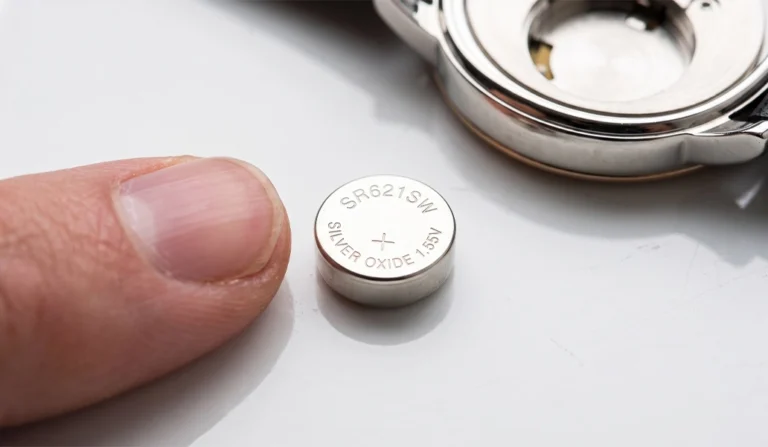
A 1.5V battery is a very common single-cell battery with an output voltage of 1.5V. However, this value is a nominal value, referring to the voltage at which the battery delivers energy during use; the actual voltage may vary depending on the battery’s chemical composition, state of charge, load conditions, and operating temperature.
Therefore, in addition to the nominal voltage, this tutorial will explore other factors that affect the performance of a 1.5V battery and help you determine when it’s time to replace the battery.
What Voltage Does a 1.5V Battery Actually Have?
1.5V is the rated voltage of a battery. In practice, however, the terminal voltage of a battery varies depending on factors such as the type of chemistry used, the battery’s state of charge, ambient temperature, load current, and the battery’s age.
The open-circuit voltage of a new battery is typically slightly higher than 1.5V. As the discharge process proceeds, the terminal voltage gradually decreases. For example, an alkaline battery may start at a voltage higher than 1.5V and gradually decrease as it discharges.
However, open-circuit voltage alone does not fully reflect the battery’s actual condition. Compared to open-circuit voltage, load voltage provides a better indication of the battery’s usability. Therefore, effective battery testing requires considering both voltage and the battery’s response under load.
What Size Is a 1.5V Battery?
Several standard sizes share the 1.5V nominal rating, but differ significantly in dimensions and capacity:
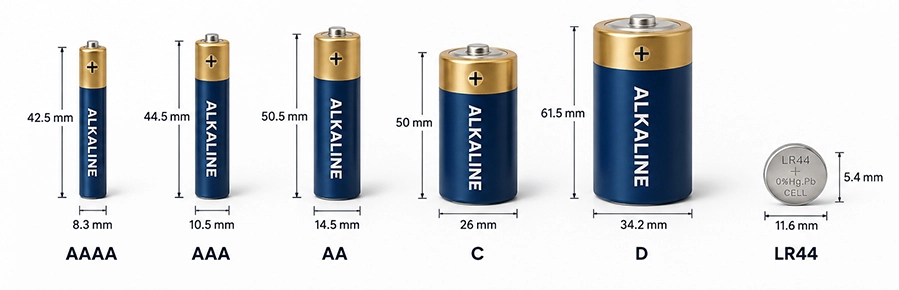
| Battery Size | Nominal Voltage | Approx. Dimensions | Common Applications |
|---|---|---|---|
| AAAA | 1.5 V | 42.5 × 8.3 mm | Small electronic devices, styluses, compact flashlights |
| AAA | 1.5 V | 44.5 × 10.5 mm | Remote controls, small electronics, flashlights |
| AA | 1.5 V | 50.5 × 14.5 mm | Toys, cameras, flashlights, household electronics |
| C | 1.5 V | 50 × 26 mm | Flashlights, toys, radios |
| D | 1.5 V | 61.5 × 34.2 mm | High-drain flashlights, radios, larger devices |
| LR44 | 1.5 V | 11.6 × 5.4 mm | Watches, calculators, toys, small electronic devices |
Although AA, AAA, AAAA, C, D, and LR44 batteries all have a voltage of 1.5 V, they vary significantly in size and capacity. Among cylindrical batteries, AA and AAA are the most common sizes, while C and D batteries are larger and have greater capacity than AA and AAA batteries. The LR44 battery is a very small button cell primarily used in small electronic devices.
Types of 1.5V Batteries: Chemistry Comparison
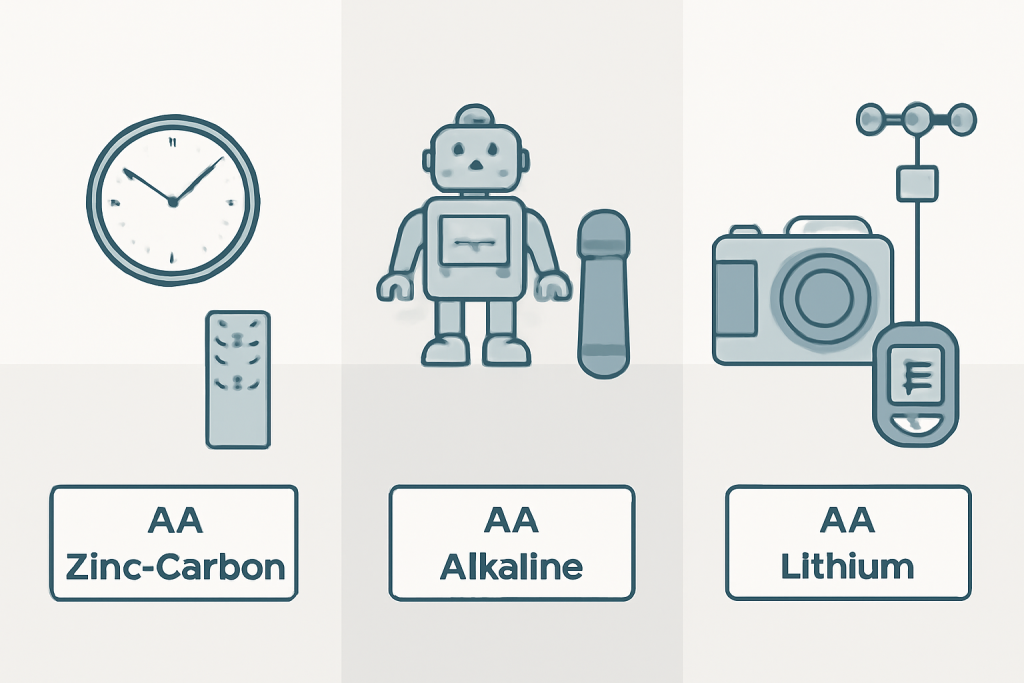
1.5-volt batteries are versatile and used in a wide range of devices, from household items to specialized equipment. The performance and suitability of 1.5-volt batteries for different devices depend largely on their chemical composition. Common applications include:
- Remote Controls: Often powered by AA or AAA alkaline batteries due to their moderate energy requirements.
- Flashlights: Use various sizes of 1.5-volt batteries, depending on the design and intended brightness level.
- Clocks and Watches: Frequently utilize zinc-carbon or alkaline batteries for their low power needs.
- Toys and Gadgets: Depend on the reliable power supply of 1.5-volt batteries, often AA or AAA types.
- Digital Cameras and Portable Electronics: High-drain devices that benefit from the high energy density of lithium batteries.
As with any lithium battery, avoid short-circuiting, puncturing, or exposing them to high heat, since these chemistries have some minimum risk of leakage or fire under abuse conditions.
| Battery Type | Rechargeable | Main Characteristics | Common Applications |
|---|---|---|---|
| Alkaline | No | Widely available, good shelf life, balanced performance | Remote controls, toys, flashlights |
| Zinc-carbon | No | Low cost, suitable for low-drain applications | Clocks, basic electronics |
| Primary lithium | No | High energy density, long shelf life, good temperature performance | Cameras, specialty electronics |
| Rechargeable NiMH | Yes | Rechargeable, typically 1.2V nominal | Rechargeable AA/AAA devices |
Zinc-Carbon Batteries: Affordable, Used in Low-Drain Devices
Zinc carbon batteries are known for their cheapness and find wide application in gadgets that require little energy. The zinc carbon battery is one of the oldest dry cell batteries. It uses zinc for the anode and carbon for the cathode with acidic electrolyte. Such batteries are cheaper, however, their lifetime and energy capacity are smaller. They can be found in remote controls and watches.These include items such as:
- Remote Controls: Often used due to their low energy requirements.
- Wall Clocks: Depend on the long shelf life and sufficient power output of zinc-carbon batteries.
- Flashlights: Suitable for emergency flashlights where low cost is a priority.
Alkaline Batteries: Versatile and Long-Lasting
An alkaline battery is the right type of battery for most household uses as well as professional uses because of its efficiency and low cost. An alkaline battery has a base or alkaline of potassium hydroxide that provides power. Alkaline batteries use a zinc anode and a manganese dioxide cathode, with an alkaline electrolyte — typically potassium hydroxide — facilitating the reaction. Alkaline batteries are available in various sizes, including AA, AAA, C, and D. They are commonly used in:
- Digital Cameras: Provide the high energy needed for powering flashes and LCD screens.
- Portable Radios: Offer long-lasting power for extended use.
- Children’s Toys: Can handle the intermittent high-drain requirements of many electronic toys.
Lithium Batteries: High Energy Density, Long Lifespan
Lithium batteries utilize lithium as an anode material. They are known for their high energy density, long life, and ability to function well in extreme temperatures. These characteristics make them suitable for high-drain devices like digital cameras and portable electronics. Lithium batteries are known for their superior energy density and extended lifespan, making them ideal for high-drain and critical devices such as:
- Digital Cameras: Require substantial power for high-resolution photography.
- Medical Devices: Used in devices like glucometers and insulin pumps due to their reliability.
- High-Tech Gadgets: Essential for gadgets that need consistent and long-lasting power, such as fitness trackers and advanced remote controls.
Lithium 1.5 Volt Batteries: High Energy Density, Long-Lasting Power
Lithium 1.5-volt batteries are favored for high-drain devices due to their superior energy density and longevity. They are ideal for:
- Digital Cameras: Providing consistent power for high-energy functions.
- Portable Electronics: Ensuring long-lasting use for devices like MP3 players and handheld GPS units.
- Medical Equipment: Reliable power source for critical devices like glucometers and insulin pumps.
1.5 Volt D Batteries: Large Cylindrical Batteries
D batteries are larger cylindrical batteries used in applications requiring significant power over a longer period. They are commonly used in:
- Uses in the Household: High drain equipment like big flashlights and radios.
- Uses in Industry: Devices that need dependable and lasting power, such as some motorized devices and emergency lights.
1.5V Button and Coin Cells
You’ll find these 1.5V button cells and coin cells in small devices. These compact 1.5V batteries are ideal for applications where larger-capacity batteries cannot be used. Despite their small size, not all 1.5V batteries are the same—each type has its own advantages.
Understanding 1.5V Button Cell Codes
The codes on 1.5V button cells help you identify the battery’s specifications. This classification system was established by the International Electrotechnical Commission (IEC), where the first letter indicates the battery’s chemical composition:
L – Alkaline battery;
S – Silver oxide battery;
C – Lithium battery (not 1.5V, but 3V);
The second letter, “R,” indicates that the battery is round. Using these codes, you can select the most suitable 1.5V battery.
Common specifications: LR44, LR41, and AG10
Currently, the most common types of 1.5V batteries are the LR44, LR41, and AG10. Each has different dimensions and capacities, measured in milliampere-hours (mAh). The higher the capacity, the longer the battery life. Additionally, 1.5V batteries have many different designations; for example, LR44 corresponds to AG13.
Are 1.5V Batteries Rechargeable?
Standard alkaline, zinc-carbon, and lithium batteries are designed for single use and shouldn’t be recharged unless the manufacturer explicitly states otherwise — attempting to recharge them can cause leaks or, in some cases, rupture.
True rechargeable options in this space work a little differently:
- AA/AAA nickel-metal hydride batteries are rechargeable, but their nominal voltage is 1.2V, not 1.5V.
- “1.5V rechargeable” refers to a relatively new type of battery—namely, a rechargeable battery that incorporates electronic circuitry to regulate its output voltage to a level close to 1.5V.
If you’re choosing rechargeable batteries, it’s worth checking: nominal voltage, charging method, battery type, charger compatibility, capacity, and your device’s specific voltage requirements. Not every “1.5V” rechargeable product performs identically — some regulate voltage more precisely than others under load.
How to Tell If a 1.5V Battery Is Dead
A single voltage reading doesn’t reliably tell you whether a battery is dead — the answer depends on chemistry, load conditions, temperature, and how the battery was manufactured. That said, several signs reliably point to a battery needing replacement:
- Extremely low terminal voltage — indicates the battery is severely discharged
- Voltage drop under load — a sharp voltage drop once the battery is powering a device usually means internal resistance has risen significantly
- Equipment malfunction — dimming lights, a motor losing power, or a device shutting down unexpectedly all point to the battery being unable to supply the power the device needs
- Physical damage or leaks — corrosion, leakage, or swelling should be treated as a hard stop; dispose of the battery according to local regulations rather than continuing to use it
- Low capacity despite normal voltage — a battery can hold its rated voltage while still lacking usable capacity, which is why a capacity test — not just a voltage check — is the more reliable way to confirm a battery’s true condition
If you’re testing batteries regularly — for quality control, product development, or troubleshooting — a simple voltage check often isn’t enough to catch these issues. Consumer battery testing equipment that measures load voltage and capacity directly gives a far more accurate picture than an open-circuit voltage reading alone. For a deeper look at how voltage and capacity testing work together, see our guide on AA vs AAA Batteries: Voltage, Size, Capacity & Testing Guide.
Using and Disposing of 1.5V Batteries Correctly
Using the correct battery size and chemistry for a given device matters for both performance and safety — mismatched batteries can cause poor performance, device damage, or safety hazards like leaks.
Proper disposal matters too. Batteries contain materials that can harm the environment if discarded improperly. Most types are covered by recycling programs, and many retailers offer take-back services for used batteries.
Conclusion
The 1.5 volt battery is of great importance when it comes to the operation of various machines. Knowledge of the various kinds of 1.5 volt batteries enables you to select the one that best suits your requirements in terms of its functionality. It is important to know how to use and dispose of batteries for maximum efficiency and safety.