For low-drain household devices — TV remotes, wall clocks, basic toys — alkaline batteries are the practical choice thanks to their low upfront cost. For high-drain or continuous-use applications — power tools, RVs, solar setups, trolling motors — rechargeable lithium (particularly LiFePO4) is the stronger long-term choice: it typically lasts far longer, weighs roughly half as much, and holds a stable voltage until it’s nearly fully discharged.
Batteries power nearly every part of modern life — remote controls, wireless sensors, smart medical devices, and even electric vehicles. Among the many battery chemistries available today, alkaline and lithium are by far the two most common in household and industrial use.
On the surface, the two look similar — both come in familiar cylindrical formats and power everyday devices. Underneath, though, they differ substantially in electrochemistry, performance, cost, and shelf life, and understanding those differences matters whether you’re powering a TV remote or a device that runs continuously around the clock.
This guide breaks down what separates lithium and alkaline batteries, the advantages and limitations of each, and how to decide which one actually fits your use case.
For a closer look at the specific sizes these chemistries come in — AA, AAA, C, D, and more — see our guide: 1.5V Batteries Explained: Types, Sizes, and How to Tell If One Is Dead.
什么是碱性电池?
碱性电池是原电池(不可充电),使用锌和二氧化锰作为电极。电池中的电解液是氢氧化钾,呈碱性,这使得离子能够持续流动,并能使电池在其使用寿命内输出稳定的电压。.
这些电池被广泛用作钟表、手电筒、玩具和遥控器等家用电器的电源。这些电池满足中低功率需求,价格便宜,日常使用方便。.
碱性电池的主要特点:
- 电解质碱性氢氧化钾
- 电压: 每个电池 1.5 伏
- 保质期:5-10 年
- 工作温度:0 °C 至 50 °C(正常)
- 常用:低排水装置
由于成本低、供应量大,碱性电池一直是全球客户首选的解决方案。.
什么是锂电池?
锂电池具有 锂金属 或 锂化合物 作为阳极,这为它们提供了高 能量密度 而且寿命比碱性电池更长。与碱性电池相比,锂电池可以在高耗电负荷下工作,也就是说,即使在小工具需要常规或峰值功率时,也能产生稳定的功率。.
根据设计,锂电池可以是
- 初级(非充电式):通常用于相机、传感器或心脏起搏器。.
- 次级(可充电,即锂离子电池):用于笔记本电脑、电话和电动汽车。.
锂电池的主要特点:
- 电解质锂盐 有机溶剂或固体电解质
- 电压:每节电池 1.8 - 3.7 V(取决于化学成分)
- 保质期: 10-15 年
- 工作温度:-40 °C 至 60 °C(变化)
- 应用: 高排水量和关键应用
锂电池重量更轻、强度更高、保质期更长。这使它们 专业 和 工业 性能不能打折扣的能力。.
Key Differences between Lithium and Alkaline Batteries
为了清楚地了解这两种电池类型,下面将并排比较它们最重要的特性:
表 1
| 特点 | 锂电池 | 碱性电池 |
| 电解质 | 锂盐(有机/固体) | 氢氧化钾(碱性) |
| 每电池电压 | 1.8 - 3.7 V | 1.5 V |
| 能量密度 | 高 | 中度 |
| 重量 | 重量轻 | 更重 |
| 温度公差 | 在极寒和极热条件下性能良好 | 有限的极端温度 |
| 保质期 | 10-15 年 | 5-10 年 |
| 费用 | 更高 | 低 |
| 高漏极器件的性能 | 优秀 | 中度至弱度 |
| 常见用途 | 摄像头、传感器、电动汽车、医疗 | 玩具、遥控器、手电筒 |
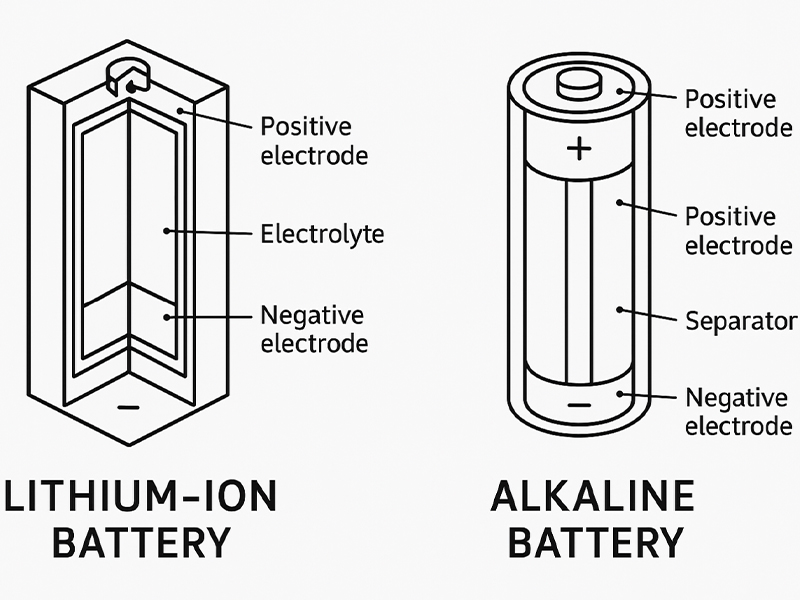
图 1 电池的结构
本表解释了为什么在高性能或关键用途情况下通常首选锂电池,而在家庭使用频率较高的情况下,碱性电池则是最具成本效益的选择。.
Rechargeable Lithium (Li-ion / LiFePO4) vs. Alkaline for High-Drain Applications
All the discussion so far has focused on comparing alkaline batteries with primary lithium batteries, but for high-power-consumption or industrial applications, a more relevant comparison would be between alkaline batteries and rechargeable lithium-ion or lithium iron phosphate (LiFePO₄) batteries. This is an entirely different matter and deserves a separate discussion.
Rechargeable lithium-ion batteries can be classified based on their chemical composition, including lithium cobalt oxide (LCO), lithium manganese oxide (LMO), lithium nickel oxide, ternary materials (NCM), and lithium iron phosphate (LFP/LiFePO₄), among others. These batteries come in a variety of standard sizes, designated by numbers such as 14500, 16650, 18650, 21700, 26650, and 32650. They are not interchangeable with AA/AAA batteries, and their capacity varies significantly depending on the chemical composition and size; for example, a 6000 mAh 32650 LFP battery
How rechargeable lithium compares to alkaline
| 特点 | 碱性电池 | Rechargeable Lithium (LiFePO4) |
|---|---|---|
| Reusability | Single-use, non-rechargeable | Rechargeable — typically 2,000–5,000+ cycles |
| Voltage behavior | Gradual voltage sag through discharge | Stable voltage until nearly fully discharged |
| Nominal cell voltage | 1.5V | 3.2V (LFP) / 3.6–3.7V (other Li-ion chemistries) |
| Typical capacity range | Fixed by size (mAh) | 1,200mAh to 200Ah+ depending on cell/pack |
| Pack configurability | Not applicable | Cells combine into higher-voltage packs (e.g. 12V, 48V, 72V) for larger systems |
| Best for | TV remotes, clocks, low-drain devices | RVs, solar storage, trolling motors, power tools, EVs |
Why this matters for high-drain use cases. Applications like RVs, off-grid solar systems, and trolling motors draw sustained, often heavy current — exactly the condition where alkaline batteries perform worst, since their voltage sags noticeably under load and they can’t be recharged for repeated use. A rechargeable LiFePO4 pack costs considerably more upfront, but over a multi-year service life, a single pack can realistically replace what would otherwise be hundreds or thousands of disposable alkaline cells — which also means substantially less battery waste over time. LiFePO4 chemistry in particular is also valued for using cobalt-free materials and offering strong thermal stability compared to other lithium-ion chemistries, which is part of why it’s become the default choice for stationary and mobility applications like these.
It’s worth being precise here: this cycle-life and rechargeability advantage applies to secondary lithium-ion/LiFePO4 cells, not to standard 1.5V primary lithium batteries (like the disposable lithium AAs discussed earlier in this guide) — the two shouldn’t be conflated when comparing options, since a single-use 1.5V lithium battery and a rechargeable 18650 cell serve very different purposes despite both being “lithium batteries.”
Advantages of Lithium Batteries
- 高能量密度:
锂电池比碱性电池大得多,后者以较小的体积就能储存相同的能量。这意味着运行时间延长,更换次数减少。. - 极端环境下的卓越性能
即使在冰冻或高温情况下,它们也能保持稳定,因此可用于户外和工业领域。. - 轻便小巧:
对于 GPS 跟踪器、无人机和医疗用品等便携式设备来说,它们的轻便性是一笔宝贵的财富。. - 保质期长:
锂电池的保质期长达 15 年,因此在紧急备用系统中非常可靠。. - 稳定的电压输出:
锂电池还能提供接近耗尽点的恒定电量,这与碱性电池不同,后者会不断失去作用。.
碱性电池的优点
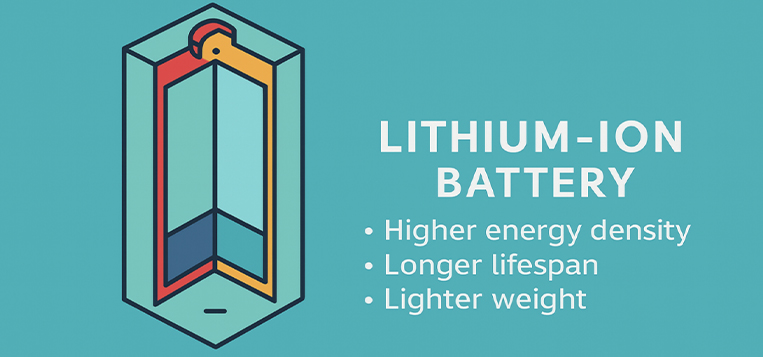
图 3 碱性的优点
- 经济实惠,交通便利:
碱性电池很便宜,在全球大多数商店都能买到。. - 安全稳定的化学
过热和短路的几率很低,因此可以每天使用。. - 是低排水设备的理想之选:
适用于钟表、遥控器、玩具等不需要大电流的产品。. - 体面的保质期
不过,这比锂电池的寿命短,在大多数消费应用中,5-10 年就足够了。. - 环境可控:
与锂电池相比,其他一些地方发现处理和回收碱性电池很简单。.
Limitations of Both Battery Types
锂电池限制
- 成本更高:锂电池的制造和采购成本较高。.
- 特殊处理要求:由于其化学性质,某些类型的材料应适当回收,以防止对环境造成危害。.
- 低漏极器件功率过大:在不需要的地方使用锂可能会造成不必要的损失。.
碱性电池限制
- 有限的高排水性能:在重负载情况下,电压往往会下降,导致耗电设备的运行时间缩短。.
- 不可充电:大多数碱性电池不能重复使用。.
- 较低的温度耐受性:热的时候,它的体温会大大降低;太冷的时候,它的体温也会大大降低。.
应用和用例
合适的电池取决于 设备性质 和 功耗:
- 锂电池的常见应用:
- 数码相机和闪光灯
- GPS 跟踪器和无人机
- 智能传感器和可穿戴设备
- 心脏起搏器和医疗监控设备
- 电动汽车和电动工具
- 碱性电池的常见应用:
- 钟表、收音机和玩具
- 遥控器和手电筒
- 无线电脑外设
- 烟雾探测器
- 简易应急照明
专业提示 锂电池最适合连续运行的设备。碱性电池适用于低能量需求和间歇性需求的情况。.
您应该选择哪种电池?
表 2
| 如果您需要... | 选择锂 | 选择碱性 |
| 高性能 | 是 | 没有 |
| 低成本 | 没有 | 是 |
| 保质期长 | 是 | 是 |
| 极端温度下运行 | 是 | 没有 |
| 日常家用 | 没有 | 是 |
| 高排水应用 | 是 | 没有 |
Lithium is the better choice when performance, reliability, and lifespan are the priority. Alkaline is the practical option when cost and availability matter more than raw performance.
Looking to compare specific battery sizes rather than chemistries? See our guide on AA vs AAA vs D Batteries: Size, Capacity & Testing Guide.
Future Insights
随着 储能技术, 因此,锂电池很可能会 在高性能 电动汽车等市场、, 智能电网 和便携式电子产品。制造商也在尝试 改善回收 锂,并使这些电池 更便宜 以便在日常生活中使用。.
不过,碱性电池不会自行销毁。它们 低成本, 化学可预测性 这意味着,在未来的许多年里,家庭和企业仍将把它们用于低排水应用。.
混合能源系统 可能会在 未来十年 锂电池和碱性电池实际上会 共存 并相当成功地履行其下一代角色。.
查看我们的 高性能电池测试解决方案 了解正确的电池技术 有助于促进 您的能源战略.
主要收获:
- 锂电池可提供 更高性能, 此外,它还能延长使用寿命,更好地应对极端条件。.
- 碱性电池 经济有效, 易于查找,非常适合低功耗设备。.
- "(《世界人权宣言》) 正确的选择取决于您的使用情况, 而不仅仅是价格。.
- 随着技术的发展,锂电池有望发挥更大的作用,而碱性电池仍是日常使用的必需品。.
常见问题
Can I substitute a lithium battery for an alkaline battery in the same device?
In most cases, yes — most 1.5V primary lithium batteries are designed as drop-in replacements for AA/AAA alkaline batteries. For larger or higher-voltage applications, switching to a rechargeable LiFePO4 system requires checking device voltage compatibility first, since pack voltages (12V, 48V, etc.) don’t map directly onto single-cell alkaline replacements.
Is the higher price of rechargeable lithium (LiFePO4) worth it?
For high-drain or long-term use, generally yes. While the upfront cost is significantly higher, a single LiFePO4 battery can realistically replace thousands of disposable alkaline batteries over a service life of a decade or more — which usually works out cheaper in total cost of ownership, and reduces battery waste substantially.
Is it possible to substitute the lithium batteries with the alkaline batteries in any equipment?
大多数情况下都可以,但前提是电压和尺寸相匹配。锂电池是高耗电设备的理想替代品,但必须参考设备制造商的建议,以防损坏。.
Are the batteries rechargeable lithium?
不全是。第一类锂电池是不可充电的,称为一次锂电池,而这些二次锂离子电池是可充电的,在智能手机和电动工具等大多数现代电子产品中都能找到。充电前一定要查看标签。.
Can it be stated that lithium batteries can be used in domestic appliances?
是的,如果使用得当,它们通常是安全的。与碱性电池相比,锂电池受到很好的保护,不易漏液。但切勿将其暴露在过热的环境中,避免刺穿或与其他类型的电池混合使用。.
Is it possible to combine lithium and alkaline batteries?
组合使用电池可能会导致漏液、短路或不成比例放电。请务必确保在同一设备中使用同一类型和品牌的电池,以实现最大的安全性和性能。.
What kind of battery will work in cold conditions better?
锂电池在极热和极冷的环境下性能更强。众所周知,碱性电池在低温下会降低电压或失去容量。.
Why are lithium batteries costly as compared to alkaline?
锂电池由高度发达的材料制成,具有更长的保质期和更高的效率。这些优点会增加制造成本,因此短期内成本较高,但从长远来看更为经济。.
Are alkaline batteries more likely to leak in comparison with lithium batteries?
是的。碱性电池在长期放置或完全放电的情况下更容易漏液。锂电池具有更强的密封性和稳定性,因此漏液现象较少。.
What are the safe ways of disposing lithium and alkaline batteries?
锂电池必须送到有许可证的回收站。在某些地区,碱性电池可以放入生活垃圾中,但最好还是回收利用。处理方法 不要将电池丢入火中或垃圾箱中。.
What is the best battery to use in daily applications in remotes, toys and clocks?
在低耗电设备中,碱性电池经济实惠,运行性能良好。锂电池更适合需要较长工作时间或极端使用的设备。应根据电力需求和环境要求来选择电池。.