如何在家里测试汽车电池(3种简单方法+电压指南)

  1. 首页
  2. »
  3. 博客
  4. »
  5. 如何在家里测试汽车电池(3种简单方法+电压指南)

分享到

导言

电瓶没电会让你寸步难行。电瓶电量不足更是毫无征兆——直到某个早晨你发现已经迟到了。本指南将教你如何在10分钟内,有工具或无工具地检测电瓶。.

您可以使用万用表轻松检查充电水平。然而,电池健康状况的确定更为复杂。 高级负载测试器 常用于确定电池的健康状态 (SOH)。并且与电压读数不同,SOH 考虑了冷启动能力、剩余电池容量和充电接受度。.

汽车电池的化学成分多年来取得了长足的进步。吸收式玻璃纤维隔板 (AGM) 和磷酸锂铁 (LiFEPO4) 等新技术正在主导该行业。它们需要更好、更现代化的电池电压测试设备。.

本文重点介绍如何使用万用表和现代设备安全地测试汽车电池,并进行负载测试。要安全地测试汽车电池,请使用万用表检查电压(12.6V+ 为健康状态),然后进行负载测试以确认其在高负载下的性能。让我们深入了解。.

您需要的工具

汽车电池测试的成功取决于您使用的工具和设备。在继续之前,请勾选以下清单,了解您进行电压测试和高级负载测试所需的工具:

  • 万用表(直流电压模式)
  • 安全手套
  • 钢丝刷或接线柱清洁器(电池接线柱经常会腐蚀)
  • 电池负载测试仪

如何测试汽车电池而无需万用表
打开前灯
发动汽车
灯光昏暗 → 电池电量弱

测试汽车电池:分步指南

了解如何检测汽车电池是一个简单的过程;您无需任何机械知识即可完成。请按照以下步骤检测您的汽车电池。.

how to test a car battery

步骤 1:执行目视检查

您还在犹豫如何测试汽车电池吗?嗯,目测是一种您可以执行的简单电池测试,用于检查汽车电池的健康状况。虽然它在很大程度上不准确,但它可以让您在最终使用万用表和负载测试仪时有所预料。.

  1. 首先检查电池温度。它应该摸起来凉凉的,并且没有明显的泄漏(对于富液式铅酸电池)。如果温度很高,即车辆刚行驶过,请勿测试电池电压。.
  2. 检查电池接线柱是否有腐蚀,如果明显腐蚀,请使用钢丝刷清洁。.
  3. 检查电池是否有裂缝或鼓胀。这些是汽车电池损坏的迹象。

如果发现肿胀或泄漏,请停止测试并立即更换电池。.

第二步:测试电池电压

为了进行汽车电池电压测试,请关闭汽车发动机以避免读数错误。另外,确保所有其他电气配件都已关闭,然后按以下步骤进行:

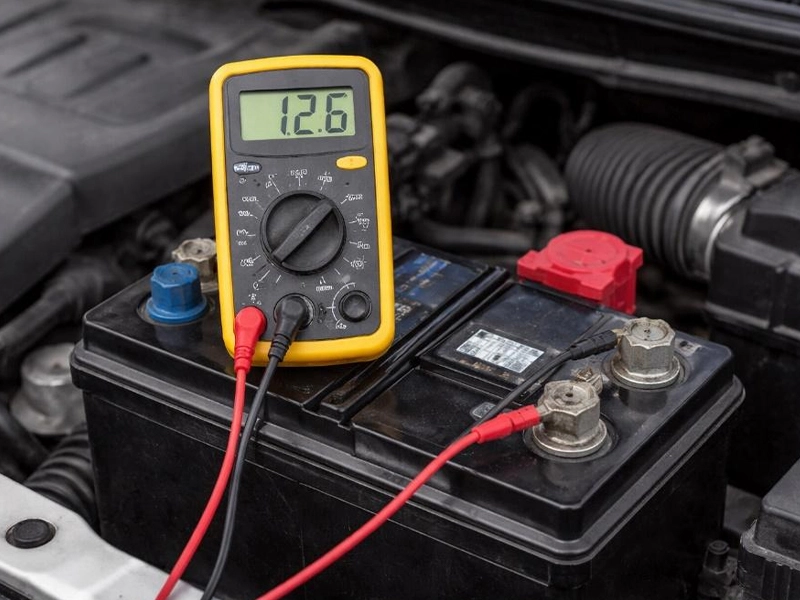
  1. 将万用表调至直流电压档,并将电压测量量程设置为 20V 以上。.
  2. 将万用表的红黑表笔连接到电池的接线柱上;红表笔连接到正极,黑表笔连接到负极。.
  3. 读取万用表上显示的电压。.

但电压本身并不能确认电池的健康状况。.

car battery voltage chart

您期望得到什么结果,这又意味着什么?

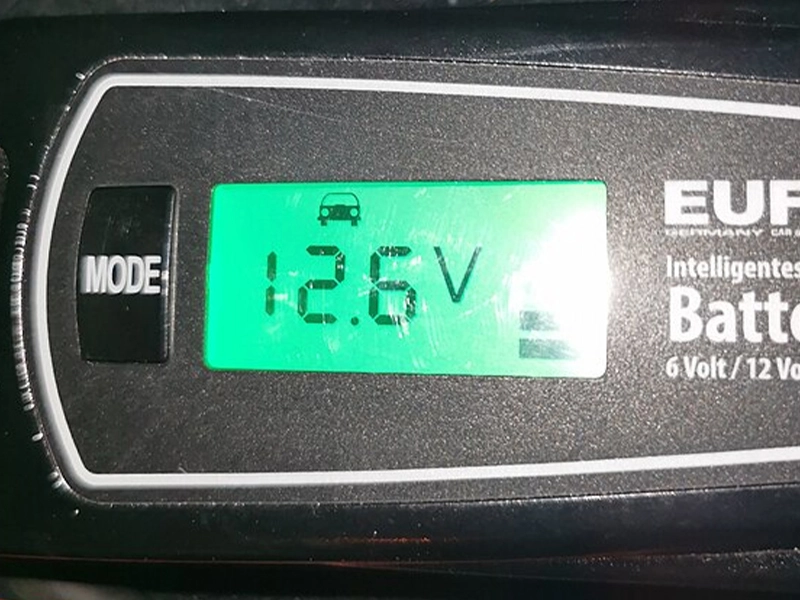
  • 6–12.8V – 电池已充满电,这可能表明电池状态良好。.
  • 4V – 电池电量约为75%。.
  • 2–12.4V – 电量低;需要充电
  • 12.0V – 电池已放电或有故障

您现在有了电池电压测试结果,但这不足以断定电池的健康状况好坏。只需再进行一步即可做出决定。.

打开大灯约2分钟,然后重复测试。高电压下降表明电池电量不足。此外,低电压并不一定意味着电池有问题,因为这可能是由汽车的电气系统从电池中耗电引起的。给电池充电并重复上述测试,以消除任何疑虑。.

步骤 3:执行负载测试

负载测试是确定汽车电池在负载条件下性能的最佳方法,也是本文关于如何测试汽车电池的最后一部分。您可以通过启动汽车并重复前面提到的电池电压测量来实现,或者使用高级负载测试仪。.

曲柄测试

程序

  1. 连接万用表,如执行电压测试时那样。.
  2. 发动引擎,然后观察万用表上电压读数的变化。.

电压下降高达 10V 是可以接受的,这表明电池状况良好。但是,如果电池电压下降到 9.5V 以下,则电池电量不足或有故障,您需要为此类更换预留预算。.

使用高级测试器进行负载测试
test car battery with multimeter

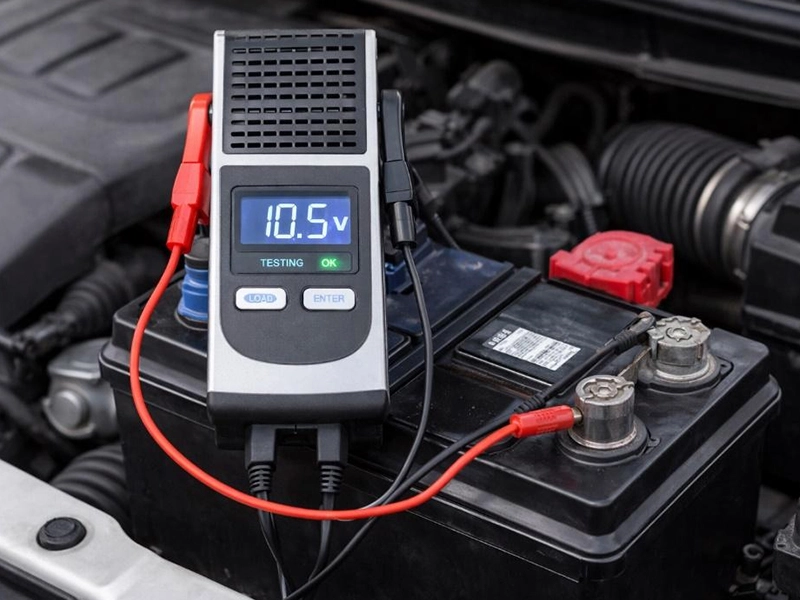
该方法涉及使用负载测试仪,它们会对电池施加受控负载。这是确定电池在真实条件下健康状况 (SOH) 和整体性能的最可靠方法。.

按照以下步骤安全地完成电池负载测试:

  1. 将负载测试仪连接到电池端子,并施加与电池额定容量相匹配的负载。请勿超过额定负载。.
  2. 测量电压随时间的变化。.

Load testing identifies weak or failing cells and evaluates voltage stability under operational conditions. A healthy car battery should keep a relatively constant voltage over time when connected to a rated load. If the voltage drops fast, the battery is weak and you should replace it.

Step 4: (Optional) Test Internal Resistance

At this point you already know how to test a car battery, but that is not all. A car battery test also involves measuring its internal resistance and comparing it against the stated value. A higher internal resistance shows a faulty battery. You will require a battery tester (conductance tester) for this part since a multimeter is incapable of giving an accurate result. Use the procedure provided below to complete this battery test.

  1. Connect the tester; the red probe goes to the positive terminal and the black one to the negative terminal.
  2. Input battery details (if prompted, depending on the battery tester you are using); choose the battery type and enter the rated cold cranking amperes.
  3. Run the test to show battery’s health, voltage, and internal resistance (mΩ).

The internal resistance of batteries varies depending on the battery type and the manufacturer. Some, such as AGMs, typically give values in the 2-5 mΩ range, while others, such as LiFePO4, have internal resistances ranging from 1-3 mΩ. Lead-acid batteries have the highest internal resistance, typically within 5 to 15 mΩ, or even higher. Note this down and compare your values only with the manufacturer’s specifications.

Signs You Need a New Battery

Battery voltage and load testing determine the next action. Here are some tips to help you in decision-making:

  • Voltage below 12V after charging (battery is weak; you should replace)
  • Fails cranking test (voltage drops to <9.5V)
  • Batteries older than 3–5 years – car batteries generally degrade over time.
  • Frequent jump-starts are required, or cranking is taking longer than usual
  • Visible swelling or leakage on the casing

Common Mistakes When Testing Car Battery

It is crucial to get how to test a car battery right in your first attempt. Here are some of the most common mistakes to avoid:

  • Testing battery when engine is running– this is likely to give you higher reading when testing battery voltage. Engine drives an alternator, which charges the battery.
  • Testing battery with accessories on– unless you want to test your batteries performance under load, all electrical systems should be turned off. Battery under load is likely to give low voltage readings. Even headlights and turn signals should be switched off.
  • Testing battery with corroded terminals– Corrosion on battery terminals increases resistance and might also cause short circuit. This means you will likely get low voltages on your multimeter.
  • Taking instantaneous reading– Do not record the indicated value as soon as you connect multimeter probes to the battery terminals. Allow the readings to stabilize and take the final value.
  • Misinterpreting test results– do not assume that low battery voltage means a bad battery. This is a wrong assumption since the battery might have been drained by electrical accessories.
  • Basing results on visual inspection– a car battery may appear to be in good condition but fails under load. You cannot determine battery health from its physical appearance only. Always perform voltage and load testing.

Car Battery Test: The Bottomline

Knowing how to test a car battery is crucial to always ensure your ride is smooth and your journey uneventful. With the step-by-step battery testing procedure in this article, you can perform battery testing safely at home.

Fortunately, advanced battery load testers for determining the SOH of your battery are available in the market. Also, affordable multimeters are available as the alternative. Armed with the procedure outlined and appropriate equipment, conduct regular battery checks and testing. Use your results for better decision-making.

常见问题

How often should you test a car battery? (Recommended schedule)

The answer depends on how you use your car and how long its battery has lasted. The general idea is to test at least once every 6 months, but if the battery is showing aging signs, test it every 3-4 months.

Can a battery show good voltage but still be bad?

Yes. High voltage reading on a multimeter is not a sign of a good battery. It simply means the battery is fully charged. Perform a load test as the surest way to determine the battery’s health.

What are the signs of a bad car battery?

You know your car battery is failing when the engine takes a longer time than usual to crank or when you require frequent jumpstarts. Also, in some car models, the dashboard battery warning lights illuminates to warn you as the driver about the battery’s health.

Does idling your car charge the battery?

Yes and no. Idling your car will ideally charge the battery since the alternator is running. This is true for some cars but not all. Others have advanced battery management systems that prevent battery charging at low rpms.

关于作者

关于作者

作者是 Sinexcel-RE 的电池设备工程师,专门从事先进电池测试系统的设计、开发和制造。.

我们的工程师在高精度充放电测试、安全验证和再生大功率测试平台方面拥有丰富的经验,致力于为电池行业打造可靠、高效的尖端设备。所有内容均从工程角度出发,提供有关电池测试技术、设备创新和新一代制造解决方案的专业见解。.

目录

相关帖子

汽车电池电压
AA 锂电池的基本知识
电池寿命周期测试

索取报价

滚动到顶部