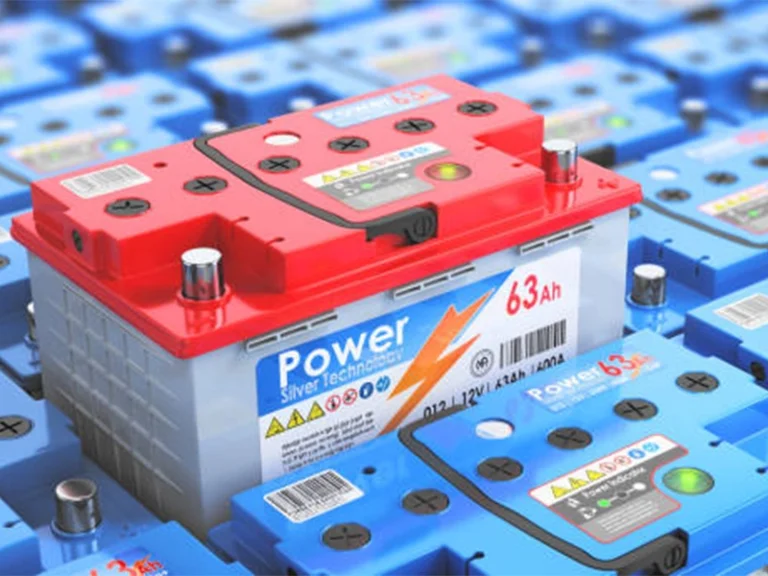
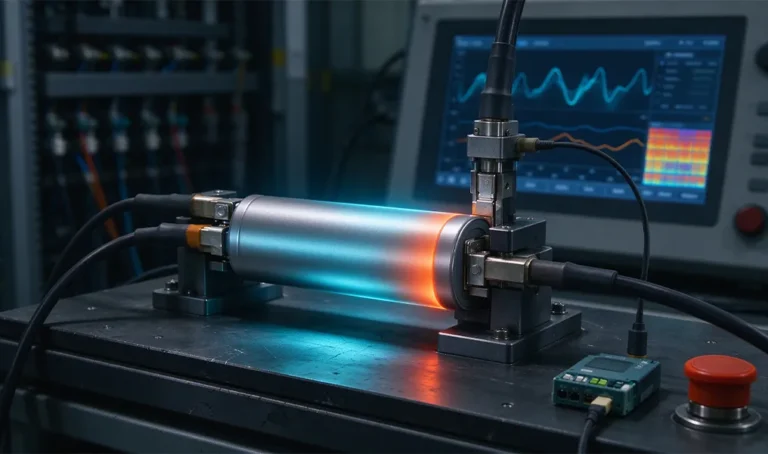
A modern electric vehicle’s (EV) battery pack is an intricate black box. You cannot simply open a sealed lithium-ion cell to inspect its remaining lifespan or determine its immediate power output. To truly understand what is happening inside the chemical structure and manage performance and safety, engineers and Battery Management Systems (BMS) must measure and calculate key data points.
We focus on four critical parameters that form the baseline for any vehicle electrical architecture: SOC, SOH, SOP, and SOF. These metrics are not just acronyms; they provide the raw data needed for control modules to make real-time decisions, keeping operations safe, efficient, and reliable under varying loads. This guide breaks down what these parameters mean, how they differ, how they interact, and how to rigorously estimate and validate them using specialized equipment.
What Are SOC, SOH, SOP, and SOF?
Let’s start with clear definitions. Each parameter describes a specific, distinct physical or chemical condition of the cell or pack.
- SOC (State of Charge): This value is a dynamic measurement of the available energy remaining in a battery compared to its total possible capacity. It functions like a fuel gauge. A 100% reading indicates a full pack, while 0% means the energy is entirely depleted.
- SOH (State of Health): This metric provides a long-term snapshot of the physical degradation of the battery. It compares the battery’s current condition, including its capacity and internal resistance, to its state when manufactured brand new. SOH tracks the slow, irreversible decline in a battery’s capability over its life cycle.
- SOP (State of Power): This parameter estimates the immediate peak power a pack can safely handle at that precise instant, for both charging and discharging. The number changes constantly as it heavily accounts for real-time dynamic factors like current temperature, SOC, and voltage limits.
- SOF (State of Function): This is a practical go/no-go assessment that determines whether the battery can execute a specific, necessary task at that moment. For example, can an EV battery deliver the massive surge of power needed to crank the motor in a freezing Canadian winter? SOF answers if the system’s electrical network can support that specific functional demand.The exact definition and calculation method of SOF may vary depending on the battery system and application.
Comparison Table: Understanding the Critical Battery States
To instantly grasp the fundamental differences and relationships, consult this quick comparison table.
| Parameter | Full Name | What it Measures (Focus) | Key BMS Question Answered | Primary BMS Function Supported |
| SOC | State of Charge | Available Energy | How much range/operating time is left? | Energy estimation Range estimation Charge/discharge control |
| SOH | State of Health | Degradation/Aging | How much of the battery’s original performance remains? | Warranty Tracking, Performance Adaptation Over Time |
| SOP | State of Power | Instantaneous Power Capability | How much power can I draw/recharge right now without damage? | Power Throttling, Dynamic Load Control |
| SOF | State of Function | Practical Task Readiness | Can the battery execute a specific job now (e.g., cold start, fast charge)? | Go/No-Go Decision-Making for System Features |
Clarifying the Differences and Interactions
While SOC, SOH, SOP, and SOF provide a complete picture of a battery’s operational reality, their individual roles and relationships must be clearly distinguished to understand system behavior.
Strenghtened Distinctions
A clear difference is that SOC and SOP are incredibly dynamic, fluctuating in seconds or milliseconds during vehicle operation. In contrast, SOH is a static metric that declines extremely slowly over months and years. SOC focuses entirely on energy, while SOP focuses on power limits. SOF is a high-level, practical synthesis, contrasting with the fundamental, cell-level data of SOC and SOH.
Enhancing the Interrelationships
These four parameters are not independent silos; they create a highly complex, interconnected web.
- SOH Limits: As SOH declines, the battery’s absolute usable capacity decreases even though SOC may still reach 100%. A low SOH battery might show 100% SOC, but it holds significantly less total energy than a new pack, and its increased internal resistance will severely throttle its peak SOP.
- SOC Influences SOP and SOF: SOP is often highest at medium-to-high SOC and can be severely limited when the battery is nearly empty or almost full. A low SOC reading will frequently result in a failed SOF evaluation, blocking specific, power-intensive functions.
- SOP and SOF are Instantaneous Checks: Both parameters are critical safety gatekeepers. SOP ensures the battery isn’t being physically over-stressed, while SOF acts as a functional green light. A system may have plenty of available power (SOP), but a low SOH might fail a SOF check because the voltage could dip too low during a heavy load.
How Do SOC, SOH, SOP, and SOF Work Together?
In a real-world scenario, like an electric vehicle during aggressive acceleration, these parameters work in dynamic harmony:
- The driver mashes the accelerator, demanding maximum power.
- The vehicle control unit requests power from the battery pack.
- The BMS instantly checks the current SOP to determine the safe limits for power discharge at that exact moment, considering temperature and cell conditions.
- The BMS uses SOC to understand available energy, SOH to account for long-term degradation, and SOP to determine current power limits. These values can then support higher-level functional decisions, which may be represented as SOF depending on the system architecture.
- If both SOP and SOF give a green light, the BMS allows the power to flow. As this power is drained, the SOCstarts to decrease.
- Over time, as this high-load usage pattern continues, the BMS monitors the SOHto track the cell degradation resulting from this aggressive operation, adapting its control models for the aging hardware.
Estimation and Validation via Battery Testing
The BMS cannot measure these states directly; it must use complex mathematical algorithms. Rigorous validation of these estimations is essential through battery testing to guarantee a safe, powerful, and reliable end product.
BMS Estimation of the States
- SOC Estimation:The BMS frequently blends Coulomb Counting (tracking current flow) and Open Circuit Voltage (OCV) methods. Kalman-filter-based methods are widely used for SOC estimation because they can combine current integration with voltage and model-based corrections.
- SOH Estimation:Systems estimate SOH by tracking capacity fade over numerous cycles (measuring initial vs. actual full capacity) and monitoring the slow climb in internal resistance using methods like 电化学阻抗谱. Advanced systems may incorporate historical usage data.
- SOP Estimation:BMS logic uses complex equivalent circuit models to calculate the peak current a pack can safely handle for a specific duration—typically 2 or 10 seconds—ensuring critical voltage and temperature limits are never exceeded.
- SOF Evaluation:SOF is a functional pass/fail test. It links the required tasks for an application to current battery capabilities. For an EV, tasks like DC fast charging or providing motor crank power in freezing conditions are evaluated by assessing if the current SOC, SOH, and immediate SOP limits can support the request.
Validation and Verification Through Battery Testing
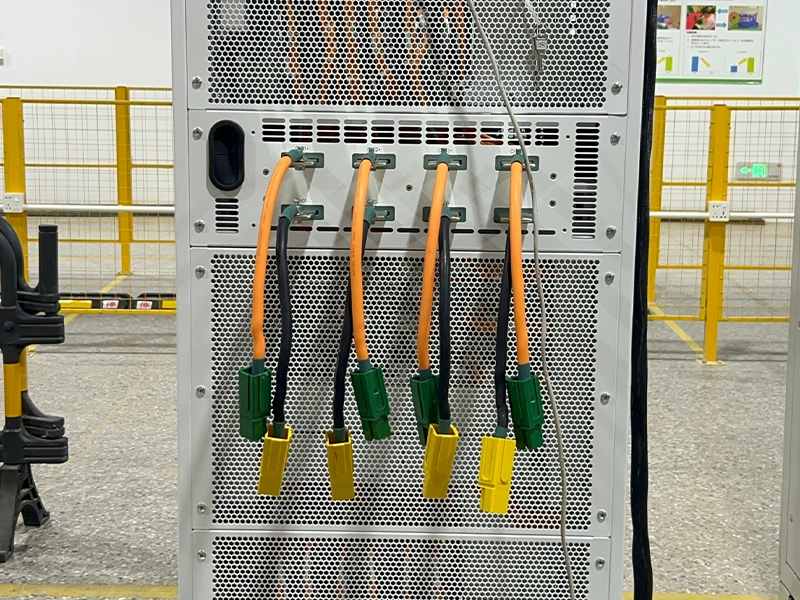
The following tests are critical in a lab environment (as shown in the pristine modern battery testing lab image) to prove the BMS algorithms are correct:
- 能力测试:Full charge and discharge loops are conducted at set currents using high-precision Sinexcel-re equipment. This provides the absolute true maximum capacity, setting the fundamental baseline for SOC and SOH verification.
- Pulse Testing:The unit is hit with short, intense high-current bursts. This is mandatory to measure resistance and the instantaneous voltage drop, providing the necessary raw data to validate the SOP models.
- Cycle Life Testing:Cells are cycled thousands of times over months. Engineers monitor the precise capacity fade curve to verify the BMS’s long-term SOH tracking.
- OCV-SOC Mapping:Engineers perform a methodical process of incrementally charging and discharging the unit, letting it rest at every 5% mark. This builds a highly accurate voltage map that is essential for calibrating and validating the OCV methods used by the BMS for SOC estimation.
- 热测试:Climate chambers are used to simulate extreme conditions. This allows engineers to verify exactly how the BMS logic adapts SOP limits and passes/fails SOF checks in freezing cold or blistering heat, mirroring real-world vehicle operation (e.g., a ruggedized EV in snow).
What Battery Testing Equipment Is Used?
You cannot rely on basic multimeters to validate advanced, high-power EV battery packs. To capture accurate dynamic behavior, specialized, powerful hardware is essential for successful R&D validation.
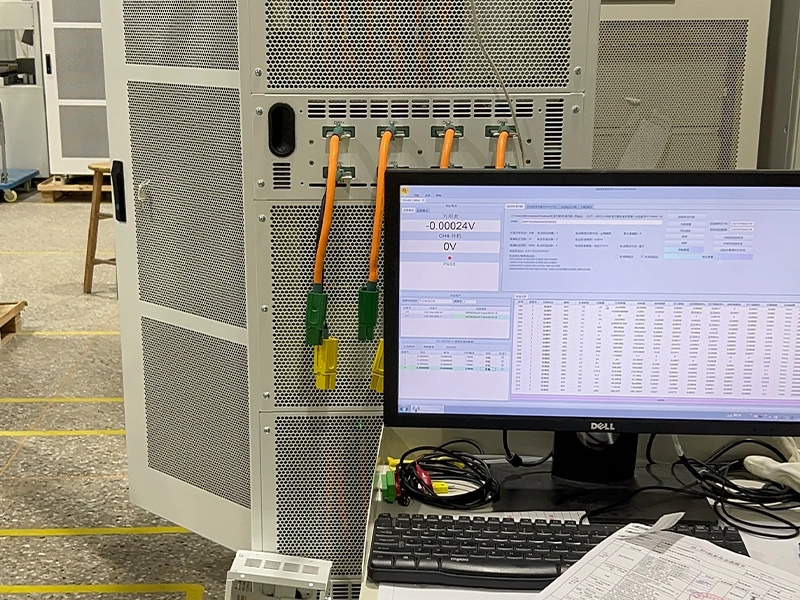
Battery cyclers and high-power battery test systems are commonly used to validate SOC, SOH, and SOP estimation under controlled conditions. Depending on the test requirements, the system may also be integrated with environmental chambers, BMS communication, temperature measurement, and data acquisition systems.
This is the specialty of Sinexcel-re, a manufacturer that designs advanced test rigs for global R&D. Whether you are validating a single-cell algorithm or a massive, high-voltage battery array for a grid storage system, their gear provides the necessary speed, precision, and efficiency.
Why Are SOC, SOH, SOP, and SOF Important for BMS?
The Battery Management System is the brain of any battery application. It needs accurate, validated data from all four parameters to control the hardware contactors and manage the thermal systems effectively.
An accurate SOC is the foundation of safe operation, directly preventing overcharging and catastrophic deep discharging, which is crucial for chemical stability and to block thermal runaway. A correctly estimated SOH allows the BMS to dynamically update range estimates, preventing a user from getting stranded by a bad reading. Validated SOP data locks down safety during heavy operation, giving the BMS the data to throttle back output if a driver floors the pedal when the cell temperature is too low. Finally, a reliable SOF keeps the user informed and controls system functions, enabling dashboard warnings if extreme cold limits motor output or blocking fast charging to protect cells. Without reliable estimation of these battery states, high-voltage battery systems may become less predictable, less efficient, and more difficult to operate safely.
结论
Understanding the dynamic reality of a battery is no longer a dangerous guessing game. By mastering the core concepts of SOC, SOH, SOP, and SOF, we unlock the safe maximum potential of energy storage. These metrics work together to guarantee safety, extend the system’s useful lifespan, and deliver peak performance exactly when it counts. Accurate battery state estimation depends on reliable models, controlled test conditions, and high-quality validation data. For engineers developing or validating battery systems, appropriate battery testing equipment can help generate the data required for capacity, pulse, cycle-life, thermal, and power capability analysis.
常见问题
What happens if SOC is calculated incorrectly?
Bad SOC data can lead to dangerous overcharging, potentially causing fires. Alternatively, it can over-discharge the cell, leading to permanent chemical damage. On a simple user level, it causes unpredictable shutdowns and range loss, ultimately leaving you stranded.
Can SOH be restored?
No. SOH represents permanent physical and chemical degradation inside the cell’s structure. You cannot reverse capacity fade or reduce internal resistance once it has increased. The only “fix” for a low SOH battery is complete replacement.
Why does temperature affect SOP so much?
Low temperatures severely spike internal cell resistance and slow down the internal chemical reactions. This crash in available performance means the battery physically cannot push or pull heavy current quickly, which crashes your available SOP instantly to prevent damage.
How often should I test my battery’s SOH?
A commercial vehicle controller will track SOH continuously in the background using data from its operational sensors. However, in an engineering lab, engineers will periodically run full, rigorous cycle tests (e.g., stopping every 100 cycles) to meticulously track degradation curves and ensure the accuracy of the BMS’s estimates.
Why choose Sinexcel-re for battery testing?
Sinexcel-re delivers professional testing gear with extreme accuracy (±0.02% F.S.) and sub-millisecond dynamic response times needed for precise SOP and SOF validation. Their systems prioritize eco-friendly energy regeneration (96% efficient) and provide safety integrated from the hardware level, covering everything from single cells to high-voltage grid arrays.