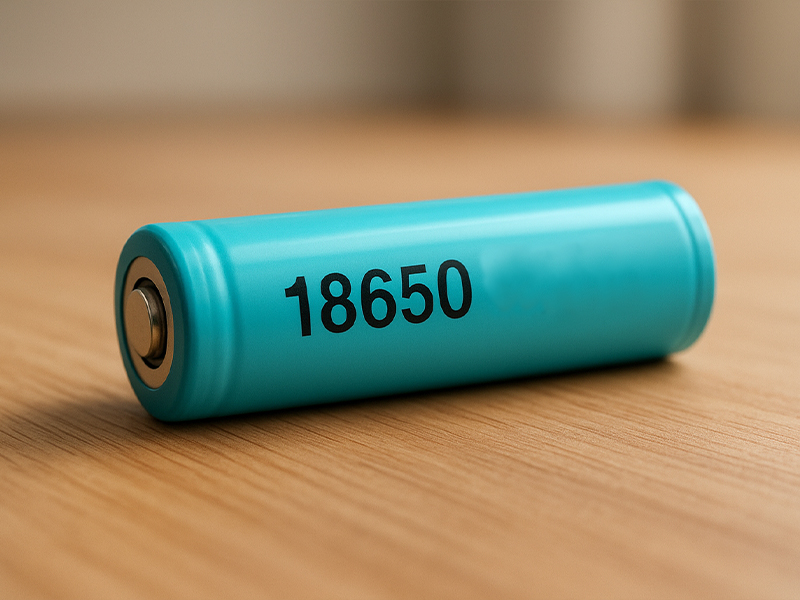
18650 batteries are cylindrical batteries with nominal voltage in the range of 3.2V to 3.7V. With respect to shape, these batteries are similar to widely used AA batteries but tip shape of AA battery is mostly replaced with flat tip and size is slightly bigger. Cylinder of 18650 battery has a diameter of 18mm and a length of 65mm. Their capacity lies between 1800mAh and 3500mAh. Individual 18650 cells generally do not contain a BMS. Battery packs made from multiple 18650 cells may use a BMS to monitor voltage, temperature, current, and protection conditions. Mostly, these batteries are a type of rechargeable 锂离子电池 磷酸铁锂(LFP)或该组中的任何其他化学物质。.
本文介绍了 18650 电池的电气和机械规格、电池的各种化学成分选项及其主要应用。由于 AA 型电池非常常见,因此我们将对 AA 电池和 18650 电池进行逐节比较,以便初学者更好地了解其性能和特点。最后,我们还将讨论延长 18650 电池寿命的技巧和诀窍,以帮助初学者延长 18650 电池的寿命并充分利用其资金。.
18650 Battery Specifications
| 规格 | Typical Information |
|---|---|
| Format | 18650 cylindrical cell |
| Diameter | Approx. 18 mm |
| Length | Approx. 65 mm |
| 化学 | Depends on cell design |
| 额定电压 | Depends on chemistry |
| 容量 | Depends on manufacturer and model |
| Maximum Charge Voltage | Depends on chemistry |
| Discharge Current | Depends on cell model |
| 可充电 | Usually, for lithium-ion 18650 cells |
18650 电池电压
The voltage of 18650 batteries varies depending on their chemical composition and manufacturer. For example, most lithium-ion 18650 batteries have a nominal voltage of 3.6 to 3.7 volts, while batteries with other chemical compositions have their own distinct nominal voltage characteristics.
For a typical lithium-ion 18650 battery, the charging voltage is approximately 4.2 volts. However, the minimum voltage at which the battery can be safely discharged varies by manufacturer and battery type; therefore, you should consult the battery’s data sheet for precise guidance.
18650 电池容量
Capacity is another important electrical parameter for batteries as it indicates the duration for which battery can keep some device running. 18650 battery capacity varies considerably depending on cell chemistry, electrode design, manufacturer, and intended application. Commercial cells can cover a broad range of capacities, so the manufacturer’s datasheet should be used as the reference for a specific cell.
18650 Battery Chemistry
| 化学 | Typical Characteristics | 常见用途 |
|---|---|---|
| LCO | High energy density | Electronics |
| NMC | Balanced energy and power | Power tools, mobility |
| NCA | High energy density | High-performance applications |
| 磷酸铁锂 | Safety and cycle life | Specific applications |
Always check the manufacturer’s datasheet because voltage, capacity, charge limits, and discharge current vary by chemistry and cell design.
18650 vs AA Battery: What’s the Difference?
| 特点 | 18650 | AA |
|---|---|---|
| Shape | Cylindrical | Cylindrical |
| 尺寸 | ~18 × 65 mm | ~14.5 × 50.5 mm |
| Typical Chemistry | Li-ion variants | Alkaline, NiMH, etc. |
| 额定电压 | Chemistry-dependent | Chemistry-dependent |
| 可充电 | Usually for Li-ion cells | Depends on chemistry |
| 典型应用 | Power tools, packs, mobility | 消费电子产品 |
18650 电池的放电率
Discharge rate or ‘C-rating’ of a battery depicts the amount of current a battery can deliver to power a device. This, indirectly, determines discharge time and size of device being powered. The discharge capability of an 18650 cell varies significantly by model. Some cells are designed for high-energy applications, while high-drain cells are designed to deliver much higher current. The manufacturer’s continuous and peak discharge ratings should always be used when selecting a cell.
18650 电池的其他性能特点
电压、容量和热管理是我们已经讨论过的主要性能参数。在本节中,我们将考虑其他性能参数,如 18650 电池的生命周期、存储寿命和记忆效应。.
How Long Does an 18650 Battery Last?
The service life of an 18650 battery typically ranges from 300 to 500 charge-discharge cycles. When the battery is operating under high-discharge conditions, its service life is significantly reduced. For example, under such conditions, an 18650 battery may have a service life of only 200 cycles. If a user fully discharges the battery at its maximum discharge current, its service life may be as short as 50 cycles.
18650 电池的记忆效应
18650 型电池的另一个吸引人的特点是没有记忆效应。记忆效应也取决于化学成分。大多数 18650 电池的化学成分,特别是锂基化学成分,都没有记忆效应。这一特性使用户可以在没有充满电的情况下随时开始使用电池。.
18650 电池的储存寿命
Apart from life cycles, storage life of battery is another important aspect which helps users and prospective buyers decide if they can keep their power storage cell for long period of time without use or not. Storage life depends on chemistry, state of charge, temperature, humidity, and cell condition. For long-term storage, users should follow the manufacturer’s recommended storage voltage and temperature rather than assuming that all 18650 cells can be stored under the same conditions.
18650 电池的应用
上述讨论表明,18650 电池具有几个吸引人的特点,如循环寿命长、放电率高、容量大、无记忆效应、存储寿命长且不损失容量。在此,我们将说明 18650 型电池的不同应用,同时将它们与不同的工作特性联系起来。.
- 18650 电池具有充电和放电率高、重量轻、寿命长等特点,因此适用于电动摩托车的电动动力系统。 小米电动滑板车, 它使用 18650 锂离子电池,性能可靠。.
- 由于放电率高、输出电压高和容量大,18650 电池可提供瞬间高功率,是手电筒和其他照明设备的理想选择。.
- 电动工具(如电钻、电动螺丝刀)需要小巧、高容量和便携式电源。18650 电池的特性使这些电池适用于电动工具。.
- 18650 电池还可用作太阳能电池储能系统。 特斯拉 Powerwall, 为家庭和小型企业提供可靠的电力。.
- 在工业和仓库中,18650 电池凭借其可靠性、长循环寿命和高容量,被机器人和无人机用于执行重复任务和监控现场。.
- 在笔记本电脑等电子产品中,18650 电池可用于组成电池组。.
延长 18650 电池的使用寿命
对于任何用户,特别是初学者和环保爱好者来说,了解延长电池寿命的方法是相当重要的。因为它能带来经济效益,如降低更换成本、可预测和可靠的运行、增加正常运行时间和生产率以及提高能源效率。延长电池寿命还能带来环境效益,因为减少电池意味着节约资源、减少废物和污染以及降低碳足迹。考虑到诸多好处,本文讨论了延长 18650 电池寿命的技巧。.
安全充电实践
良好的充电方法是延长包括 18650 电池在内的各种电池寿命的关键。您必须使用专门为相关电池设计的充电器,具体取决于电池的化学成分和制造商的建议。用户应避免将电池与充电器连接太久,以免电池过度充电。这样还能确保维持最佳电压。此外,还可以投资智能充电器来调节和监控充电过程。.
18650 电池的最佳储存方式
电池储存和使用过程中的环境温度对其使用寿命有很大影响。最好将电池存放在 20-25 摄氏度的适中温度下。在存放电池时,如果您希望延长存放时间,那么请尝试将电池部分充电(约 50%)。完全耗尽或完全充满电的电池在存放期间会受到负面影响。.
良好的使用条件
关于 18650 电池的使用,有很多方法可以提高电池的使用寿命。如上所述,高放电率的电池更容易失去其生命周期。因此,用户必须确保 18650 电池的放电率适中。此外,在放电阶段应避免深度放电。.
避免物理损坏和适当清洁
如果用户以安全的方式保管电池,使其免受物理损坏,18650 电池的寿命就会大大延长。此外,环境中的灰尘和其他残留物会沉积在电池端子上。用户必须定期用抹布清洁电池端子,以延长电池寿命。.
How to Test an 18650 Battery
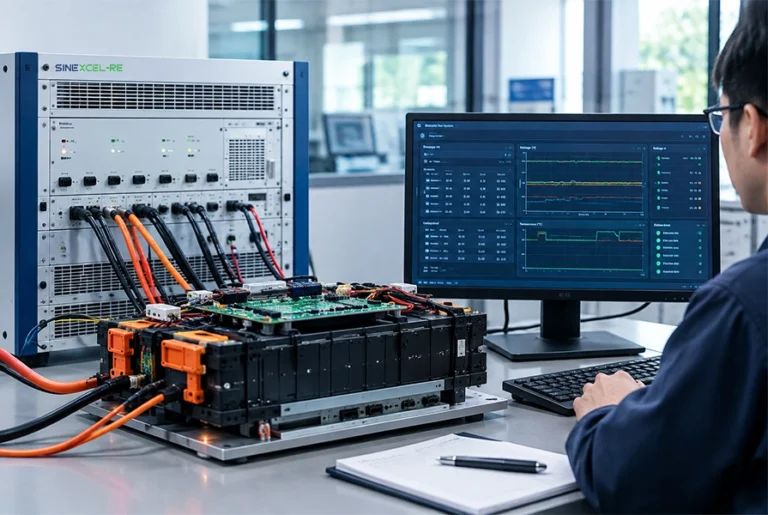
Testing an 18650 battery involves more than checking its voltage. A voltage reading can provide a quick indication of the cell’s condition, but it cannot show how much capacity the battery can actually deliver or how its internal resistance has changed. For a more complete evaluation, voltage, capacity, internal resistance, and charge-discharge performance should be considered together.
Check the Battery’s Physical Condition
Before performing any electrical test, inspect the 18650 cell for visible damage. Look for a damaged wrapper, dents, corrosion, leakage, swelling, or other physical abnormalities.
A damaged cell should not be used simply because its measured voltage appears normal. Physical inspection is an important first step before connecting a battery to a charger or test equipment.
Measure the Open-Circuit Voltage
Use a suitable multimeter or battery tester to measure the voltage of the cell when it is not connected to a load or charger.
The measured voltage can provide a quick indication of the cell’s state of charge, but voltage alone is not a reliable measure of battery health. Two cells can show similar resting voltages while having significantly different capacities or internal resistance.
For this reason, voltage testing is best used as an initial check rather than a complete battery health assessment.
Perform a Capacity Test
A capacity test measures how much charge an 18650 cell can actually deliver under controlled discharge conditions.
A typical test involves:
- Charging the cell according to the manufacturer’s specifications.
- Allowing the cell to rest if required by the test procedure.
- Discharging it at a controlled current.
- Recording the delivered capacity in Ah or mAh.
- Comparing the measured capacity with the manufacturer’s rated capacity.
Capacity testing is particularly useful for identifying cells that have experienced significant degradation.
Measure Internal Resistance
Internal resistance testing can provide additional information about the condition of an 18650 cell.
As a cell ages or deteriorates, its internal resistance may increase. Higher internal resistance can contribute to greater voltage drop and heat generation during high-current operation.
For more detailed battery evaluation, DCIR testing can be used to assess the cell’s resistance response under controlled current conditions.
Perform Charge-Discharge or Cycle Testing
For applications where battery life and degradation are important, a single voltage or capacity measurement may not be enough.
Repeated charge-discharge testing can be used to monitor:
- 容量保持性
- Charge and discharge efficiency
- Voltage behavior
- Internal resistance changes
- Cycle degradation
This type of testing is commonly used during battery R&D, quality control, and cell performance evaluation.
How to Tell if an 18650 Battery Is Still Good
Although the capacity and performance of 18650 batteries may have declined, their voltage readings may still appear normal. Therefore, voltage readings alone are not sufficient to determine the quality of an 18650 battery.
Signs of a Healthy 18650 Battery
A battery is generally in better condition when it:
- Has no swelling, leakage, corrosion, or physical damage
- Shows stable voltage under normal operating conditions
- Retains a significant portion of its rated capacity
- Does not show excessive voltage drop under load
- Has relatively stable internal resistance
- Does not become abnormally hot during charging or discharging
These indicators should be evaluated against the manufacturer’s specifications and the requirements of the application.
Signs That an 18650 Battery May Be Degraded
Several signs can indicate that a cell has deteriorated:
Severe Capacity Loss:
When the measured capacity is significantly lower than the capacity specified by the manufacturer, it may indicate that the battery has undergone severe degradation.
Voltage Drop Under Load:
Some batteries exhibit normal voltage when open-circuited but show a significant voltage drop when current flows. This indicates an increase in internal resistance, leading to reduced power output.
Increased Internal Resistance:
An increase in internal resistance reduces the battery’s efficiency in delivering current and generates additional heat.
Abnormal Heat Generation:
If a battery exhibits abnormal heating during charging or discharging, it indicates electrical and chemical issues that should not be ignored.
Physical Damage:
Swelling, leakage, damage to the insulation, dents, and corrosion are all warning signs. Even if the voltage remains normal, any physically damaged lithium-ion battery should be taken out of service.
Can Voltage Alone Tell You if an 18650 Battery Is Good?
No.
Voltage is useful for a quick initial check, but it does not directly tell you the battery’s remaining capacity, internal resistance, or cycle life.
For example, a degraded cell may still show a normal resting voltage while delivering significantly less capacity than when it was new.
A more reliable assessment combines:Voltage + Capacity + Internal Resistance + Charge/Discharge Performance
For cells used in professional applications, these measurements can be performed using dedicated battery testing equipment.
结论
18650 battery cells are available in various chemistries including Lithium-ion, lithium polymer, and Nickle metal hydride (NiMH). Their rechargeability feature paired with good capacity, ability to provide high drain currents, low discharge rates, long storage life, and extended life cycles makes these batteries valuable for many applications including flashlights, robots, and electric powertrains.
When selecting or evaluating 18650 batteries, you should first check their nominal voltage, capacity, discharge performance, and physical condition. However, battery voltage alone does not guarantee that the battery is in good condition. Testing the capacity, measuring the DC internal resistance (DCIR), and conducting charge-discharge tests provide a more accurate assessment of the battery’s condition.
Whether you are selecting new batteries or evaluating used ones, you must strictly follow the manufacturer’s guidelines for charging, discharging, storing, and general safety of 18650 batteries. For specialized research and development in battery testing, professional 电池测试设备 should be used.